Last updated October 31, 2026
Insulation Cost Breakdown: The Rancho Santa Margarita Homeowner’s Reference for 2026
A $1,200 attic insulation quote and a $2,100 quote for the same Rancho Santa Margarita home aren’t necessarily a rip-off versus a bargain. The lower quote almost certainly excludes existing insulation removal, air-sealing, and depth verification that the higher quote includes. The homeowner who picks the low number often ends up paying more once the hidden scope gets added back in. This guide breaks down every cost component so you can compare quotes fairly, understand what you’re actually paying for, and make a decision that holds up five years from now. For more guides & resources, visit our blog.
Quick Answer
Most Rancho Santa Margarita homeowners will spend between $1,800 and $4,200 on a complete attic insulation upgrade in 2026, with material choice and scope inclusions driving most of the variance. A basic blown-in fiberglass top-up over existing insulation runs $1,200 to $2,000, while a full removal, air-sealing, and closed-cell spray foam job can reach $8,000 to $12,000 on larger homes. The single biggest pricing variable isn’t the contractor’s margin – it’s whether the quote includes the five scope items that separate a patch job from a permanent fix.
Table of Contents
- The Three Most Common RSM Insulation Projects: Line-by-Line 2026 Pricing
- The Five Scope Items That Make Quotes Incomparable
- How Material Choice Actually Moves the Price
- 2026 Utility Rebates and Tax Credits for RSM Homeowners
- The Honest ROI: Payback Periods Using RSM Utility Rates
- Where DIY Makes Sense (and Where It Really Doesn’t)
- Common Mistakes to Avoid
- Frequently Asked Questions
The Three Most Common RSM Insulation Projects: Line-by-Line 2026 Pricing
Rancho Santa Margarita’s housing stock is fairly uniform – most homes were built between 1986 and 2005, with original attic insulation that’s now 20 to 40 years old and well below current code. That means three project types dominate the local market. Here’s what each one actually costs in 2026, broken down by component.
Project 1: Attic blown-in upgrade (top-up over existing insulation)
This is the most common job in RSM. Your existing insulation stays in place, and a technician blows additional fiberglass or cellulose on top to reach the R-38 depth that current California energy code expects. For a typical 1,800 square foot single-story RSM home with accessible attic:
- Material (10-12 inches of blown-in fiberglass, R-30 to R-38): $450 to $700
- Labor including setup, blowing, and depth verification: $500 to $800
- Basic air-sealing of top plates and penetrations: $200 to $400
- Total realistic range: $1,200 to $1,900
Note that this price assumes the existing insulation is dry, not rodent-contaminated, and that attic access is standard. Homes in the neighborhoods east of Antonio Parkway tend to have lower-slope roofs with tighter attic access, which adds labor time.
Project 2: Attic removal and full replacement
If your existing insulation has been compromised – water damage from a roof leak, rodent activity, or it’s the original R-19 fiberglass that’s settled to R-8 – you need removal before new material goes in. See our Insulation Warning Signs: A Rancho Santa Margarita Homeowner’s Reference Guide for how to spot these issues early. This is where quotes diverge hardest.
- Removal of existing insulation with commercial vacuum: $1.50 to $2.50 per square foot, so $2,700 to $4,500 for an 1,800 square foot attic
- Haul-away and disposal: $300 to $600
- Attic air-sealing (foam sealing of top plates, wire penetrations, plumbing stacks, can light housings): $600 to $1,200
- New blown-in fiberglass or cellulose to R-38: $800 to $1,200
- Total realistic range: $4,400 to $7,500
We’ve seen removal quotes that skip the air-sealing step entirely, which drops the price by $800 or more but leaves the attic leaky. That’s not savings – it’s deferred scope.
Project 3: Crawl space or floor insulation
Many RSM homes have vented crawl spaces with no insulation at all. Homes built on slabs don’t have this issue, but most of the older neighborhoods – including areas built before 2000 – sit on raised foundations. Insulating the floor above a vented crawl space costs:
- Fiberglass batt installation (R-19 to R-30) with wire support rods: $1.20 to $2.00 per square foot installed
- For a 1,800 square foot crawl space footprint: $2,200 to $3,600
- Adding a vapor barrier to the ground: $800 to $1,500 depending on crawl space condition
The Five Scope Items That Make Quotes Incomparable
When two Rancho Santa Margarita contractors quote the same job 40% apart, the difference almost always sits in five line items that one included and the other left out. Here’s each one, what it costs when priced separately, and whether you actually need it.
- Existing insulation removal: $2,700 to $4,500 for a typical RSM attic. Needed when insulation is water-damaged, rodent-infested, or compressed below R-12. Not needed for a top-up over dry, intact material.
- Attic air-sealing: $600 to $1,200. This is the foam sealing of every penetration between your living space and attic – can light housings, wire holes, plumbing stacks, top plates where drywall meets framing. A blow-and-go quote always omits this. It’s the single highest-ROI component of any attic project.
- Duct boot sealing: $150 to $400. Your HVAC registers poke through the ceiling into the attic, and the gaps around them leak conditioned air. Foam-sealing each boot takes 30 to 60 minutes total but stops a constant thermal bypass.
- Baffles or ventilation chutes: $3 to $8 per baffle installed, typically 18 to 24 baffles per RSM home, so $60 to $190 total. These keep soffit vents clear of blown insulation so your attic still breathes. Cheap line item, frequently skipped, and skipping it leads to moisture problems in RSM’s coastal-influenced climate.
- Haul-away: $300 to $600. Some contractors expect you to handle disposal. Others include it. Confirm which you’re getting.
Before you compare any two quotes, put them side by side and check which of these five items each one covers. If a quote doesn’t list them, ask. We’ve walked into more than a few RSM homes where a “completed” insulation job from another contractor skipped air-sealing entirely – the homeowner paid for R-38 but got the effective performance of R-20. Check our Insulation Permits, Codes & Inspections in CA: What You Need to Know to verify work meets legal requirements. That’s the apples-to-oranges problem made physical.
How Material Choice Actually Moves the Price
Material choice doesn’t affect cost the way most homeowners assume. The price difference between fiberglass and cellulose is marginal. The real cost driver is whether the material requires a separate labor process, and whether it replaces work that another material would have needed anyway.
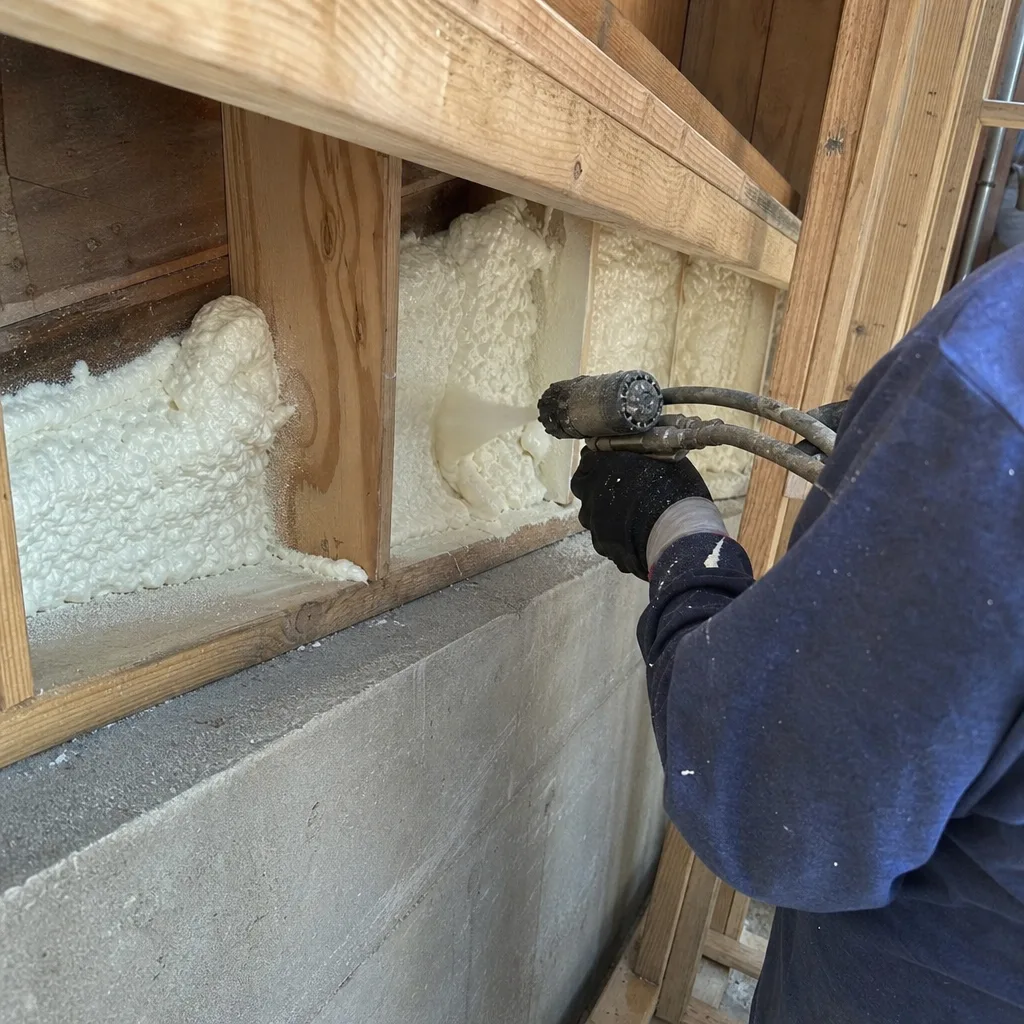
Take open-cell spray foam versus fiberglass batts for wall cavities. A common assumption is that spray foam costs dramatically more. For attic floors, that’s true. For a 2×4 wall cavity in a room addition or a garage conversion, open-cell foam from Icynene can actually finish cheaper than a fiberglass batt job once labor is counted. Here’s why: installing fiberglass batts correctly in a wall means cutting each batt to fit around electrical boxes, plumbing, and blocking – labor-intensive fiddly work that takes a full day for one wall assembly. Open-cell foam is sprayed in one continuous application, fills every irregular gap automatically, and air-seals the cavity at the same time. The batt route requires separate air-sealing work on top. Net installed cost for that specific application: often within 10% of each other, with foam winning when the wall has lots of penetrations.
Rockwool mineral wool occupies a different niche. It costs more per square foot than fiberglass – roughly 30 to 50% more in RSM’s market – but we recommend it specifically for homeowners who want fire resistance and acoustical isolation alongside thermal performance. For an interior wall between a garage and living space, or a shared wall in a condo in Rancho Santa Margarita’s multi-family zones, Rockwool’s fire rating and sound attenuation justify the premium. If you’re just topping up an attic, it’s overkill.
Knauf and CertainTeed fiberglass products are the workhorses for blown-in and batt applications in RSM’s climate. The choice between them usually comes down to availability and R-value per inch, not price – they’re within pennies of each other per square foot. What matters more is that the contractor actually stocks the depth you’re paying for and verifies it after installation, rather than eyeballing it from the hatch.
One more counterintuitive point: closed-cell foam’s higher material cost can buy back square footage. Closed-cell achieves R-14 to R-15 at 2 inches in a 2×4 wall cavity, where fiberglass batts top out around R-13 with zero air-sealing. For a Rancho Santa Margarita homeowner doing a garage-to-ADU conversion, the 2×4 wall depth is fixed. Closed-cell is the only way to hit meaningful R-value in that cavity depth, and that’s a product decision that belongs in the quote conversation from day one.
2026 Utility Rebates and Tax Credits for RSM Homeowners
Rancho Santa Margarita homes sit in Southern California Edison’s service area for electric and SoCalGas for natural gas. Both utilities fund insulation incentives in 2026, and stacking them with the federal 25C credit changes the math on nearly every project.
Southern California Edison’s attic insulation rebate in 2026 pays between $0.15 and $0.25 per square foot of attic insulated, depending on whether the home is in a disadvantaged community zone (DAC) and whether the upgrade brings the attic to R-38 minimum. For a typical 1,800 square foot RSM attic, that’s roughly $270 to $450 back. SCE requires a participating contractor to submit the rebate paperwork, so confirm your contractor is enrolled before you sign. The same program offers a larger rebate for duct sealing, which pairs naturally with attic insulation work.
SoCalGas funds a similar attic insulation and weatherization rebate through its Energy Savings Assistance Program for income-qualified households. Income thresholds on that program read roughly: a household of four with income at or below 200% of the federal poverty level qualifies for subsidized insulation at steeply reduced cost. For RSM homeowners above that threshold, the standard SCE rebate path is the one that applies.
The federal 25C tax credit is the bigger lever for most RSM homeowners. In 2026 it covers 30% of insulation material cost, up to a $1,200 annual cap for insulation and air-sealing combined. The labor is not covered – material only. For a $1,500 blown-in job where $600 of that is material, you can claim $180 back. For a full attic removal with $2,500 of new insulation material, you can claim $750. The credit applies to the material cost of fiberglass, cellulose, mineral wool, and spray foam equally, as long as the product meets the IECC 2018 standard for climate zone 3 (which RSM falls in).
Here’s how the stacking actually works on a typical RSM attic top-up:
- Project cost: $1,500 (R-38 blown-in fiberglass top-up with air-sealing)
- SCE rebate: $300 (via participating contractor)
- Federal 25C credit: $180 (30% of $600 material cost)
- Net out-of-pocket after rebates and credits: $1,020
Your contractor should be able to itemize material cost on the invoice specifically because the 25C credit requires it. If a quote lumps everything into one labor line, ask for the material breakdown.
The Honest ROI: Payback Periods Using RSM Utility Rates
National-average payback numbers don’t mean much in Rancho Santa Margarita. RSM sits in a marine-influenced Mediterranean climate – warm but not scorching summers, mild winters with cool nights, and a heavy evening marine layer from May through July. That means cooling load is the dominant energy cost, not heating. Your insulation investment pays back primarily through reduced air conditioning hours between June and October.
SCE’s residential rate structure in 2026 puts RSM homeowners on time-of-use pricing, with peak rates from 4pm to 9pm running between $0.42 and $0.55 per kilowatt-hour depending on the plan. A typical RSM home with a 3-ton AC system running 4 hours per day during peak rate windows in summer burns through roughly 14 kWh daily just on cooling, or around $6.30 per day at peak rates. Proper attic insulation and air-sealing typically cuts cooling energy use in an RSM home by 20 to 30%.
Here’s the payback math for each project type:
Attic top-up with air-sealing ($1,500 gross, $1,020 net after rebates/credits): Annual savings of $280 to $420 on cooling and heating combined. Payback: 2.5 to 3.5 years. This is the highest-ROI insulation project an RSM homeowner can do.
Full attic removal and replacement ($4,400 to $7,500 gross, $3,900 to $6,700 net): Annual savings of $400 to $600, plus it eliminates a known problem (mold, rodents, settled insulation). Straight payback: 7 to 12 years, but non-energy benefits like interior comfort and lower AC runtime push the practical value higher. For homes with failed insulation, this isn’t optional work – it’s restoration.
Crawl space floor insulation ($2,200 to $3,600 gross, $1,900 to $3,100 net): Annual savings of $150 to $280 in RSM’s mild winters. Longer payback of 8 to 14 years, but it makes floors noticeably warmer in winter and reduces the cold-floor complaint that’s common in homes built before 2000. Do this after the attic, not instead of it.
The honest takeaway: attic insulation and air-sealing are the first, second, and third priority for RSM homes. Everything else is secondary. If you’re budgeting one insulation project in 2026, make it the attic. For emergency planning, read our Insulation Emergency Preparedness Guide for Rancho Santa Margarita Homes.
Where DIY Makes Sense (and Where It Really Doesn’t)
Some insulation work is genuinely doable for a careful homeowner. Other parts carry risks that make professional installation worth the cost. Here’s the split as it applies to Rancho Santa Margarita homes specifically.
DIY-viable work in RSM attics:
- Installing baffles or ventilation chutes in an attic you can already access safely. Material cost under $100, takes a weekend afternoon.
- Replacing weatherstripping around the attic hatch and adding an insulated cover to the hatch itself. This is a $40 fix that stops a real air leak.
- Sealing small visible gaps around plumbing vent pipes or wire penetrations with canned spray foam, if you can reach them from the attic floor without walking on joists.
Work that belongs with a professional:
- Blowing insulation to a verified depth. This requires a blower machine, two-person coordination, and a depth gauge. Most DIY blow-and-go jobs end up with uneven coverage because the amateur operator can’t verify depth while holding the hose. If the material settles to R-20 because no one checked depth, the whole project underdelivers.
- Removal of existing insulation. This is physically punishing, requires a commercial-grade vacuum, and exposes you to whatever’s been living in the attic for 30 years – rodent droppings, mold, fiberglass dust. Not a weekend project.
- Spray foam of any thickness. Two-part spray foam requires specialized equipment, precise temperature and humidity monitoring, and correct mixing ratios. An improper application off-gasses and can leave you with uncured foam that’s worse than no insulation. This is squarely professional territory, full stop.
- Full attic air-sealing. The technique isn’t hard – it’s the consistency that matters. Missing three of forty penetrations means your air-sealing is 92% incomplete in effect, because air takes the path of least resistance and finds every gap you missed. We’ve seen professional crews spend four hours on a single RSM attic, and the difference between 90% sealed and 100% sealed is meaningful.
One safety note that applies regardless of who does the work: never step on the drywall between ceiling joists. The joists are the structural members; the drywall is not. A fall through an attic onto a garage slab is a hospital visit at best.
Common Mistakes to Avoid
- Comparing quotes on price alone without checking scope. A blow-and-go top-up quote and a full removal, seal, and replacement quote both read as “attic insulation.” They are not the same project. Ask each contractor which of the five scope items they’re including before you put two numbers side by side.
- Choosing a general contractor for insulation work. RSM has no shortage of roofing and HVAC companies that also install insulation. The problem is that insulation is a fill-in trade for them, not a specialty. A contractor running three trades has less product knowledge and fewer material relationships, which means you get whatever product their one supplier happens to carry. Orange County Insulation home is an insulation-only operation for this exact reason – eight brands, three methods, one trade.
- Skipping air-sealing because it’s a “separate” line item. Insulation without air-sealing is like a jacket with the zipper left open. In RSM’s climate, attic air-sealing is often the higher-ROI half of the job. We cannot overstate this: sealing the gaps matters as much as or more than adding R-value.
- Assuring yourself the existing insulation is “fine” because it looks fluffy from the hatch. The first three feet near the hatch always looks passable. The far corners of the attic tell the true story. We routinely find R-38 homes where the far east side has settled to R-10 because of a past roof leak or rodent nest. You cannot assess insulation from the attic opening.
- Waiting until summer to schedule. RSM’s cooling season runs June through October, and every insulation contractor’s schedule fills up before the first heat wave. Scheduling in winter or early spring means faster timelines and more schedule flexibility. If you’re reading this in May, schedule now anyway – the alternative is waiting until September.
- Assuming the federal tax credit applies to the full project cost. The 25C credit covers 30% of insulation material only, not labor. If a contractor blurts “30% off your whole project” they’re misrepresenting the credit. Keep the material line item clear on your invoice.
When to Call a Professional
You should call for a professional insulation assessment in Rancho Santa Margarita if you notice any of these: rooms that stay 5 degrees warmer than the rest of the house on summer afternoons, energy bills that climb year over year without a change in usage habits, visible insulation that’s compressed or damp in the attic, rodent droppings or nesting material in the attic, or any room where you can smell the attic when the AC kicks on. For crawl spaces, call if floors feel cold in winter or if you notice musty smells rising through the floor boards. These are all fixable, and a 45-minute assessment tells you exactly which of the three project types above applies. Orange County Insulation offers free estimates in Rancho Santa Margarita – call (877) 680-3557 to schedule an attic inspection, and ask specifically about whether you’d benefit from a full removal versus a top-up.
Frequently Asked Questions
Attic insulation in Rancho Santa Margarita runs $1,200 to $7,500 depending on whether you’re topping up existing material or removing and replacing it. A basic blown-in fiberglass top-up over intact insulation costs $1,200 to $1,900. Full removal, air-sealing, and replacement runs $4,400 to $7,500 for a typical 1,800 square foot home. Call (877) 680-3557 for an exact quote on your attic – estimates are free and itemized.
Cheaper is topping up over existing insulation if it’s dry, uncompressed, and rodent-free, which runs $1,200 to $1,900 in RSM. If the insulation has been water-damaged, compressed below R-12, or contaminated by rodents, replacement is not a cost decision – it’s a health and performance decision, and the $4,400 to $7,500 removal and replacement job is the right call. We do not top up over failed insulation, and neither should anyone else.
For an attic floor, blown-in fiberglass costs $1,200 to $1,900 while open-cell spray foam on the roofline runs $6,000 to $12,000 for a typical RSM home – a difference that reflects the change in thermal boundary from attic floor to roofline. For wall cavities in a 2×4 frame, the gap shrinks dramatically once labor and air-sealing are counted – open-cell foam often finishes within 10% of batts because it fill-and-seals in one step. The right material depends on your project type, not a blanket rule.
We schedule free estimates in Rancho Santa Margarita on a rolling basis, typically within a few days depending on season. Summer is our busiest stretch – June through September fills up fastest – so if you’re reading this during cooling season, call (877) 680-3557 and get on the calendar as soon as you can. Winter and spring scheduling is usually faster.
Yes, the federal 25C tax credit covers 30% of insulation material cost up to $1,200 per year through 2032, and it applies to Rancho Santa Margarita homes in climate zone 3 as long as the product meets IECC 2018 standards. The credit covers material only, not labor. Your contractor should itemize the material cost on the invoice so you can file accurately.
Attic, always attic. Heat rises, and in Rancho Santa Margarita’s cooling-dominated climate, the attic is where conditioned air escapes and radiant heat enters. Wall insulation matters less in RSM than in colder climates because the temperature delta across walls is smaller. If you have one budget line for insulation in 2026, spend it on Attic Insulation in Rancho Santa Margarita with air-sealing included. Spray foam and blown-in options both have their place in the attic, but the attic comes before walls every time.
The Bottom Line
Insulation pricing in Rancho Santa Margarita varies by 40 to 60% on identical homes because quotes don’t describe identical work. The fix is to itemize everything: removal, air-sealing, duct boot sealing, baffles, haul-away. Get those line items written down, compare like against like, and the confusing price spread collapses. A $1,500 attic top-up with sealing and baffles outperforms a $1,200 blow-and-go every single time. Confirm your contractor’s brand roster before you sign – if they only carry one manufacturer, they’re selling you what they stock, not necessarily what your home needs. Get the right scope, the right material, and the right installer for your specific RSM house. That’s the whole game.
Written by the team at Orange County Insulation, serving Rancho Santa Margarita since 2013. We only do insulation – which means we do it better. Call (877) 680-3557 for a free, itemized estimate on your attic, walls, or crawl space.