Insulation Company in Desert Hot Springs, CA
Blown in insulation is the most common retrofit we handle in Desert Hot Springs, and for good reason. Homes in the 92240 and 92241 ZIP codes were mostly built between the 1950s and 1980s, and much of the original attic insulation has settled, been disturbed, or was never adequate to begin with. Combine that with summer highs above 105°F and wind-driven dust moving through the San Gorgonio Pass, and you get houses that leak conditioned air all day long. We only do insulation, which means we can tell you exactly what’s happening in your attic and what material will fix it. Call (877) 680-3557 and we’ll walk you through it.
Why Desert Hot Springs Homes Are Different
Desert Hot Springs sits directly over the Mission Creek branch of the San Andreas Fault, and geothermal water is pumped from deep wells throughout the area. Homes on private geothermal or well systems carry elevated indoor humidity and mineral dust that most desert insulation advice doesn’t account for. A standard attic job here isn’t just about heat: it’s about specifying material that won’t absorb moisture, won’t hold mineral particulates, and won’t become a nesting site for the roof rats that are already common in the older tracts around 92240.
The housing stock reinforces this. Much of what we see in Desert Hot Springs is older, often self-built or manufactured homes with single-pane windows, unsealed crawlspaces or slab-on-grade construction, and insulation that was minimal even when it was new. In the mobile home parks and older subdivisions, we routinely find blown-in cellulose that has settled to a fraction of its original depth, scattered by rodents and wind, leaving the ceiling cavity effectively uninsulated near the eaves. Air sealing has to happen before any new material goes in, or the problem follows the new insulation around the house.
The day-night swing also works against the building envelope. When it’s 108°F at 4 p.m. and 68°F by 5 a.m., materials expand and contract, and any gap becomes a channel for dust and heat transfer. That’s why we approach Desert Hot Springs attics as a system: seal, level, then insulate to the correct R-value for this climate zone.
Our Main Desert Hot Springs Services
Most Desert Hot Springs homeowners call us about two problems: attics that bake the rooms below them, and walls or roofs that need the air-sealing performance of spray foam. Both have their own dedicated pages, linked below.
Attic Insulation in Desert Hot Springs
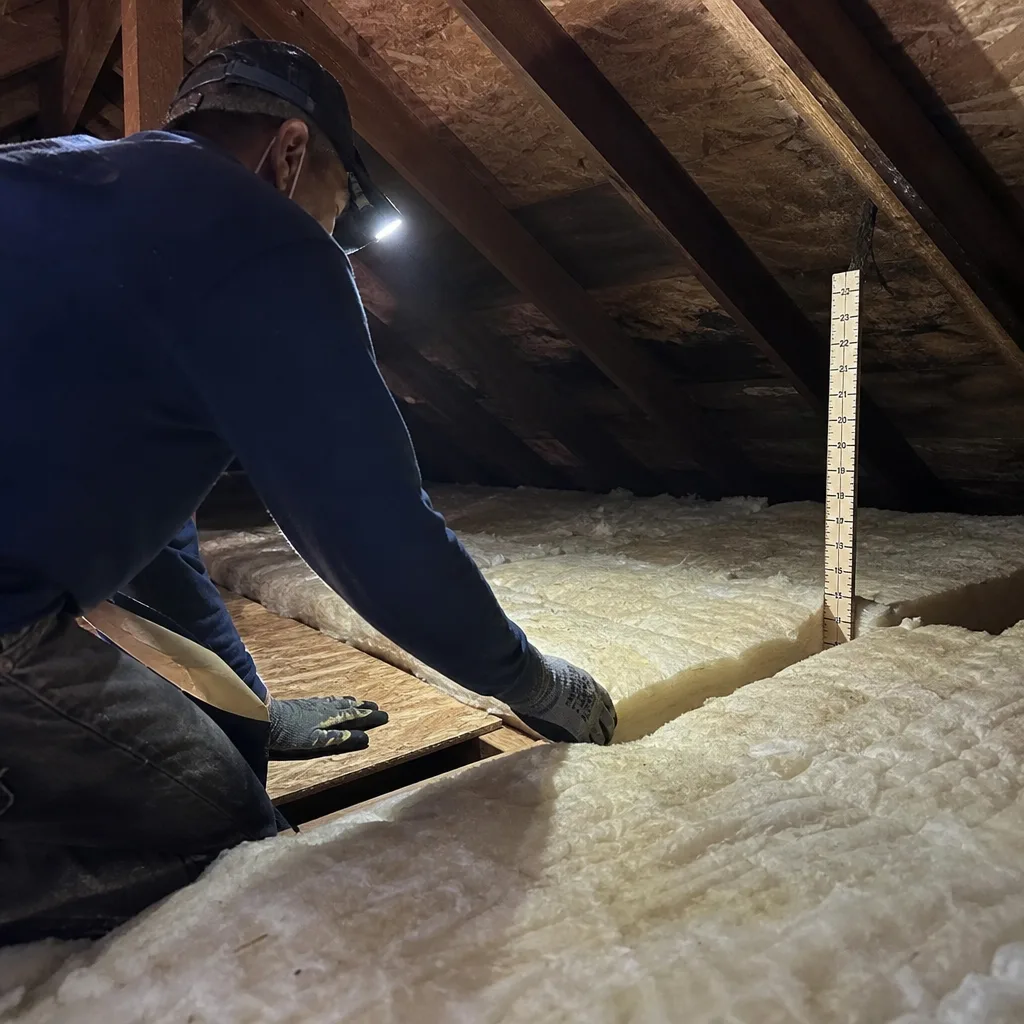
Attic work in Desert Hot Springs usually starts with removing or re-leveling what’s already up there, because settled cellulose and rodent-damaged batts are the norm in this housing stock. We match the material to the home: blown-in fiberglass where depth is the priority, mineral wool where fire resistance matters, or batts where the attic is used for storage. The climate demands at least R-38 in most attics here, and we verify depth and coverage before we call the job done. For the full scope of what we do in attics across 92240 and 92241, see Attic Insulation in Desert Hot Springs.
Spray Foam Insulation in Desert Hot Springs
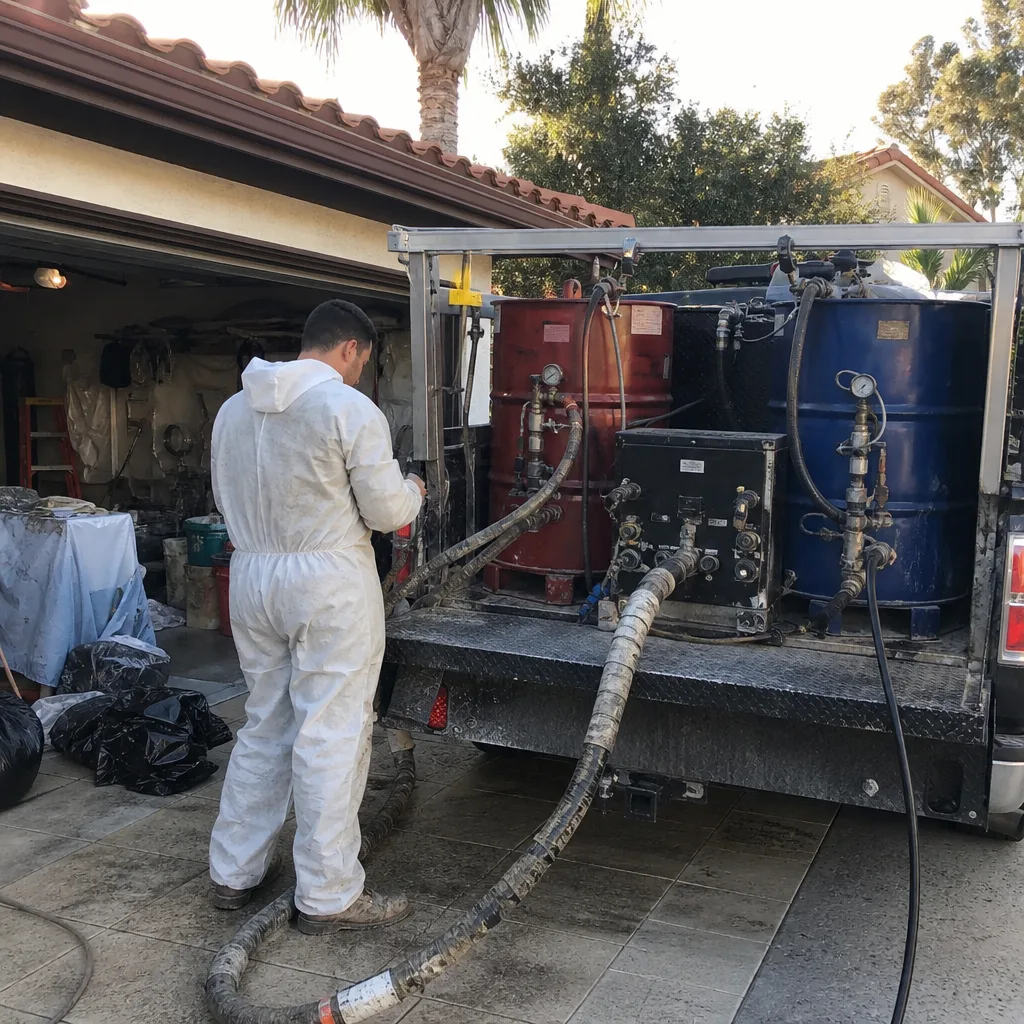
Spray foam answers the problem that batts and loose fill can’t fully solve: air movement. In Desert Hot Springs, wind-driven dust and large temperature swings push air through every crack, and closed-cell foam from Demilec gives you an air barrier and high R-value in one pass. Open-cell Icynene works well in interior walls for sound control. On geothermal homes with elevated humidity, closed-cell also helps manage moisture that would otherwise condense inside wall cavities. For pricing and application details, read Spray Foam Insulation in Desert Hot Springs.
What happens when you call
- 1
A real person answersNo phone trees — you reach a local pro.
- 2
You get an upfront price rangeHonest numbers before anyone is dispatched.
- 3
A background-checked tech heads outLicensed & insured, dispatched right away.
- 4
You approve before work beginsNothing starts until you say go.
Blown In Insulation in Desert Hot Springs
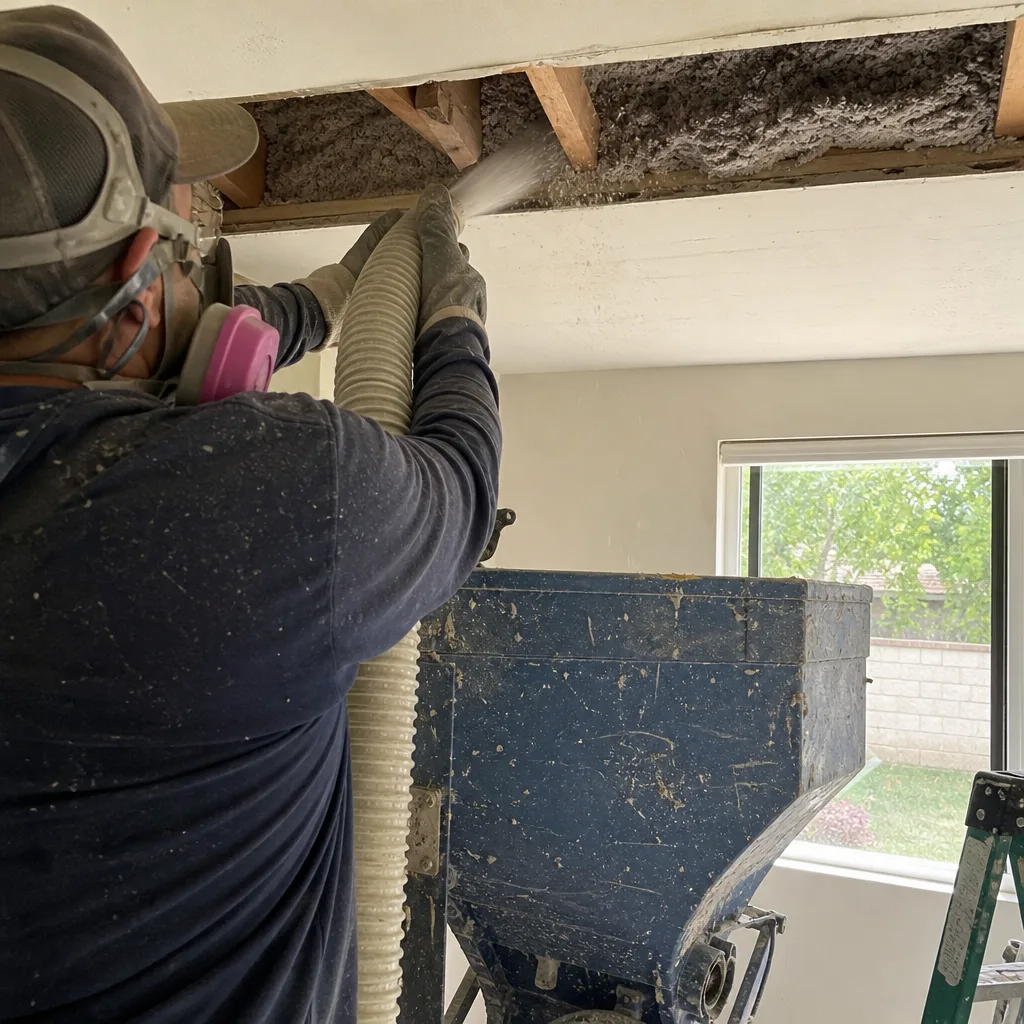
Blown in insulation is the workhorse retrofit for Desert Hot Springs homes because it’s the fastest way to get a settled, under-insulated attic back to proper depth without tearing out ceilings. We regularly find attics in the 92240 mobile home parks where cellulose has compressed to R-11 or worse, with bare spots along the eaves where wind and rodents got in. Re-leveling and air sealing first, then blowing fresh material to full depth, is the standard fix. Our crews work with fiberglass from Owens Corning and Johns Manville, as well as cellulose from GreenFiber, so we can match material to your attic’s condition rather than forcing one product. For a deeper look at the method and material options, see our Blown In Insulation page.
Cellulose Insulation
Signs you need it
Your attic has old, settled material that measures well below current code depth, or you want a recycled-content option with good coverage in hard-to-reach corners.
What it costs in Desert Hot Springs
Cellulose blown-in insulation in Desert Hot Springs typically runs $1.50 – $3.50 per square foot installed, depending on depth and prep work.
How we do it
We seal penetrations, mark target depth, and blow GreenFiber cellulose evenly across the attic floor, then verify final R-value with a depth gauge.
Blown In Attic Insulation
Signs you need it
Rooms under the attic feel noticeably hotter than the rest of the house in summer, and your cooling bills climb every year despite the same thermostat settings.
What it costs in Desert Hot Springs
Blown in attic insulation in Desert Hot Springs generally falls between $1.00 and $4.00 per square foot, with most attics landing around $1,800 – $5,500 total.
How we do it
We remove or level compromised material, air seal can lights and top plates, blow fiberglass or cellulose to the specified depth, and leave the attic clean.
Blown In Fiberglass Insulation
Signs you need it
Your attic has old batts that have been compressed or infiltrated by dust and rodents, and you want a material that holds its loft over time.
What it costs in Desert Hot Springs
Blown in fiberglass in Desert Hot Springs runs about $1.00 – $3.00 per square foot, with material from Owens Corning or Johns Manville specifying on the mid to upper end.
How we do it
We prep the attic floor, install vent baffles where needed, and blow fiberglass to a consistent depth across the full ceiling plane, checking with a depth gauge twice.
Loose Fill Insulation
Signs you need it
Your attic has irregular joist spacing or awkward framing that makes batts inefficient, or existing loose fill has settled below the tops of the joists.
What it costs in Desert Hot Springs
Loose fill insulation in Desert Hot Springs costs $1.50 – $4.00 per square foot installed, with final pricing set by target R-value and access difficulty.
How we do it
We clear debris and old material if necessary, seal bypasses, then blow loose fill to a measured, uniform depth that meets or exceeds code for this climate zone.
What Blown In Insulation Costs in Desert Hot Springs
| Item | Typical range in Desert Hot Springs |
|---|---|
| Blown in fiberglass (attic, R-38) | $1.00 – $3.00 per sq ft |
| Blown in cellulose (attic, R-38) | $1.50 – $3.50 per sq ft |
| Full attic prep, sealing, and blow-in | $1,800 – $5,500 typical home |
Is blown in insulation worth it in Desert Hot Springs?
Yes. In a climate where attic temperatures can exceed 140°F, bringing a settled attic from R-11 back to R-38 cuts cooling load meaningfully. Most Desert Hot Springs homeowners notice the difference within the first summer.
Can you blow insulation over old material in Desert Hot Springs?
Sometimes, but only after we check what’s underneath. In 92240 attics with rodent damage, moisture, or compressed material, we usually recommend removing or re-leveling the old layer before blowing new material on top. Call (877) 680-3557 and we’ll tell you what your attic actually needs.
Brands We Service in Desert Hot Springs
We stock and install insulation from eight manufacturers, and in Desert Hot Springs the most common materials we specify are GreenFiber cellulose, Owens Corning and Johns Manville fiberglass, and Demilec closed-cell foam. That breadth means we’re not steering you to one product because it’s all we carry. For the full roster and what each brand does best, see our brands.
Pricing for Insulation Company in Desert Hot Springs, CA
| Service | Typical range in Desert Hot Springs |
|---|---|
| Blown in fiberglass (attic) | $1.00 – $3.00 per sq ft |
| Blown in cellulose (attic) | $1.50 – $3.50 per sq ft |
| Loose fill insulation | $1.50 – $4.00 per sq ft |
| Spray foam (open-cell, per sq ft) | $0.50 – $2.00 per sq ft |
| Spray foam (closed-cell, per sq ft) | $1.00 – $4.50 per sq ft |
| Attic air sealing + insulation retrofit | $1,500 – $6,000 typical |
| Cellulose wall cavity retrofit | $1.50 – $3.50 per sq ft |
| Fiberglass batt replacement | $0.50 – $2.50 per sq ft |
| Mineral wool (Rockwool) batts | $1.00 – $3.00 per sq ft |
What pushes price up in Desert Hot Springs is prep: attics with rodent damage, settled material that needs removal, inaccessible framing, or geothermal-home humidity issues all add labor before new insulation goes in. We quote upfront and the price we give is the price you pay, no surprise line items after the fact.
Neighborhoods We Serve in Desert Hot Springs
We cover all of Desert Hot Springs, from the mobile home parks and older tracts around 92240 up through the newer builds in 92241. Our crews are in the area on a scheduled rotation and can usually get to most Desert Hot Springs jobs within a few days of estimate acceptance.
- Desert Hot Springs Highlands
- Mission Lakes
- Skyborne
- Desert Crest
- Wardman Heights
Service Area – Cities Near Desert Hot Springs
Orange County Insulation has served Desert Hot Springs since 2013, and we also work regularly in the surrounding communities. Homeowners in Desert Edge, CA, Sky Valley, CA, Garnet, CA, and Thousand Palms, CA get the same insulation-only specialization and brand access that Desert Hot Springs homeowners do. If you’re within a reasonable drive of the Coachella Valley, call us and we’ll tell you if we can reach your job.
Serving Desert Hot Springs, CA — Our Local Coverage Area
We’re based in the Desert Hot Springs area and know this community well. Use the map below to see our service coverage — if you’re nearby, we can almost certainly help.
FAQs About Insulation Company in Desert Hot Springs
Most retrofit insulation work in Desert Hot Springs doesn’t require a permit because it’s classified as a minor home improvement. That said, if you’re doing a full remodel or adding square footage, the insulation is folded into the broader building permit for that project. We can tell you which applies to your situation before we start.
We schedule Desert Hot Springs projects as part of a regular Coachella Valley rotation. Most estimate appointments happen within a week, and installation is typically scheduled within a few days of contract signing. Larger spray foam or full attic removal jobs may take a little longer to coordinate. Call (877) 680-3557 for current scheduling.
Yes. Mobile homes and manufactured housing make up a significant share of the 92240 housing stock, and we specify insulation for those structures differently than for site-built homes. The weight of the material, the ceiling cavity depth, and ventilation all factor in. We’ll match the material to the structure, not force a standard attic product into a cavity it wasn’t designed for.
What happens when you call
- 1A real person answersNo phone trees — talk to a local insulation pro.
- 2You get an upfront price rangeHonest numbers before anyone is dispatched. No surprises.
- 3A background-checked tech heads outLicensed & insured, typically within the hour.
- 4You approve before work beginsNothing starts until you say go.
What Desert Hot Springs Customers Say
"Told me the crawlspace didn't need doing and only the attic did. Half the job, half the money."
— Miguel Flores"He did a blower door test before and after and gave me the numbers. I like being able to see the difference rather than being told about it."
— Nia Robinson"Installed baffles at the soffits so the new insulation didn't block the ventilation, which the previous contractor apparently never considered."
— Mark Schaefer