
Insulation Company in Koreatown, CA
Koreatown’s housing stock makes blown in insulation more of a retrofit art than a standard install. Most buildings here went up between the 1920s and 1980s, and many got little or no insulation when they were built. What that means for homeowners and property managers is a mix of overheated upper-floor units, sound bleed between tenants, and attics so awkward that only specialized equipment gets the job done. Orange County Insulation has served Koreatown since 2013, and we only do insulation, which means we do it better. Call (877) 680-3557 for a straight answer about your building. This page is the deep-dive resource for what insulation work actually looks like in Koreatown, what it costs, and why the building type drives the method.
Why Koreatown Homes Are Different
Koreatown is dense. You see it on every block: a 1920s single-family house converted into three units, next to a mid-century dingbat apartment with stucco walls, next to a newer infill building. That mix matters for insulation. The dingbats along 6th and 8th streets are classic examples of what we deal with daily. They were built fast, framed with wood, wrapped in stucco, and left with almost no thermal barrier. The attics above each upper unit are often shallow, vented, and sealed off from neighbors. One ceiling cavity does not connect to the next, so blown-in insulation has to be done unit-by-unit, not as one big attic drop. In older converted homes, plaster walls hide the framing, and the space above the top-floor ceiling can be cramped or entirely inaccessible from inside the unit. Technicians frequently pull back a hatch and find knob-and-tube wiring still active, or vermiculite that has to be tested before anything gets installed over it. Those are not reasons to walk away. They are reasons to send someone who has seen it before. Koreatown’s climate also shapes the work: summers are hot and dry, cooling loads dominate, and the south-facing stucco walls on dingbats soak up heat all afternoon. The insulation has to address that specific thermal problem, not just meet a code minimum.
Our Main Koreatown Services
Most Koreatown calls come down to two services: attic insulation and spray foam. Both are covered in detail on their own pages, but here is what each one involves in this neighborhood.
Attic Insulation in Koreatown
Attic work in Koreatown often means working in old, compartmentalized spaces where access comes through a small closet ceiling hatch, not a pull-down stair. We see attics split by firewall separations between units, and we treat each section as its own job. The main goal is stopping heat from radiating down into upper-floor rooms during the long summer. We choose the material based on what is already up there, what the wiring situation looks like, and whether the space vents properly. For a full breakdown of materials, signs, and pricing, see our Attic Insulation in Koreatown page.
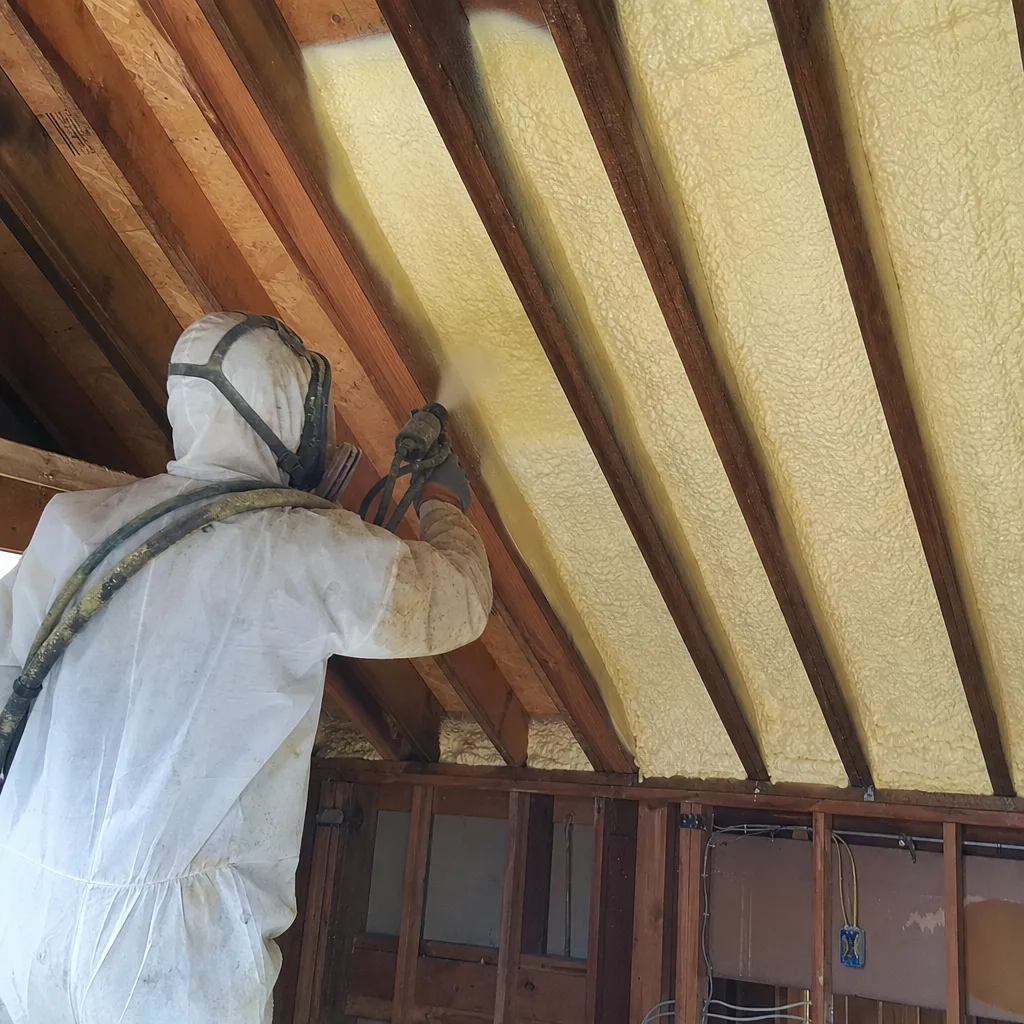
Spray Foam Insulation in Koreatown
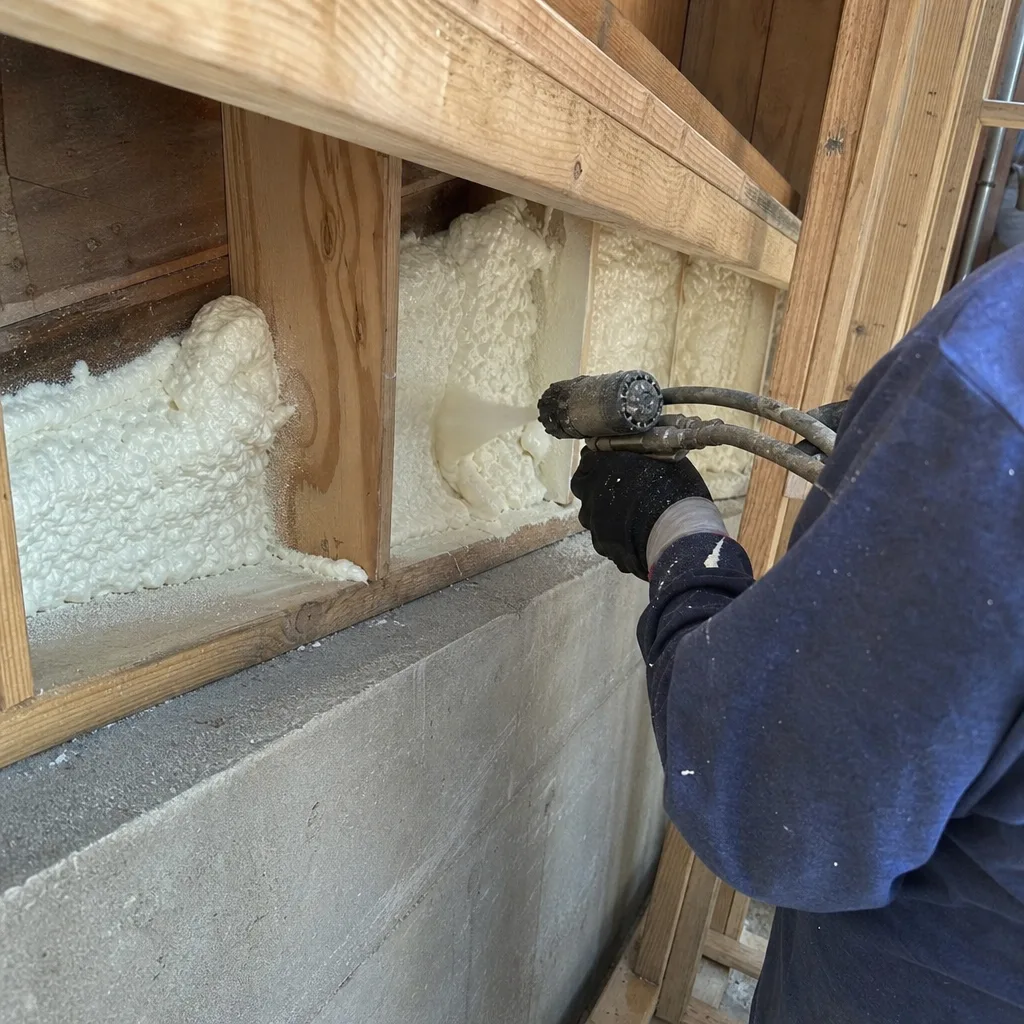
Spray foam earns its keep in Koreatown when air sealing matters as much as R-value. Older stucco buildings leak air around windows, rim joists, and plumbing penetrations, and open-cell foam fills those gaps while insulating at the same time. For walls in converted units where tenant sound transfer is a complaint, closed-cell foam adds both thermal and acoustic separation. We install both open-cell and closed-cell, backed by Icynene and Demilec. Details, costs, and what to expect are on the Spray Foam Insulation in Koreatown page.
What happens when you call
- 1
A real person answersNo phone trees — you reach a local pro.
- 2
You get an upfront price rangeHonest numbers before anyone is dispatched.
- 3
A background-checked tech heads outLicensed & insured, dispatched right away.
- 4
You approve before work beginsNothing starts until you say go.
Blown In Insulation in Koreatown
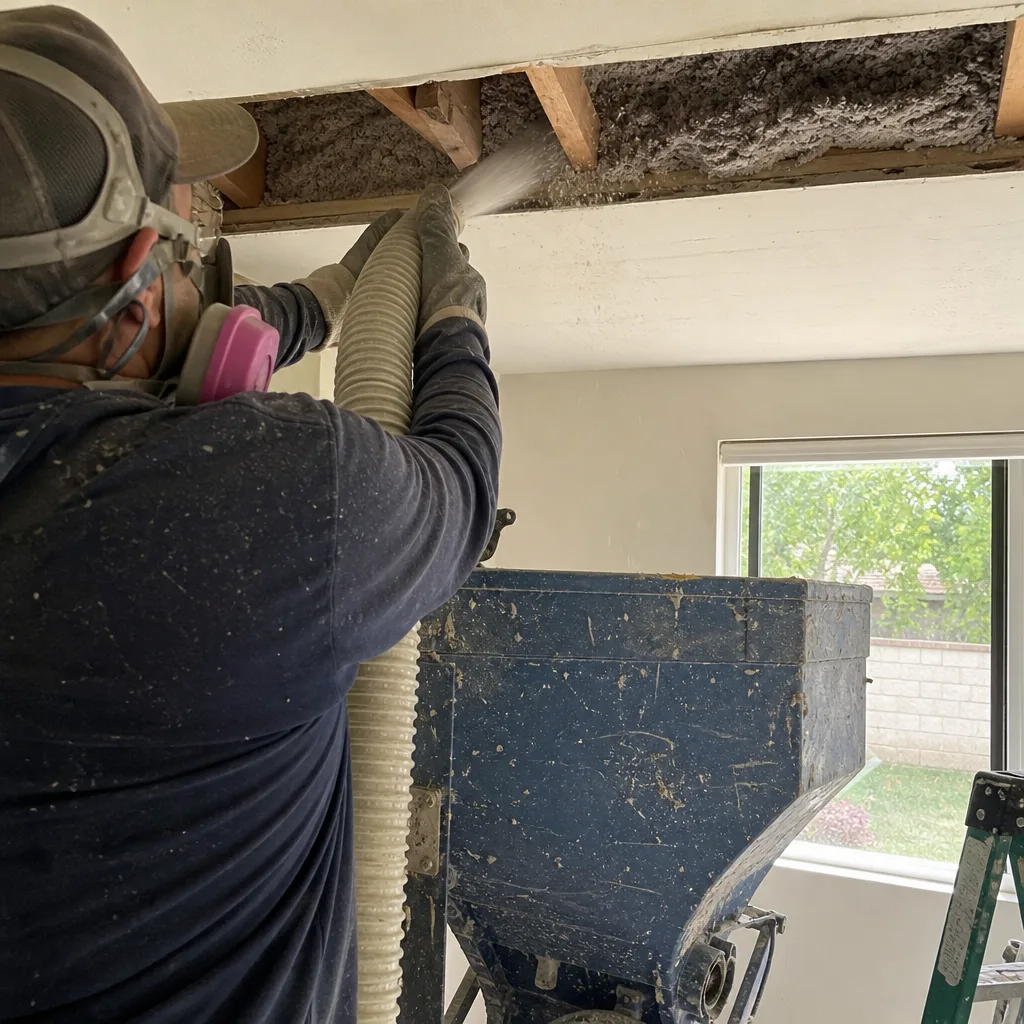
Blown in insulation is the workhorse for Koreatown attics, especially in older buildings where the ceiling cavity is shallow, irregular, or split between units. Loose material flows around existing framing, wiring, and ducts without requiring us to tear open walls or ceilings. In a city where most insulation jobs are retrofits in occupied buildings, that minimal disruption is everything. What makes blown in insulation uniquely useful in Koreatown is the unit-by-unit reality: each attic compartment gets treated as its own small project, and the material fills the shallow cavities that batts simply cannot. For a deeper look at how we approach this service everywhere we work, see our Blown In Insulation page.
Cellulose Insulation
Signs you need it
Rooms directly under the roof get hot by mid-afternoon while the thermostat says the rest of the unit is fine, or you can hear every footstep and conversation from the unit above.
What it costs in Koreatown
Expect roughly $1.20 to $2.20 per square foot installed, with denser application for sound control landing on the higher end.
How we do it
We run a hose into the attic cavity and blow the cellulose to the specified density, building up an even layer across every compartment without removing the existing material.
Blown In Attic Insulation
Signs you need it
Your top-floor ceiling feels warm to the touch in summer, or you see old, settled insulation that sits below the top of the ceiling joists and leaves ducts exposed.
What it costs in Koreatown
Most blown in attic jobs in Koreatown run between $1,800 and $3,200 for a typical converted-home attic or dingbat unit attic.
How we do it
We inspect the attic hatch by hatch, air-seal visible gaps, then blow the material across the full ceiling plane until it reaches the R-value the space can support.
Blown In Cellulose Insulation
Signs you need it
You want a recycled-content material with good sound-dampening properties, and your upper-floor rooms overheat while your AC runs constantly in summer.
What it costs in Koreatown
Budget $1.20 to $2.20 per square foot installed, depending on the depth needed and how many separate attic compartments the building has.
How we do it
We blow GreenFiber cellulose at the coverage rate that hits the target R-value, including into the tight perimeter edges where heat leaks most.
Blown In Fiberglass Insulation
Signs you need it
You want a lighter-weight loose fill material, or you have an attic with existing fiberglass batts that settled and left bare spots across the ceiling.
What it costs in Koreatown
Installed pricing for blown in fiberglass in Koreatown typically runs $1.00 to $1.80 per square foot.
How we do it
We run our blowing hose from the truck to the attic access and apply the fiberglass in a consistent depth, covering the joists and edges where batts failed.
Loose Fill Insulation
Signs you need it
Your attic has odd angles, low clearances, or mechanical chases that make rolling out batts impractical or impossible.
What it costs in Koreatown
Loose fill in Koreatown generally lands at $1.00 to $2.20 per square foot installed, with the material choice driving the range.
How we do it
We choose the loose fill material that fits the attic’s condition and the building’s needs, then blow it into every reachable cavity for full coverage.
What Blown In Insulation Costs in Koreatown
| Item | Typical range in Koreatown |
|---|---|
| Blown in fiberglass (per sq ft) | $1.00 – $1.80 |
| Blown in cellulose (per sq ft) | $1.20 – $2.20 |
| Typical attic job (installed) | $1,800 – $3,200 |
Does blown in insulation work in shallow Koreatown attics?
Yes. Loose fill conforms to whatever space exists, including the shallow vented attics above dingbat units. We adjust depth and density to what the cavity can physically hold, and we do not force material where airflow must remain open.
Can blown in insulation reduce noise between Koreatown units?
Cellulose does help with sound transfer when applied at higher density in ceiling and wall cavities. It will not make a converted house silent, but it measurably softens footsteps and voice bleed between floors. Call (877) 680-3557 and we will tell you honestly what to expect in your specific building.
Brands We Service in Koreatown
We stock and install GreenFiber cellulose, Owens Corning and Johns Manville fiberglass, and Knauf products across our Koreatown jobs. Materials are staged at our Orange County yard and arrive on the truck matched to your specific project, so there is no supplier runaround on install day. The full roster is on our brands page.
Pricing for Insulation Company in Koreatown, CA
| Service | Typical range in Koreatown |
|---|---|
| Blown in fiberglass (per sq ft) | $1.00 – $1.80 |
| Blown in cellulose (per sq ft) | $1.20 – $2.20 |
| Typical blown in attic job | $1,800 – $3,200 |
| Spray foam (open-cell, per sq ft) | $2.00 – $4.00 |
| Spray foam (closed-cell, per sq ft) | $3.00 – $6.00 |
| Attic air sealing with spray foam | $500 – $1,500 |
| Attic insulation removal | $2.50 – $5.00 |
Prices in Koreatown climb with difficulty of access: attic hatches in closets, compartmentalized ceiling cavities, and occupied buildings where we work around tenants and furniture all add time. We give a fixed, upfront number before any work starts, and that number does not move unless the scope changes.
Neighborhoods We Serve in Koreatown
We work throughout the 90005 ZIP and the surrounding blocks. Most of our Koreatown work clusters in the denser residential stretches, where dingbat apartments and converted houses sit side by side, but we cover every part of the neighborhood.
- Wilshire Park
- Hancock Park
- Country Club Park
- Little Bangladesh
- Harvard Heights
Typical response for a Koreatown estimate is two to three business days, and we schedule installs around tenant access when the building is occupied.
Service Area – Cities Near Koreatown
Our service area reaches beyond Koreatown into the surrounding neighborhoods and cities. If you are in Los Angeles, CA, Echo Park, CA, Silver Lake, CA, or Hollywood, CA, the same crew and the same upfront pricing approach apply. We schedule Koreatown jobs alongside these neighboring areas weekly.
Serving Koreatown, CA — Our Local Coverage Area
We’re based in the Koreatown area and know this community well. Use the map below to see our service coverage — if you’re nearby, we can almost certainly help.
FAQs About Insulation Company in Koreatown
Estimates in Koreatown typically happen within two to three business days of your call. Installation scheduling depends on the building’s access and tenant coordination, but we will give you a firm install date at the time of the estimate, not a vague window.
Most retrofit insulation in existing buildings does not require a permit, but dingbat apartments with shared walls or fire separations sometimes trigger questions from the city. We tell you upfront if your building falls into that category and we handle the paperwork if it does.
Yes, that is the standard for our Koreatown work. Blown in insulation goes through a hose from outside or from a hallway, so there is no gutting of walls or ceilings. Spray foam requires short access to the area being sprayed, and we schedule unit-by-unit to keep disruption to a single day or less per space.
Stop guessing why your energy bills are high, call (877) 680-3557 and we will tell you exactly what is going on in your Koreatown building and what it takes to fix it. Estimates are free, and the number we give you is the number you pay.
What happens when you call
- 1A real person answersNo phone trees — talk to a local insulation pro.
- 2You get an upfront price rangeHonest numbers before anyone is dispatched. No surprises.
- 3A background-checked tech heads outLicensed & insured, typically within the hour.
- 4You approve before work beginsNothing starts until you say go.
What Koreatown Customers Say
"Told me the crawlspace didn't need doing and only the attic did. Half the job, half the money."
— Miguel Flores"He did a blower door test before and after and gave me the numbers. I like being able to see the difference rather than being told about it."
— Nia Robinson"Installed baffles at the soffits so the new insulation didn't block the ventilation, which the previous contractor apparently never considered."
— Mark Schaefer