GreenFiber Attic Insulation in Rancho Santa Margarita: A Homeowner’s Guide
GreenFiber attic insulation in Rancho Santa Margarita most often costs between $1,800 and $3,400 for a typical 1,400-square-foot attic blown to R-38, including professional installation. That’s roughly 15 to 25 percent less than fiberglass batts at the same R-value, and the material itself is just recycled newsprint treated with borate. The catch: those savings only materialize if the install hits the right density, which is where most Rancho Santa Margarita attic jobs go sideways.
If you’d rather skip the details and get a straight quote, call (877) 680-3557 and we’ll walk you through it. Otherwise, here’s what the bag doesn’t tell you.
What GreenFiber Actually Is (And Why It Works in RSM’s Climate)
GreenFiber is loose-fill cellulose insulation made from recycled newsprint, pulverized into a fluffy, fibrous material and treated with boric acid. The borate does two jobs: it makes the fibers fire-resistant, and it makes them unpalatable to insects. That’s the whole product. Wood fiber and borate. There’s no proprietary chemistry, no fiberglass binders, nothing that off-gasses.
What makes it interesting for Rancho Santa Margarita specifically is how the material handles moisture. GreenFiber is vapor-permeable, which means it lets water vapor pass through rather than trapping it. In coastal humidity zones like Newport Beach or San Clemente, that permeability can work against you if there’s an air leak pulling damp air into the attic. But RSM’s inland, semi-arid climate means attics here stay dry most of the year, with humidity spiking only during Santa Ana-adjacent weather patterns and winter rains. In this environment, a vapor-permeable insulation that dries quickly if it ever does get damp is a genuine advantage, not a liability.
Compare that to fiberglass, which also lets vapor pass but has a nasty habit of holding onto moisture in its air pockets when humid air condenses. In RSM’s dry heat, GreenFiber tends to perform more consistently year-round.
The Density Problem: What the Bag Says vs. What You Actually Get
The GreenFiber bag shows a chart: at X inches, you get R-38. At Y inches, R-44. Simple enough, except those numbers assume a settled density of about 1.5 pounds per cubic foot. Blow the material in too loose, and you’re not getting R-38 at 10.4 inches. You’re getting R-30. Or worse.
We’ve crawled through attics in Rancho Santa Margarita neighborhoods like Trabuco Canyon, Dove Canyon, and Robinson Ranch where a DIY install or a rushed contractor job had settled to half its intended depth within two years. Cellulose settles more than fiberglass, and it settles fastest when it’s blown too fluffy. That settling is exactly what the stated density spec is designed to prevent.
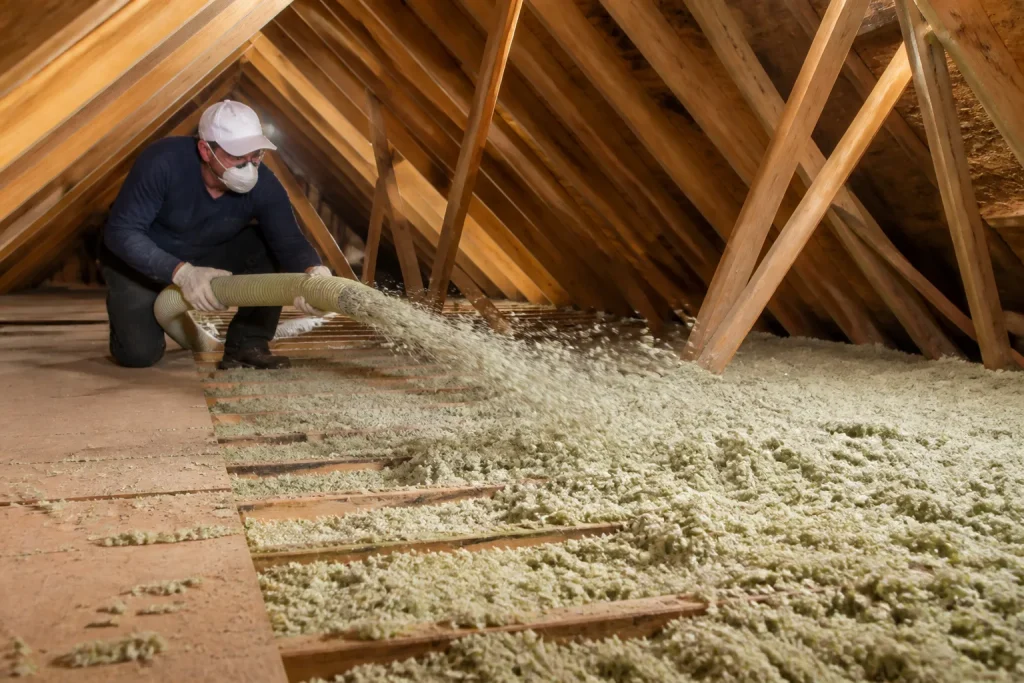
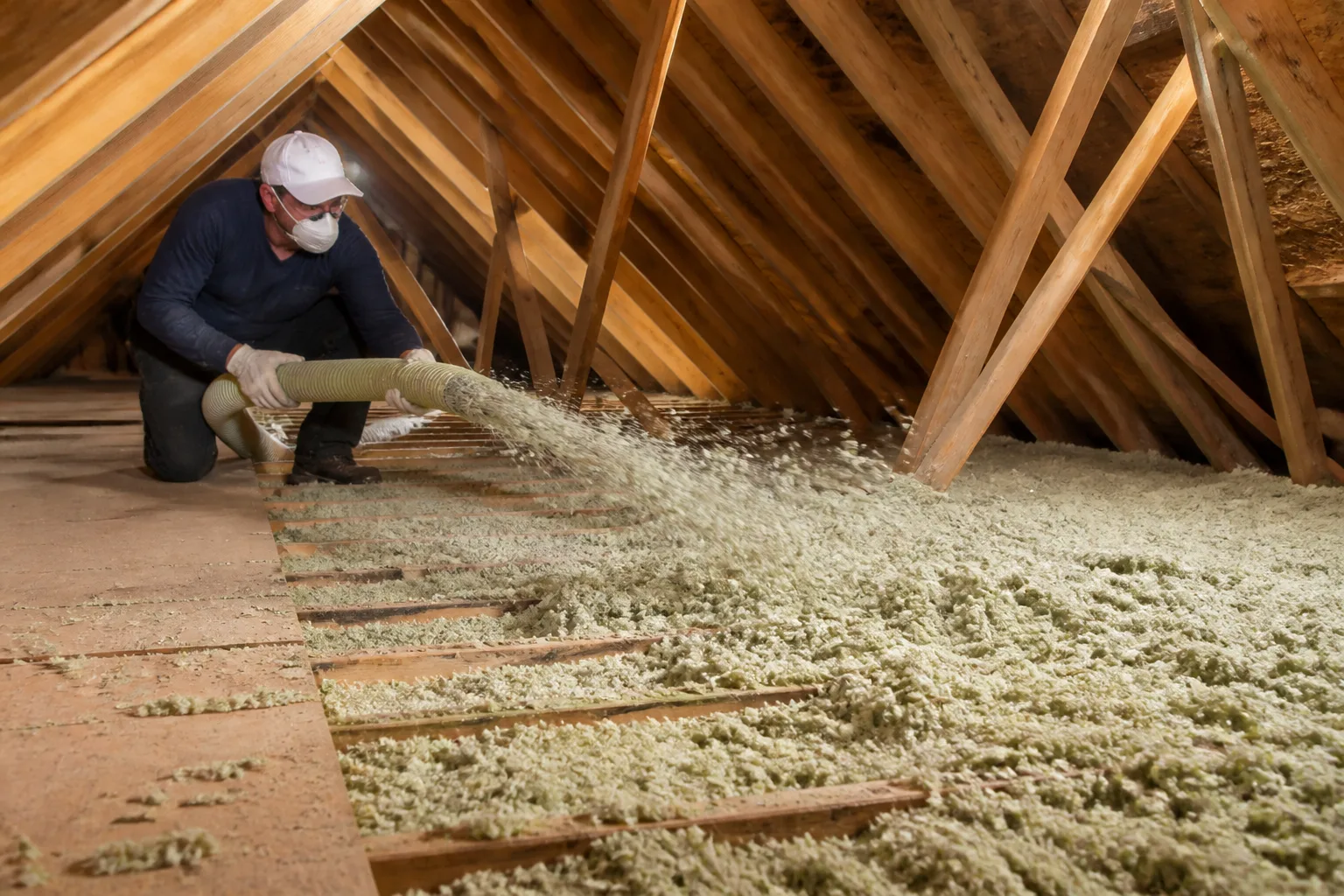
Here’s what a properly installed GreenFiber attic should look like in Rancho Santa Margarita:
- Depth after settling: The bag’s coverage chart assumes you’re installing to allow for settlement. A pro blowing R-38 installs it deeper than 10.4 inches knowing it will settle back to the target depth.
- Density after blowing: The installed open-blow density should be at or above 1.5 lb/ft³. This is what gives the R-value chart its accuracy and prevents the material from shifting over time.
- Ruler test: After the job settles, you should be able to stick a ruler into the insulation and measure the depth. In RSM, a properly installed R-38 attic typically measures 10.4 to 11 inches after settlement, and it should feel springy, not loose and fluffy.
- Coverage: The same depth everywhere, no bare spots or thin patches around the eaves.
If you’re checking a GreenFiber attic in Rancho Santa Margarita and the depth reads 7 inches in one corner and 10 inches in another, that’s an installer who didn’t know what they were doing. The density spec isn’t optional. It’s the difference between paying for R-49 and getting R-32.
GreenFiber vs. Fiberglass in Rancho Santa Margarita’s Afternoon Heat
Here’s something most insulation guides miss: GreenFiber doesn’t just resist heat transfer, it also stores it. Cellulose has higher thermal mass than fiberglass. In practical terms, that means when RSM’s daytime highs push into the mid-90s and your attic radiates heat downward, a dense layer of cellulose absorbs and briefly holds some of that heat before releasing it later. Fiberglass, with its lower mass, passes heat through more readily.
What does that mean for your home? On a typical August afternoon in Rancho Santa Margarita, an attic insulated with properly dense GreenFiber tends to lag the outdoor temperature longer than a fiberglass attic does. The peak indoor temperature arrives later in the evening and usually peaks lower. Some homeowners report the difference feels like their AC running less during the 4 p.m. to 7 p.m. window, which is exactly when electricity prices are highest in Orange County. We’re not going to promise you’ll cut your cooling bill by some magic percentage. But the thermal lag is real, and it’s one of the quiet advantages of cellulose that rarely shows up in a product brochure.
There’s one caveat: dense-pack cellulose in walls (which is a different install from attic open-blow) gives you the strongest version of this thermal mass effect. An open-blow attic job still has less thermal mass than a dense wall pack. But even at attic densities, GreenFiber outperforms loose-fill fiberglass on this front.
Does the Borate Treatment Actually Keep Pests Out of Your RSM Attic?
GreenFiber treats its material with boric acid, and boric acid is a legitimate insect deterrent. Termites won’t eat through borate-treated cellulose. Carpenter ants avoid it. Cockroaches don’t nest in it. In Rancho Santa Margarita, where ants are a year-round nuisance and termites are a known problem in many neighborhoods near the Oso Creek corridor, that’s a meaningful perk.
But here’s the honest answer to whether it stops rodents: no, not by itself. Rats and mice don’t care about boric acid. They’ll tunnel through GreenFiber just as happily as they’ll tunnel through fiberglass. The borate reduces insect pressure and makes the insulation inhospitable to termites, which is a real benefit in RSM. But if you’ve got a gap in your eave vents or an open soffit seam, rats will find their way into any insulation on the market.
That’s why the air sealing step matters as much as the material choice. Before we blow GreenFiber into any Rancho Santa Margarita attic, we seal the bypasses: the top plates, the plumbing penetrations, the recessed light housings, the chase that runs down from the attic to the garage. Sealing those entry points does more to keep rodents out than any fiber treatment ever will. We’ll take the borate as a nice-to-have defense against insects, but we tell every RSM homeowner the same thing: GreenFiber deters bugs. Sealing deters rodents.
GreenFiber vs. Fiberglass Batts vs. Loose-Fill Fiberglass: Real Numbers for a Rancho Santa Margarita Attic
We’re going to put some honest pricing on the table. These are rough ranges for a 1,400-square-foot attic in Rancho Santa Margarita, blown to R-38, including labor and the insulation itself, with air sealing excluded from all three so you’re comparing apples to apples:
- GreenFiber cellulose, R-38: $1,800 to $2,800. The material costs less per square foot than most competing products, and the install is fast. Density is the wild card, so choosing a contractor who actually measures density after blowing matters more than the brand.
- Loose-fill fiberglass, R-38: $2,000 to $3,100. The material is comparable in price to cellulose, but it tends to perform worse in RSM’s hot attics because it lacks cellulose’s thermal mass and it settles more unevenly. It also loses R-value as the attic gets hotter, which is exactly the condition you’re trying to protect against.
- Fiberglass batts, R-38: $2,400 to $3,600. Batts are the most expensive of the three in most RSM attics, and they’re also the most prone to installation error: gaps around joists, compression in tight spots, and seams that don’t butt together cleanly. A perfectly installed batt job works well. Most batt installs aren’t perfect.
If you want to bring the budget down, you can also consider a hybrid approach: air sealing plus GreenFiber, which is usually the best value-per-dollar option for Rancho Santa Margarita homes that have older, settled insulation. For reference, our Attic Insulation in Rancho Santa Margarita work almost always starts with air sealing, because no material on the planet makes up for an attic that leaks conditioned air into the outdoors all day.
One more thing: if you’re comparing bids and one contractor comes in at $1,300 for a 1,400-square-foot R-38 GreenFiber attic, ask them how they’re verifying density. If they can’t answer, keep looking. A cheap cellulose job that settles to R-25 in a year is the most expensive insulation you’ll ever buy.
Three Installation Methods: Which One Fits Your Rancho Santa Margarita Home?
We stock and install across three methods, and each has a clear place. We never steer a homeowner toward the method that’s easiest for us to install. We recommend the one that makes sense for the house.
- Open-blow attic insulation (GreenFiber cellulose or loose-fill fiberglass): The most common choice in RSM, especially for attics with existing insulation that needs a top-up or full replacement. Fast to install, covers awkward spaces evenly, and works well with air sealing underneath.
- Spray foam insulation: Open-cell from Icynene or closed-cell from Demilec. Closed-cell spray foam is the only option that insulates, air seals, and adds structural strength in one step. It’s more expensive, but for attics with ductwork in the unconditioned space or homes with severe heat gain, it’s often the right call. Read our Spray Foam Insulation in Rancho Santa Margarita page for the full breakdown on when spray foam beats blown-in.
- Blown-in insulation (wall cavities and hard-to-reach attics): The same material, installed into enclosed cavities rather than blown across an open attic floor. In RSM homes with settled or absent wall insulation, this is often the missing piece that attic work alone won’t fix. See our Blown In Insulation in Rancho Santa Margarita page for details.
We also install fiberglass batts and mineral wool from Owens Corning and Rockwool when those materials genuinely fit the situation, such as cathedral ceilings or soundproofing between floors. But for a standard RSM attic floor, GreenFiber cellulose is the product we recommend most often. It’s the best combination of cost, thermal performance, and environmental profile for the climate we live in. Eight brands. Three methods. One specialty.
When to Call a Pro (And When to Walk Away)
Blowing cellulose is not a weekend DIY job. The machines you rent from the big-box store don’t calibrate the same way the commercial units do, which means you’re guessing at density. And if you don’t air seal first, you’re spending a Saturday covering your bypasses with a nice new blanket of cellulose that still lets hot air pour through. Most DIY GreenFiber attics in Rancho Santa Margarita end up at R-28 to R-30 when the homeowner thinks they got R-38, and they paid full price for the material anyway.
Here are the signs you should call a professional:
- Your attic has old, compacted insulation mixed with gaps and bare spots.
- You can feel heat radiating down into your living room on summer afternoons even with the AC running.
- Your energy bills have crept up year over year while the thermostat stays at the same setting.
- You see rodent droppings or ant trails in the attic.
- You want the job done once, with the density measured and documented.
We only do insulation. That’s not a slogan, it’s how we work. Every estimate we give in Rancho Santa Margarita, every crew member we send, every warranty call we answer centers on insulation. There’s no roofing department pulling our attention, no HVAC crew waiting to upsell you a new unit. The right material for your house, not the easiest one for us to install. If you’re thinking through your options, our Orange County Insulation home page walks through the full range of materials, and we’re happy to talk through which one fits your attic specifically.
The Bottom Line
GreenFiber cellulose is one of the smartest attic insulation choices for Rancho Santa Margarita homes: it’s cost-effective, performs well in our dry inland climate, and carries a borate treatment that gives you a real edge against termites and ants. But the product only delivers on its R-value promise when it’s installed at the correct density by someone who understands that spec. The bag’s coverage chart is not a guarantee. It’s a target that only a properly calibrated, professionally run job actually hits.
If you’re in Rancho Santa Margarita and want to know what your attic actually needs, call Orange County Insulation at (877) 680-3557. We’ll come out, look at what’s up there, measure what’s already installed, and give you a straight answer with a free estimate. No upsell. No guesswork. Just insulation.
Frequently Asked Questions
For a typical 1,400-square-foot attic in Rancho Santa Margarita, GreenFiber blown to R-38 costs between $1,800 and $2,800 with professional installation, not including air sealing. The range depends on current insulation levels, attic access, and whether old material needs removal. Call (877) 680-3557 for an exact quote on your attic.
The Department of Energy recommends R-38 for most attic spaces in Orange County, and R-38 is the minimum we recommend in Rancho Santa Margarita given our hot summer afternoons. Many RSM homeowners go to R-44 or R-49 when replacing old insulation, opting for more depth while the attic is already being air sealed.
Yes, the borate treatment in GreenFiber makes the material unpalatable to termites, carpenter ants, and other wood-destroying insects. It does not deter rodents, which is why sealing entry points before blowing insulation is essential in any RSM attic. Think of borate as an insect defense, not a rodent defense.
GreenFiber cellulose typically lasts 30 to 40 years in a Rancho Santa Margarita attic when installed at proper density and protected from roof leaks. If the material gets soaked by a leak or wasn’t installed to density spec, it can compact and lose R-value within a few years, which is why density verification matters from day one.
Written by the team at Orange County Insulation, serving Rancho Santa Margarita since 2013.
Need Insulation Help?
Call Orange County Insulation — licensed & insured, here with fast after-hours help in Orange.
(877) 680-3557