Fast, Reliable Attic Insulation Across Whittier
If your Whittier home bakes upstairs every summer and won’t hold heat on those cool foothill nights, the problem usually isn’t your HVAC – it’s what’s sitting, or missing, above your ceiling. Attic insulation in Whittier homes has to work harder than in most of the metro because the same assembly fights 95-105°F summer radiant heat and winter nights dipping into the 40s near Turnbull Canyon. That dual swing is the exact reason we treat every Whittier attic as its own job, not a template. Call (877) 680-3557 for a free estimate, and we’ll tell you exactly what’s happening up there – and what actually fixes it.
Key takeaways for Whittier homeowners:
- Attic insulation issues here are driven by radiant heat gain in low-pitch and flat-roof homes, not just winter heat loss.
- Older Whittier housing stock – 1920s bungalows through 1970s tract homes – often has original or collapsed insulation.
- A radiant barrier alone won’t fix it. Batts alone won’t either. The right fix pairs ventilation, air sealing, and the correct R-value, in that order.
- We only do insulation. That’s all we install, all we diagnose, and all we warranty.
Why Orange County Insulation Is Whittier’s Preferred Attic Insulation Company
Whittier homeowners call us because the first thing we do is look at the roof pitch, the vent path, and what the existing insulation was supposed to do – not just how many inches are up there. Our Attic Insulation crews work on the flat and low-pitch roofs common along the bluffs near Turnbull Canyon and the Whittier Hills, where marginal ventilation turns a standard attic into an oven by 2 p.m. That’s local pattern recognition, not guesswork. We know what a 1940s Uptown bungalow needs versus a mid-century tract home in east Whittier, and we spec the job accordingly.
We carry eight manufacturer lines – until we find the right one for your attic and your roof assembly, not whatever one supplier happens to stock this month. That roster includes Owens Corning, Johns Manville, Knauf, Rockwool, CertainTeed, Icynene, Demilec, and GreenFiber. For Whittier specifically, the conversation is almost always about radiant barriers, ventilation, and upgrading R-value without creating a moisture trap. We lead with that because it’s what keeps working through summer.
Whittier customers also know we arrive prepared to do the job in one trip. We stock the materials for common local problem sets – sagging batts in low-pitch attics, thin original insulation in prewar bungalows, and top-ups over older blown-in fiberglass – so we’re not burning your afternoon running back and forth. We only do insulation. That narrow focus is why we can talk honestly about what your attic needs and what it doesn’t.
Radiant Barrier in Whittier
Radiant Barrier in Whittier is the difference between fighting the afternoon sun and just living under it. A radiant barrier is a reflective material installed along the underside of your roof deck, and its job is to bounce radiant heat back outside before it ever reaches your insulation or your living space—similar to what you’d expect from Reflectix repair in Whittier. In Whittier, where low-pitch and flat-roof homes along the foothills trap attic heat with minimal ventilation, this matters more than adding another six inches of fiberglass. A properly installed radiant barrier can cut attic temperatures by 20-30°F on a 100°F day, which directly reduces the load on your AC and makes upstairs rooms usable by late afternoon. For Whittier homes, we typically pair a radiant barrier with blown-in insulation rather than installing it as a standalone fix, because the two do different jobs.
What a Radiant Barrier Job Involves
The first step is inspecting the underside of your roof deck and the existing vent path. On Whittier’s low-pitch roofs, there may be only a few inches of clearance between the deck and the insulation, so radiant barrier material gets stapled or installed directly to the deck rather than draped over the rafters. We also check whether old batts have collapsed into the soffit vents and blocked airflow – if they have, no radiant barrier will perform the way it should. A typical Whittier radiant barrier installation runs $1,500 to $3,200 depending on attic size and roof geometry, and it’s usually installed correctly in one day.
When Whittier Homeowners Actually Need It
You need a radiant barrier if your upstairs rooms stay hot hours after the sun goes down, or if your attic is consistently 130°F or hotter on summer afternoons. Homes near the Whittier Hills and Turnbull Canyon – where flat and low-pitch roofs hold heat with almost no vent path – are the strongest candidates. If your attic has decent ventilation but old, thin insulation, adding R-value may be the better first move. We’ll tell you which one applies to your roof, because guessing gets expensive.
Attic Cleaning Services in Whittier
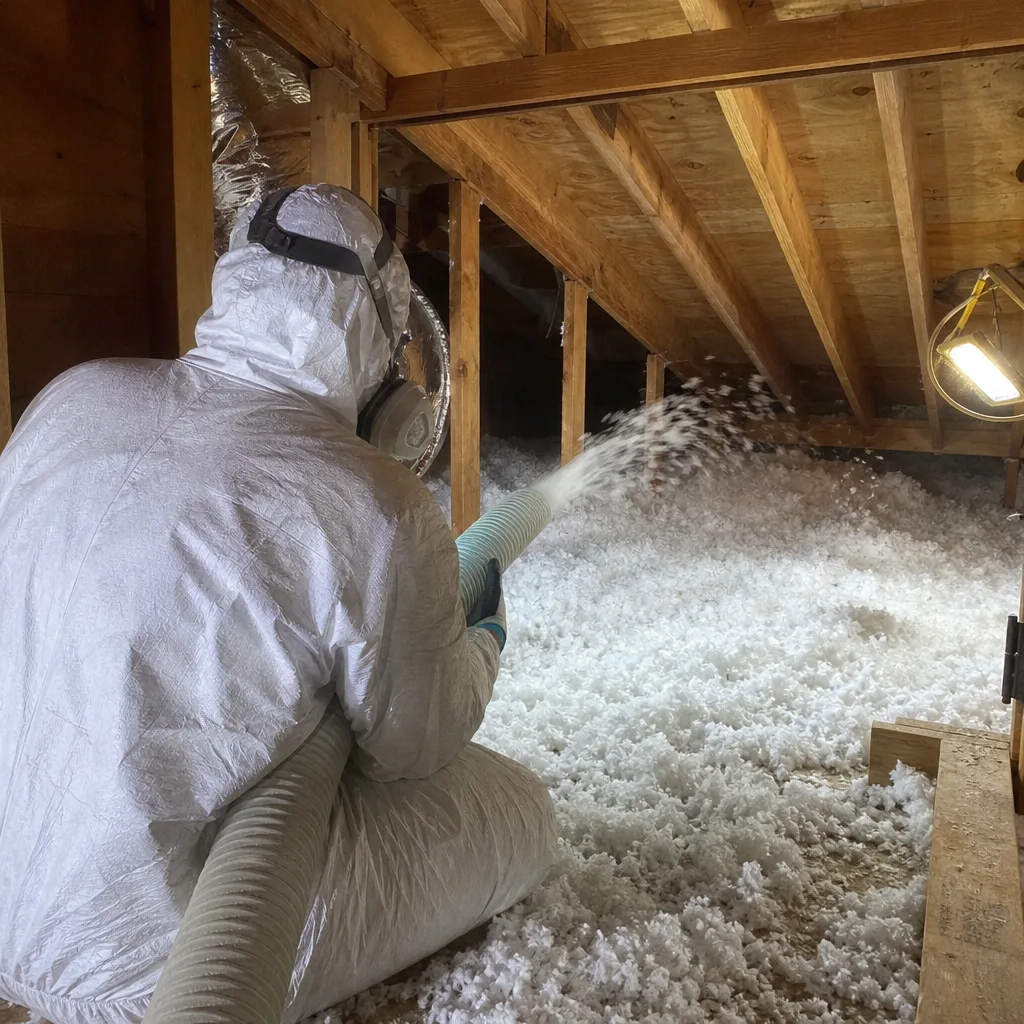
Attic Cleaning Services in Whittier start with removing the debris and failed insulation that make every other insulation upgrade a waste of money. Whittier’s aging housing stock – bungalows from the 1920s-40s near Uptown and the College area, plus mid-century tract homes across the east side – has had decades for dust, rodent activity, and disintegrating batt fibers to accumulate above the ceiling. Cleaning means removing old, compromised insulation, vacuuming out debris, sanitizing where needed, and giving you a clean, stable base before new material goes in. Attic cleaning in Whittier typically runs $800 to $1,800, and it’s the step that prevents us from blowing new insulation over a mess that’s already failing.
Why Cleaning Comes Before Insulating
Spraying or blowing new insulation over a contaminated attic seals in the problem and shortens the life of the new material. Old rodent droppings, dust-caked batts, and moisture-damaged fibers all compromise air quality and performance. In Whittier’s foothill homes, we also find collapsed batt insulation that’s blocking soffit vents – cleaning restores the vent path so the next insulation job actually has airflow to work with.
What a Cleaning Visit Covers
A standard cleaning visit includes removal of old insulation by commercial vacuum, debris removal, spot sanitizing of bacterial or pest residue, and a final inspection of the ceiling plane for air leaks before we recommend the next step. Most Whittier attics clean out in a single day, and we can transition directly into a top-up or full replacement if the structure is sound.
What happens when you call
- 1
A real person answersNo phone trees — you reach a local pro.
- 2
You get an upfront price rangeHonest numbers before anyone is dispatched.
- 3
A background-checked tech heads outLicensed & insured, dispatched right away.
- 4
You approve before work beginsNothing starts until you say go.
Trusted Brands We Service in Whittier
The brands we service in Whittier are the same ones we stand behind: Owens Corning, Johns Manville, Knauf, Rockwool, CertainTeed, Icynene, Demilec, and GreenFiber. That’s eight lines under one roof, so your home gets the right material – spray foam where air sealing is the priority, mineral wool where fire resistance and sound control matter, cellulose where you want recycled content, and fiberglass batt or blown-in where budget and roof geometry point that way. We keep Whittier-specific needs in mind when recommending a brand: a minimally vented flat roof near the hills may call for an air-sealing open-cell Icynene plus a radiant barrier, while a 1960s tract home with a standard pitch often does perfectly well with blown-in Owens Corning attic insulation. One specialty, not a contractor guessing across trades.
Common Attic Insulation Problems We See in Whittier Homes
- Sagging or collapsed batt insulation under low-pitch roofs: When a flat or barely-pitched roof over a foothill home heats up, old fiberglass batts lose their loft and fall away from the ceiling plane. We see this constantly along Turnbull Canyon Road and the Whittier Hills, where attic ventilation is minimal and the heat load is extreme.
- R-value added without a radiant barrier or ventilation fix: Treating Whittier like a cold-climate market means piling on insulation while the 95-105°F radiant heat gain goes untouched. The attic stays hot, the AC still runs, and the homeowner wonders why the “upgrade” didn’t work.
- Knob-and-tube-era wiring and air gaps in prewar bungalows: Homes from the 1920s-40s near Uptown and College/Mar Vista often have old wiring that must be assessed before we blow insulation over it, plus leaking ceiling planes that make new insulation work at a fraction of its rated R-value. Sealing and safe coverage are part of the job, not an extra.
- Blocked soffit vents from decades of dust and collapsed material: Even when a Whittier attic has the right amount of insulation, the vent path is often buried. No radiant barrier, no new insulation, and no vent path means the system underperforms every summer.
Pricing for Attic Insulation in Whittier, CA
Here’s what Whittier homeowners should expect to pay. Blown-in attic insulation runs $1,800 to $4,500 for a typical 1,200-1,800 sq ft home, depending on depth and whether we’re topping up or starting clean. Attic batt insulation is $1,400 to $3,800, with mineral wool like Rockwool on the higher end. Attic insulation top-up over existing, sound material runs $900 to $2,500. Full attic insulation replacement, including removal of old material and air sealing, runs $2,800 to $7,000. Radiant barrier installation adds $1,500 to $3,200. Your roof pitch, attic access, and whether old insulation needs extraction are the biggest cost movers. Every quote is free and specific to your house.
The most expensive mistake we see is paying for more insulation when the real issue is a radiant heat gain problem on a flat-roof foothill home. We’ll tell you when batts are all you need, when a radiant barrier is the better buy, and when both make sense. Call (877) 680-3557 and we’ll put a real number on your attic.
We Also Serve Cities Near Whittier
Our insulation crews work regularly in South Whittier, West Whittier-Los Nietos, East La Mirada, and Santa Fe Springs, and we know how the housing stock shifts across city lines. If you’re in one of those neighboring communities, the same diagnostics and the same eight-brand roster apply. We serve all of Whittier and the surrounding east San Gabriel Valley corridor, from Uptown bungalows to foothill custom homes.
Serving Whittier, CA — Our Local Coverage Area
We’re based in the Whittier area and know this community well. Use the map below to see our service coverage — if you’re nearby, we can almost certainly help.
FAQs About Attic Insulation in Whittier
It comes down to roof pitch, vent path, and what direction your home faces. Whittier homes on the bluffs and near Turnbull Canyon are often built with low-pitch or flat roofs that have minimal attic ventilation, so the attic has no way to shed the 100°F-plus heat that radiates through the roof deck. Your neighbor may have a steeper pitch, better soffit-to-ridge airflow, or a radiant barrier already in place. We can measure your attic temperature, check the vent path, and tell you exactly which of those factors is driving the difference. Call (877) 680-3557 and we’ll diagnose it.
For a low-pitch or flat-roof Whittier home with a hot attic, a radiant barrier is often worth more than adding another layer of insulation, because radiant heat gain is your biggest problem – and insulation alone slow-cooks. A radiant barrier directly blocks the heat that a low-pitch roof absorbs all day. The truth is most Whittier homes need a combination: the radiant barrier to stop radiant heat, and the right R-value to hold the conditioned air where it belongs. Adding insulation without a radiant barrier on a minimally vented roof is the classic mistake that leaves you paying for an upgrade that doesn’t move the needle. We’ll tell you which one your roof actually needs.
Usually, yes – we assess the wiring and the air leakage in the same visit as the insulation install. Knob-and-tube-era wiring needs to be handled carefully before we blow insulation over it, and we’ll identify any spots that need clearance or custom attention rather than burying a hazard. The attic is small enough in most Uptown bungalows that the full job – cleaning, air sealing, and installing the right insulation – completes in one workday. Call us and we’ll schedule a day that works around your home’s constraints, not the other way around.
Because the attic gets extremely hot and the insulation has lost its loft over years of thermal cycling. Fiberglass batts held in place by friction or staples eventually sag under high heat, especially in low-pitch and flat-roof Whittier attics where heat builds with no vent escape. Once the batt loses contact with the ceiling plane, it stops insulating, and the problem compounds as the attic gets hotter and the AC runs more. The fix is removal, not top-up, because adding more material over failed batts doesn’t restore contact or airflow.
We spec insulation that handles both directions, because a Whittier attic needs to resist radiant heat gain in summer and slow conductive heat loss on 40°F foothill nights. That usually means achieving a true R-38 to R-49 at the ceiling plane with air sealing beneath it, paired with a radiant barrier above. The R-value slows heat moving through the ceiling in winter, while the radiant barrier blocks summer heat from ever reaching the insulation. One system, two seasons, and no compromise either way.
Written by Noel Carrasco, Owner at Orange County Insulation, serving Whittier and the east San Gabriel Valley.