Fast, Reliable Attic Insulation Across Sunland
Attic insulation in Sunland costs between $1,800 and $4,700 for a typical single-story ranch home, depending on material and attic condition. Most jobs wrap up in a day or two. If you’re in the 91040 or 91041 zip code and your upstairs rooms bake in summer while your AC never shuts off, the problem is almost certainly in the attic. Call us at (877) 680-3557 and we’ll tell you exactly what’s going on up there.
Sunland sits in a heat pocket. The canyon walls hold the sun, and those 1950s ranches along Foothill Boulevard and up toward the Verdugo foothills soak up heat all afternoon. We know this because we’ve crawled through attics in Shadow Hills, Tujunga, and Sunland for years, and the patterns are consistent: thin original insulation, poor air sealing, and vents that were never designed for this kind of heat load. Add Santa Ana winds to the equation and you’ve got embers testing your attic’s defenses every fall.
Why Orange County Insulation Is Sunland’s Preferred Attic Insulation Company
We only do insulation. That’s not a slogan, it’s our entire business model. Noel Carrasco built Orange County Insulation around a simple idea: a dedicated insulation specialist with access to eight manufacturer brands can make better material decisions than a general contractor who stocks one brand and installs whatever’s on the truck. For Sunland homeowners, that means we’re not going to sell you fiberglass batts because that’s all we have. We’re going to look at your canyon exposure, your roofline, your venting, and your existing assembly, then tell you whether Rockwool mineral wool, GreenFiber cellulose, Icynene open-cell foam, or Demilec closed-cell foam makes the most sense for your specific house.
Our crews work in Sunland on a regular basis. We know the mid-century ranch stock on the flat streets off Sunland Boulevard, and we know the hillside customs climbing toward the Angeles National Forest boundary. The difference matters: a 1963 stucco tract home with a low-pitch roof has completely different attic dynamics than a 1985 hillside build with vaulted ceilings and limited access. We account for that before we ever open the hatch. Estimates are free, and we’ll walk you through what we found with photos so you can see the problem for yourself.
Attic Cleaning Services in Sunland
Attic cleaning services in Sunland homes typically run $400 to $1,100, depending on attic size and how much debris has accumulated over the decades. We pull out old insulation, remove rodent droppings and nesting material, clean out construction debris left over from remodels, and leave you a clean cavity ready for new insulation. In a 60-year-old Sunland ranch, you’d be surprised what we find up there: decades of dust, dead insects, sometimes rat activity from the nearby wash areas, and insulation that’s compressed, shredded, or simply gone in spots.
When Cleanup Precedes Installation
If critters have been living in your insulation, you don’t want to layer new material over contaminated batts. You want it out. Same story if old insulation has been saturated by roof leaks or has absorbed decades of dust from canyon winds. On the homes near the Verdugo Mountain foothills, wind-driven dust gets pulled into attic spaces through soffit vents and settles into the insulation. That debris reduces insulation performance and holds moisture. We recommend a full clean before any top-up or replacement in those situations.
Debris Removal and Air Sealing Prep
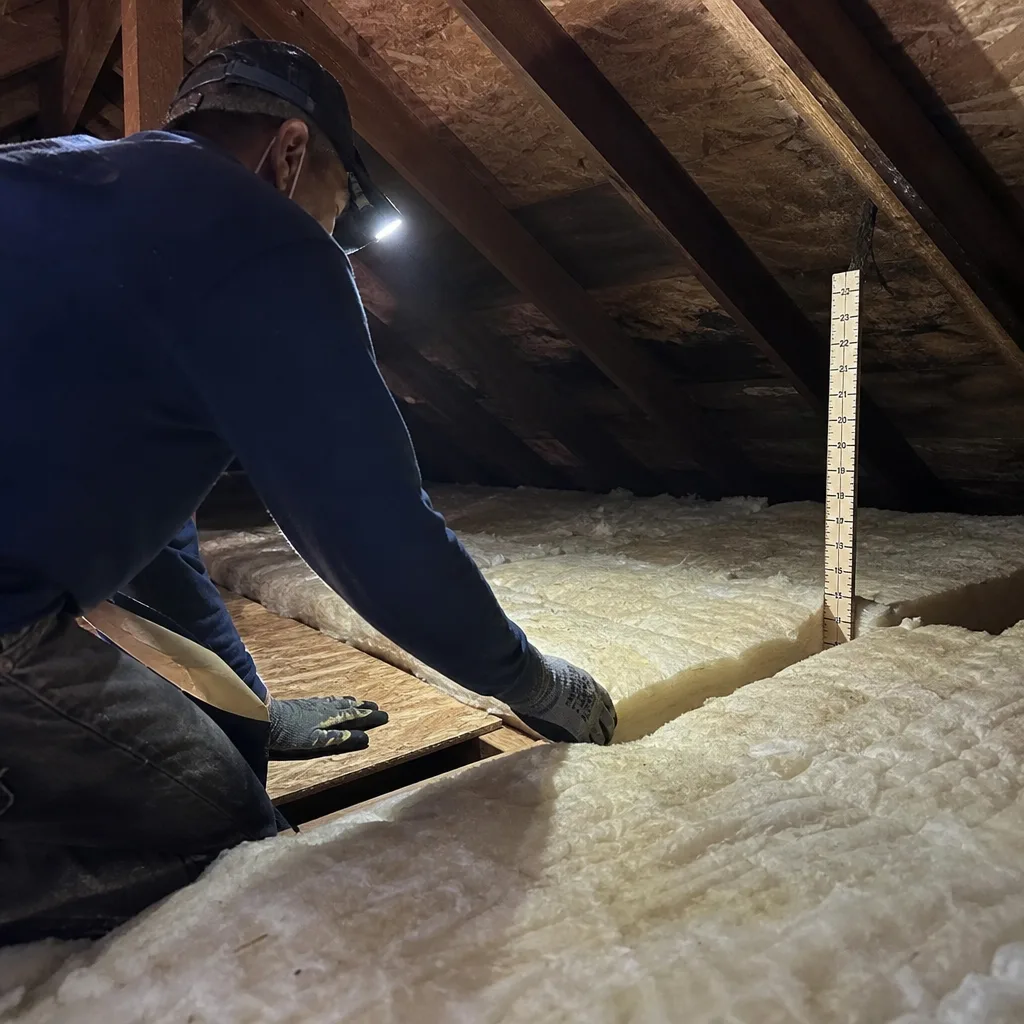
Once the attic is clean, we can see what’s actually going on: gaps at top plates, unsealed penetrations around electrical and plumbing chases, recessed light housings leaking conditioned air straight into the attic. Cleaning isn’t just cosmetic. It’s the step that lets us do the thermal and fire-resistance evaluation properly. In Sunland, where ember entry through soffit vents is a real concern during Santa Ana events, a clean attic also makes it easier to inspect venting for gaps and damage before new insulation goes in.
What happens when you call
- 1
A real person answersNo phone trees — you reach a local pro.
- 2
You get an upfront price rangeHonest numbers before anyone is dispatched.
- 3
A background-checked tech heads outLicensed & insured, dispatched right away.
- 4
You approve before work beginsNothing starts until you say go.
Attic Mold Removal in Sunland
Attic mold removal in Sunland homes usually falls between $1,500 and $3,800, depending on the square footage affected and whether the mold is surface-level or has penetrated into the roof sheathing. Yes, mold in Sunland happens. Even with the dry climate, condensation forms on the underside of roof decking when warm interior air leaks into the attic and hits cool surfaces overnight. Poor bathroom fan venting, which we see constantly in older Sunland ranches, makes it worse. Moist, warm air dumped directly into the attic rather than through a proper roof vent will feed mold growth on the north-facing roof planes that never see direct sun.
Condensation and Venting Failures
We find mold concentrated around bathroom exhaust terminations and in corners where soffit vents are blocked by old insulation or decades of cobwebs, dust, and nesting debris. The fix isn’t just killing the mold. You have to correct the airflow problem that created it. That means cleaning the attic, treating the affected surfaces, improving or restoring venting, and then insulating properly so conditioned air stays in the living space below. On Sunland homes with cathedral ceilings, we inspect the vent channels carefully, because inadequate baffling there is a common root cause of hidden mold.
Treating and Preventing Recurrence
We use an EPA-registered treatment appropriate for wood framing and sheathing, and we don’t put new insulation over mold-affected surfaces that haven’t been properly remediated. After treatment, we focus on the details that keep it from coming back: air sealing around penetrations, ensuring bathroom fans terminate through roof caps and not into the attic, and installing or replacing baffles to keep soffit vents open and flowing. Then the new insulation goes in over a clean, dry, properly vented attic.
Trusted Brands We Service in Sunland
Because we’re an insulation-only contractor, we’re not locked into one supplier. We stock and install products from Owens Corning, Johns Manville, Knauf, Rockwool, CertainTeed, Icynene, Demilec, and GreenFiber. For Sunland specifically, that brand roster matters in a way it doesn’t in, say, coastal LA. Rockwool mineral wool carries a Class A fire rating and doesn’t ignite, which is a decisive advantage for canyon-edge homes watching embers blow over the ridgeline. Icynene open-cell spray foam air-seals better than any batt, which is the right tool for windy, dusty attic cavities. Demilec closed-cell foam adds structural rigidity and moisture resistance that homeowners on exposed hill slopes appreciate. We pick the right material for the specific Sunland home, not the easiest one to install.
Common Attic Insulation Problems We See in Sunland Homes
- Degraded R-11 batts in 1950s-1970s ranches. Original insulation in these homes was thin by modern standards, and decades of canyon heat have compressed it further. Many Sunland attics measure R-11 or less when they should be at R-38 to R-49 for this climate zone. The result is a ceiling that radiates heat into the house all summer.
- Ember and ash intrusion through standard vents. Soffit and gable vents that were fine for coastal LA are a liability in Sunland’s wind corridors. During Santa Ana events, wind-driven ash and embers can enter attic spaces through those openings, which is why we recommend ember-resistant vent models for homes near the wildland-urban interface.
- Air leaks at top plates and recessed lights bypassing whatever insulation exists. Even with R-38 in the attic, if the top plates aren’t air-sealed, hot canyon air moves through the wall cavities and into the attic, cutting the effective R-value by half or more. Recessed can lights are among the worst offenders we find in Sunland’s older homes.
- Blocked soffit vents and missing baffles. Insulation crews in decades past often shoved batts straight over the soffit vents, cutting off the airflow the attic needs to breathe. Without that ventilation, attic temperatures climb and moisture builds up on the roof decking, feeding mold and degrading the sheathing.
Pricing for Attic Insulation in Sunland, CA
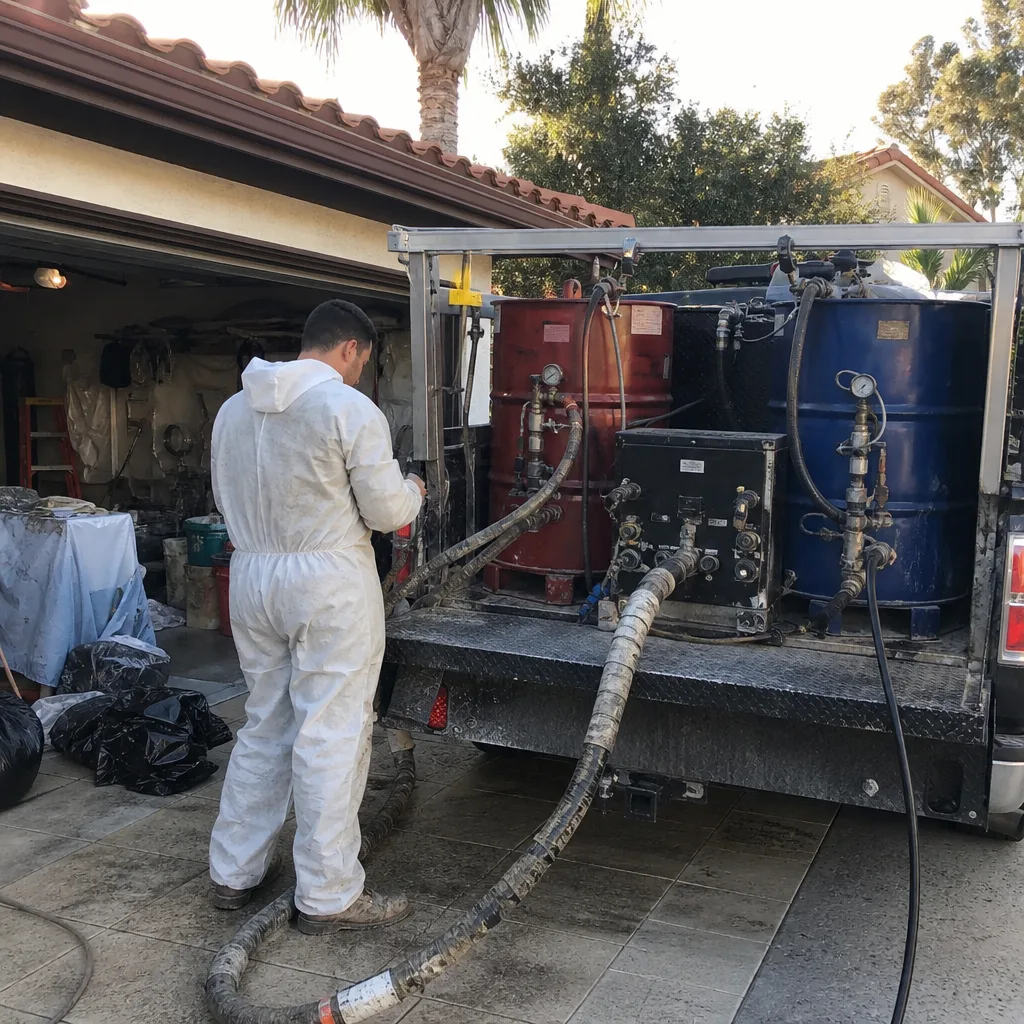
Expect to pay between $1,800 and $3,200 for blown-in fiberglass or cellulose in a typical 1,200-square-foot Sunland ranch attic. Rockwool batt installation runs $2,800 to $4,700 for the same footprint, reflecting both material cost and the fire-resistance benefit. Spray foam is the premium option at $3,500 to $6,500 for open-cell and $5,000 to $8,500 for closed-cell, depending on roof deck coverage. Attic top-ups where existing insulation is clean but thin run $900 to $1,700. Factors that shift your number: attic accessibility, whether old insulation needs removal, how much air sealing gets done before installation, and whether you’re doing this alongside attic cleaning or mold remediation. We give upfront, itemized pricing so you know exactly what you’re paying for before work starts. Call (877) 680-3557 to schedule a free estimate.
We Also Serve Cities Near Sunland
Beyond Sunland, our crews cover Shadow Hills, Tujunga, La Crescenta-Montrose, and Burbank on a regular basis. If you’re in one of those foothill communities and you’ve been putting off an Attic Insulation upgrade, the same team that works up and down the Verdugo corridor serves your street too. Canyon heat doesn’t respect city boundaries, and neither do we.
Serving Sunland, CA — Our Local Coverage Area
We’re based in the Sunland area and know this community well. Use the map below to see our service coverage — if you’re nearby, we can almost certainly help.
FAQs About Attic Insulation in Sunland
For homes in Sunland’s wildland-urban interface, we recommend Rockwool mineral wool because it’s non-combustible and carries a Class A fire rating, or closed-cell Demilec spray foam for cavities that need both air sealing and moisture resistance. The key detail isn’t just the insulation itself, it’s pairing those materials with ember-resistant venting and proper air sealing so wind-driven embers never reach the attic interior. Standard fiberglass batts will insulate fine, but they won’t resist ignition the way mineral wool does. Call (877) 680-3557 and we’ll assess your specific canyon exposure before recommending a material.
Sunland regularly runs 10 to 15 degrees hotter than downtown LA in summer, which means attic temperatures can exceed 140 degrees on bad days. That extreme heat degrades older fiberglass batts faster, compresses them, and pushes cooled air demand through the roof as your AC works against the radiating ceiling. Insulation rated for the LA basin often fails to perform up here because the thermal load is simply higher. We size your insulation to Sunland’s actual temperature profile, not a generic Southern California baseline.
Not always, but in Sunland’s older homes it’s more likely than not. Wind-driven dust and ash accumulate in attic spaces over decades, and if rodents or birds have ever nested up there, the existing insulation is contaminated and needs removal before new material goes in. We’ll tell you during the estimate whether a full clean is necessary or whether a simple top-up over clean, intact batts will do. Getting this wrong means burying contamination under new insulation where it’ll cause problems for years.
Yes, and it’s more common than homeowners expect. Sunland’s humidity is low, but attic condensation happens when warm interior air leaks into the attic and hits cool roof sheathing at night. Homes with bathroom fans venting into the attic, which we find constantly in Sunland’s mid-century ranches, are especially prone to it. The north-facing roof planes that stay shaded all winter never dry out the way the sun-baked south planes do. Mold removal combined with proper venting and air sealing fixes the root cause.
Most Sunland ranches have small access hatches in a hallway ceiling or closet, and some hillside customs have nearly inaccessible sloped cavities. We work with what’s there: blown-in insulation equipment can reach through small hatches without cutting new openings, and our crews are used to working in cramped, low-clearance attic spaces up here. If access is genuinely too tight for safe installation, we’ll tell you that honestly and explain the options, which sometimes means adding an access point or working from the roof side. We don’t cut corners to make a difficult job look easy.
Written by Noel Carrasco, Owner at Orange County Insulation, serving Sunland and the surrounding foothill communities.