
Fast, Reliable Attic Insulation Across Redondo Beach
Attic insulation in Redondo Beach costs $1,400 to $4,800 for a typical 1,200 sq ft attic, depending on material and whether old insulation needs removal first. Most jobs take one to two days. We work throughout Redondo Beach on a regular basis and know exactly how salt air and marine-layer humidity attack attic systems in ways inland contractors never see. If your energy bills climb every summer while upstairs rooms stay muggy, the problem is usually in the attic. Call (877) 680-3557 and we’ll tell you what’s actually going on up there.
Why Orange County Insulation Is Redondo Beach’s Preferred Attic Insulation Company
Redondo Beach sits in a narrow band where the Pacific marine layer rolls in most mornings and burns off by early afternoon. That daily moisture cycle does something specific to attics: it pushes humid air into any gap in the ceiling plane, where it condenses on cooler surfaces and soaks into whatever insulation is up there. We see it constantly in 90277, where 1950s beach bungalows near the pier still have their original fiberglass batts, now compressed, dust-caked, and holding moisture like a sponge. Those homes need a different approach than the 1980s townhomes in 90278, which have their own problem: shared-wall air leaks between units. As an insulation-only contractor, we’re not splitting attention between roofing, HVAC, or a dozen other trades. Led by Noel Carrasco, our crew does one thing, and because of that, we’ve learned to read a Redondo Beach attic the way a mechanic reads an engine. Call (877) 680-3557 and you’ll get a straight answer, not a sales script.
Attic Mold Removal in Redondo Beach
Attic Mold Removal in Redondo Beach usually starts at $850 and runs $1,500 to $3,200, because the coastal humidity here means mold isn’t a rare event, it’s a recurring condition. Where an inland attic might see surface mildew once a decade, a bungalow off South Catalina Avenue can develop mold inside wall cavities within two or three years of a bad air-sealing job. The moisture that feeds attic mold in Redondo Beach comes mostly from daily temperature swings that push warm, damp air through unsealed top plates, light fixtures, and access hatches. Once it hits the underside of the roof sheathing, condensation forms and the spores take hold.
What We Treat and How
We remove mold-damaged insulation, treat affected framing with antimicrobial agents, and address the moisture source rather than painting over the symptom. That means sealing top plates, correcting vent baffle placement, and checking that existing vents are actually pulling air, not just sitting there as decoration. If the vent screens have rusted through, which happens often within half a mile of the beach, treating the mold without fixing the vent is wasted effort.
When Mold Means Full Removal
If mold has reached the sheathing or spread across more than a third of the attic floor insulation, spot treatment won’t hold. In that case we recommend pulling everything out, treating the framing, and starting with clean material. That’s the difference between a fix that lasts and one you’ll pay for again in two years.
Attic Insulation Removal in Redondo Beach
Attic Insulation Removal in Redondo Beach typically runs $900 to $2,200, and it’s the step most beach bungalow owners in 90277 have to take before re-insulating. Homes built in the 1950s and 60s near the pier often have insulation that’s been compromised for decades, compressed by foot traffic from cable installers and roofers, saturated by marine-layer condensation, and tunneled through by rodents that got in through corroded vent screens. You can’t blow new insulation over that and expect it to perform.
Why Removal Comes First in Older Homes
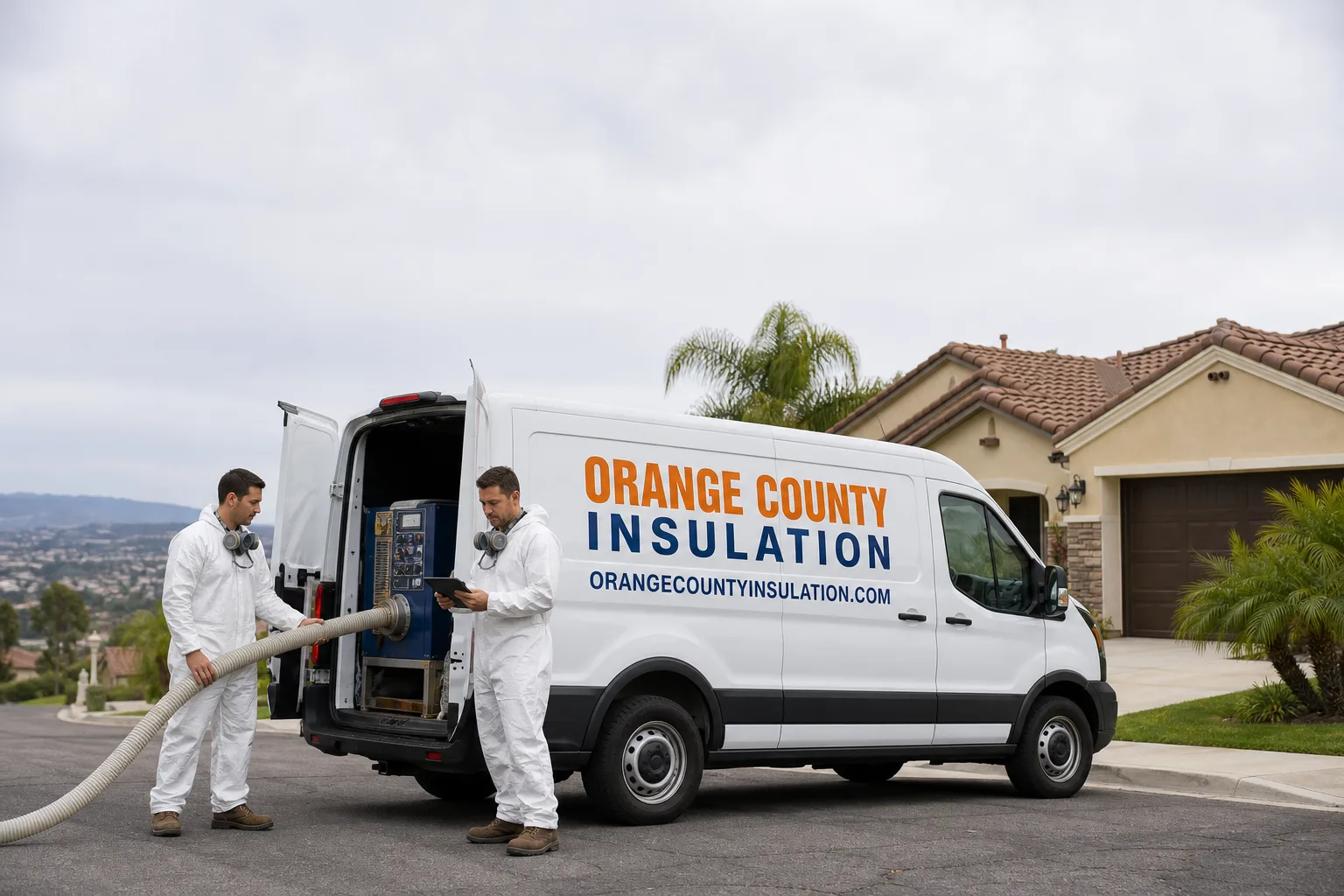
We pull damaged batts or blown-in material with commercial vacuums, bag it, and prep the attic floor for whatever goes back in. During that process we inspect the vent hardware and the top plates, because in Redondo Beach, removal is often where we discover the real problem: rusted fasteners, failed rodent screens, gaps around plumbing stacks that have been sucking in humid air for years.
Rodent and Moisture Damage
Rodent waste and urine-soaked insulation make removal a health matter, not just an efficiency one. If the material is contaminated, leaving it in place means you’re heating and circulating that air through your house. We handle the removal, the sealing, and the prep in one pass so your attic is actually ready for new insulation, not just visually tidier.
Trusted Brands We Service in Redondo Beach
We carry insulation from CertainTeed, GreenFiber, Icynene, and Demilec, among eight manufacturer brands we stock, so the material we install in a Redondo Beach attic matches what that specific house needs. A south Redondo bungalow with open framing and a vented attic might be the right fit for GreenFiber blown-in insulation, while a north Redondo townhome with shared walls often benefits from Demilec closed-cell spray foam or Icynene open-cell depending on air-sealing requirements. We’re not attached to one product line, which means you get the right material for your attic, not whatever is easiest for us to install. That matters when the difference between brands is measured in how well they hold up to coastal humidity. We only do insulation. That’s the whole job.
Common Attic Insulation Problems We See in Redondo Beach Homes
- Rusted vent screens and fasteners. Salt air eats through galvanized hardware within ten to fifteen years of install in homes west of Pacific Coast Highway. Once screens fail, rodents move in and the insulation gets destroyed from the outside in.
- Marine-layer condensation in unsealed attics. The daily fog cycle in Redondo Beach pushes humid air into attics through small gaps in the ceiling plane. That moisture condenses and compresses insulation, cutting its effectiveness and inviting mold.
- Shared-wall air leaks in 90278 townhomes. The denser townhome rows in north Redondo suffer from air moving between units through party walls. Without fire-rated sealing, you’re paying to condition your neighbor’s air and the insulation isn’t doing its job.
- Compressed, contaminated original batts in 90277 bungalows. Post-war tract homes near the pier still have their original fiberglass, flattened over decades and often soaked with condensation or dotted with rodent damage. R-value means nothing when the material has collapsed.
Pricing for Attic Insulation in Redondo Beach, CA
Blown-in attic insulation in Redondo Beach runs $1,400 to $3,800 for most homes under 1,500 sq ft. Attic batt insulation lands between $1,800 and $4,200 depending on the material you choose and whether we’re insulating a bungalow or a townhome. An attic insulation top-up, where existing insulation is still in decent shape and we add material to reach recommended depth, starts around $1,100. Attic insulation replacement, which includes removal and disposal of old material, runs $2,800 to $4,800. Attic baffles and ventilation prep adds $300 to $700 depending on how many soffit vents need attention. We give you a fixed quote before any work starts, based on the actual attic, not a phone estimate pulled from a spreadsheet. Call (877) 680-3557 and we’ll walk the attic with you.
We Also Serve Cities Near Redondo Beach
Our crews regularly work in Redondo Beach, and we cover the surrounding coastal cities as well: Hermosa Beach, Palos Verdes Estates, Manhattan Beach, and Marina del Rey. Each has its own microclimate quirks and housing patterns, but the salt-air problem shows up everywhere along this stretch of coast. Attic Insulation done right is surface-specific. Call us from anywhere in the South Bay and we’ll schedule a proper attic inspection.
Serving Redondo Beach, CA — Our Local Coverage Area
We’re based in the Redondo Beach area and know this community well. Use the map below to see our service coverage — if you’re nearby, we can almost certainly help.
FAQs About Attic Insulation in Redondo Beach
Redondo Beach’s marine layer pushes humid air into attics every morning, which condenses and soaks insulation from the inside, while salt air corrodes vent screens and fasteners that would last decades inland. The combination means insulation here degrades in half the time it would in, say, Torrance or Lawndale. Call (877) 680-3557 and we’ll tell you exactly what’s happening in your attic.
Almost always, yes. Most 1950s and 60s bungalows in 90277 still have original batts that are compressed, moisture-stained, or rodent-damaged, and blowing new material over the top just locks the problem in. Removal runs $900 to $2,200, and it’s the difference between insulation that works for twenty years and insulation that fails in five.
We remove the mold-damaged insulation, treat the affected framing with antimicrobial agents, and fix the moisture source, whether that’s a failed vent screen, an unsealed top plate, or a bathroom fan venting into the attic. Mold treatment in Redondo Beach typically costs $1,500 to $3,200 depending on the extent. Call (877) 680-3557 for a straight assessment.
North Redondo townhomes in 90278 have shared walls that leak air between units, so fire-rated sealing and dense-pack material matter more than raw R-value, while south Redondo bungalows in 90277 have open vented attics where salt-air corrosion and rodent intrusion are the primary failure points. One ZIP code, two completely different jobs. We quote them differently, too.
We install CertainTeed, GreenFiber, Icynene, and Demilec products, among eight manufacturer brands we carry, and we choose based on your attic’s specific conditions. A vented bungalow near the pier often gets GreenFiber blown-in insulation, while a townhome with shared walls might get Demilec closed-cell spray foam for air sealing. Call (877) 680-3557 and we’ll explain why one fits your house better than another.
Written by Noel Carrasco, Owner at Orange County Insulation, serving Redondo Beach and the South Bay.