Fast, Reliable Attic Insulation Across Lomita
If your Lomita home was built between the 1940s and 1970s, there’s a good chance your attic insulation is doing almost nothing. We find original batt blankets compressed to a couple of inches, settled rock-wool fill, and damp sheathing from marine-layer fog in bungalows all over the 90717 zip code. It’s why your energy bills creep up and why rooms never feel quite right. We fix it fast, with the right material matched to your house, not the easiest one for us to install. Call (877) 680-3557 for a free attic inspection and a straight answer about what’s actually going on up there.
Why Orange County Insulation Is Lomita’s Preferred Attic Insulation Company
We’re an insulation-only contractor, and the difference shows up the second you start talking to us. There’s no roofing crew moonlighting, no HVAC tech guessing at R-values. Every estimate, every crew member, every warranty conversation centers on insulation. Our Attic Insulation team has worked in Lomita long enough to know the bungalows off Lomita Boulevard, the post-war tract homes near the 110, and the 1960s apartments with impossibly tight attic hatches. That local familiarity means we arrive knowing what to expect, and we don’t waste your time figuring out your house on the clock.
Homeowners in Lomita who call us get a specialist who can explain exactly why one material beats another for their specific roof pitch, ceiling depth, and noise situation. We bring eight major manufacturer brands with us: Owens Corning, Johns Manville, Knauf, Rockwool, CertainTeed, Icynene, Demilec, and GreenFiber. We’re not tied to a single supplier, so what you get is the right product for the job, not what one warehouse stocks. We service Lomita with fast scheduling and crews who know the Harbor Gateway permit landscape.
Radiant Barrier in Lomita
Radiant Barrier in Lomita works differently than most people expect. It’s not a heat trap. It’s a reflective layer installed on the underside of your roof deck that bounces radiant heat back out before it radiates into your living space. And here’s the catch for Lomita specifically: with our mild marine-layer climate, radiant barrier alone won’t transform comfort the way it might in Riverside or Palmdale. Where it does earn its keep in Lomita is in homes with black asphalt shingle roofs on the sunnier western exposures near Rolling Hills Estates, where afternoon sun loads still spike attic temperatures even under the coastal haze.
When Maritime Damp Changes the Math
Morning fog off the ocean keeps Lomita’s temperatures in a narrow band, which means radiant barrier’s biggest benefit, blocking harsh solar gain, is less dramatic here than inland. But if your bungalow has an unshaded south or west-facing roof and the upstairs bedrooms run noticeably warmer on sunny afternoons, it’s absolutely worth considering. We’ll tell you honestly whether it pays for itself in your specific house. In many Lomita bungalows, the better investment is boosting settled insulation depth first, then adding radiant barrier as the secondary layer if heat still pushes through in summer.
Material Choices for Coastal Air
Lomita’s damp, salt-touched air attacks cheap reflective foils quickly. We install heavy-duty radiant barrier that resists the corrosion this marine environment accelerates, and we pair it with proper baffles and ventilation so you don’t end up trapping moisture against the roof deck. A typical radiant barrier installation for a Lomita attic runs $1,200 to $2,800 depending on roof geometry and whether baffles need replacement at the same time.
Attic Cleaning Services in Lomita
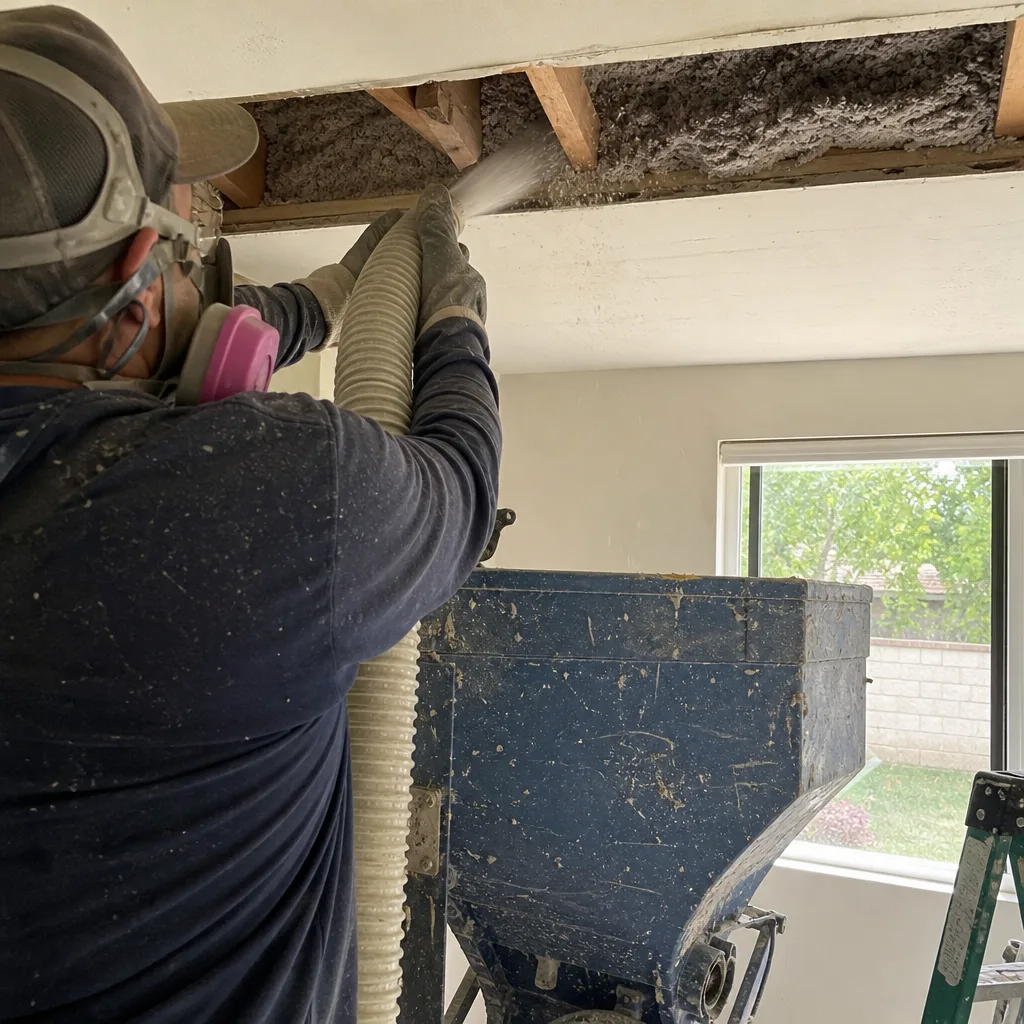
Attic Cleaning Services in Lomita are more important than in drier climates because of what the fog does to attic spaces over time. Morning dampness settles into old insulation, rodent droppings from the roof-rat activity common around the Palos Verdes Peninsula foothills accrue, and decades of dust cake into compressed fiberglass that no longer insulates. We remove old material, sanitize the surfaces, address any mold on sheathing or rafters, and prep the space for new insulation. Older bungalows off Lomita Boulevard frequently need this step before any new material makes sense, since you can’t build a clean system on top of deteriorated fill.
The Removal Process in Tight Lomita Attics
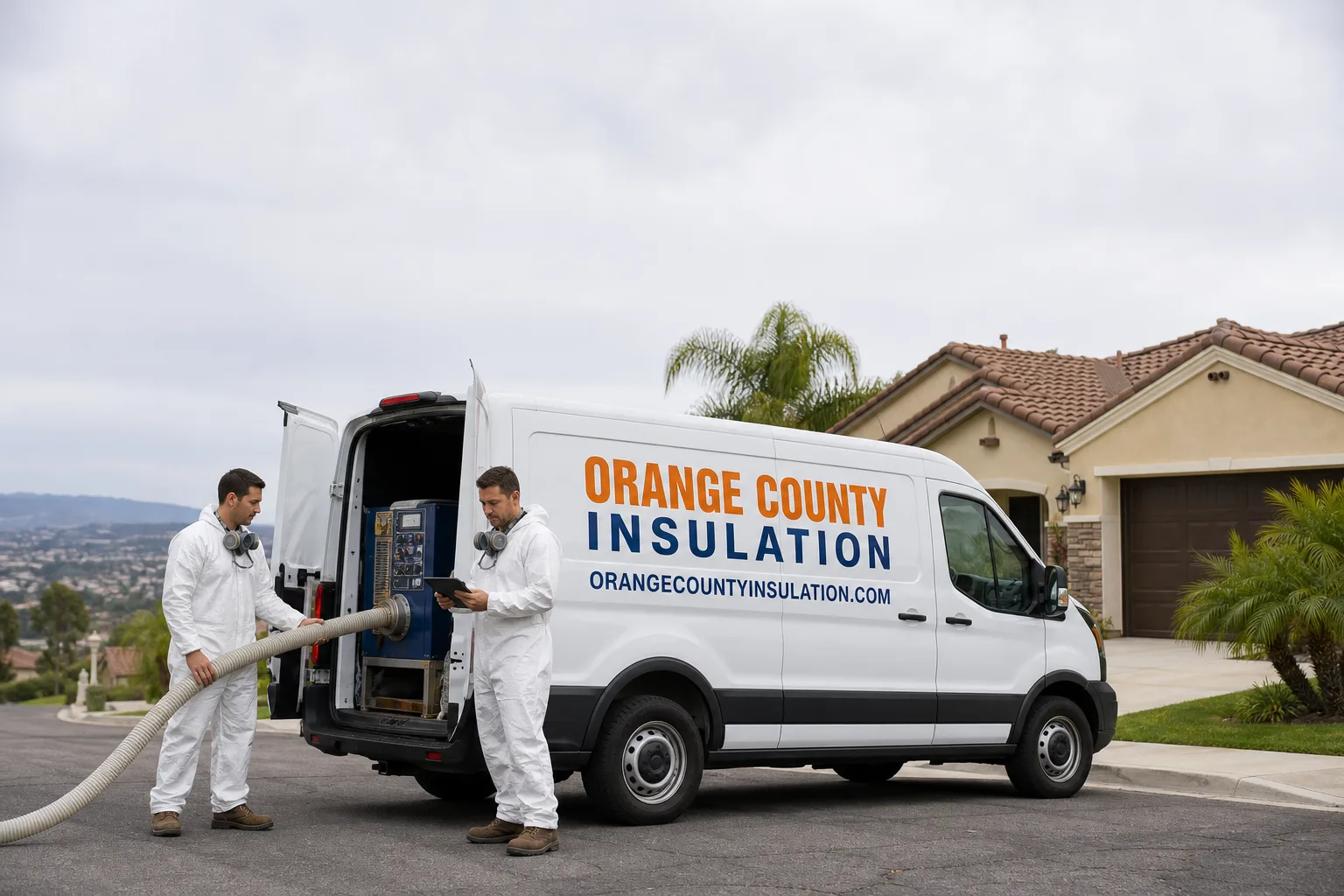
Lomita’s small-lot houses mean small attic hatches, shallow roof cavities, and tight access that makes careless removal a nightmare for homeowners. Our crews use HEPA-filtered vacuums and confined-space protocols designed for exactly these conditions. We seal off the living area, extract everything through the hatch without tracking debris through your hallway, and leave the attic rafter bays ready for what comes next. Attic cleaning in Lomita typically runs $900 to $2,400 depending on attic size, material type being removed, and whether we’re pulling out old vermiculite, which requires specialized handling.
Dampness and Mold Before You Insulate
If we find fog-driven moisture staining your sheathing, which happens more in Lomita than anywhere inland because of the marine layer, we’ll flag it before dropping new insulation on top. Sealing air leaks and verifying ventilation paths has to happen first. That’s the difference between insulation that performs for 30 years and insulation that becomes a damp, moldy mess in five.
What happens when you call
- 1
A real person answersNo phone trees — you reach a local pro.
- 2
You get an upfront price rangeHonest numbers before anyone is dispatched.
- 3
A background-checked tech heads outLicensed & insured, dispatched right away.
- 4
You approve before work beginsNothing starts until you say go.
Trusted Brands We Service in Lomita
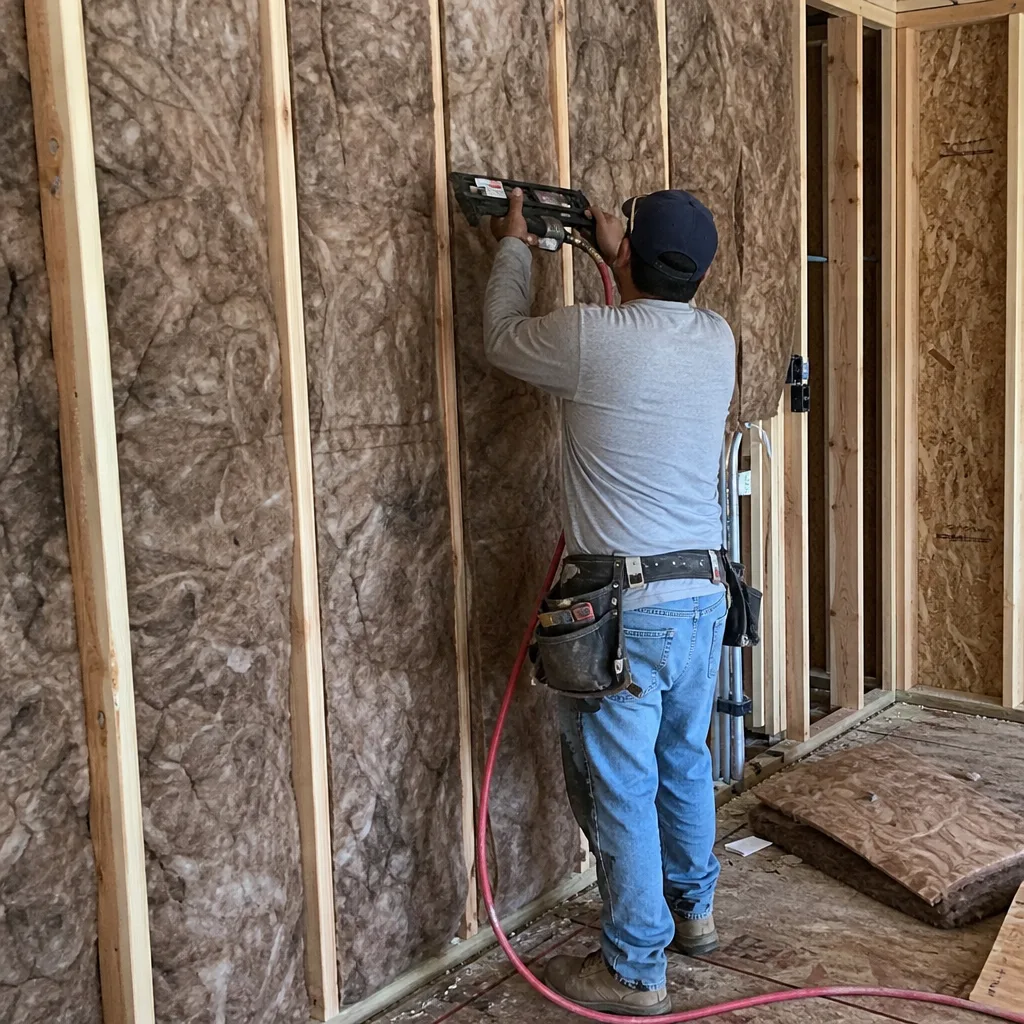
We stock and install insulation from eight manufacturers, so a Lomita homeowner isn’t forced into one material story. CertainTeed batts for standard re-insulation jobs. Icynene open-cell spray foam for tight roof cavities and air sealing. Demilec closed-cell for spaces where moisture resistance matters most. GreenFiber cellulose for bungalows where noise dampening and recycled content matter to the owner. That roster means we can match the product to the specific problem your Lomita house has, whether that’s Harbor Freeway traffic rumble, fog-driven dampness, or thin 1950s batt that’s given up entirely.
Common Attic Insulation Problems We See in Lomita Homes
- Compressed 1950s batt blankets. We routinely find original fiberglass in small-lot bungalows off Lomita Boulevard packed down to an inch or two of depth, roughly R-4 when the label promised R-19. This happens as decades of foot traffic, stored boxes, and gravity crush the fibers flat. The owner feels it as hot ceilings in summer and cool drafts in winter, even though Lomita’s climate is mild.
- Settled rock-wool or vermiculite fill. Post-war houses near the Harbor Freeway often still carry loose-fill insulation from the Eisenhower era that’s settled into the bottom of each rafter bay. It might have been adequate in 1958. It’s not now, and in many cases it’s holding moisture from the morning marine layer that should have been ventilated away decades ago.
- Freeway and PCH noise bleed-through. Lomita sits close enough to the 110 and Pacific Coast Highway that traffic noise seeps through under-insulated ceilings and walls, especially in the Ranchito and Harbor Hills neighborhoods. Homeowners don’t call us asking about R-value; they call saying they can hear trucks downshifting at the on-ramp. Mass and density fix that, and it’s a big part of why material choice matters more than simply “adding more.”
- Fog-driven dampness and mold on sheathing. The marine layer rolls in at night and burns off by noon, but in shallow low-pitch attic cavities with poor ventilation, that moisture doesn’t always clear. We see dark staining on roof sheathing in Lomita attics that never see rain intrusion, purely from condensation cycles. Proper air sealing and baffles solve it before new insulation goes in.
Pricing for Attic Insulation in Lomita, CA
Here’s what our customers in Lomita actually pay. Blown-in insulation for a standard 1,100 to 1,400 square foot bungalow runs $2,300 to $4,100, with the material chosen based on whether you want cellulose for noise dampening or fiberglass for budget-friendly depth. Attic batt insulation replacement in the same size home lands between $1,900 and $3,400. Spray foam is the premium option at $5,800 to $9,500 for a typical Lomita home, but it often solves air-sealing and dampness problems that batts can’t. A top-up over existing settled insulation runs $1,100 to $2,200. Every estimate is free, and we’ll tell you plainly if your existing material can stay and be topped up rather than replaced. Call (877) 680-3557 for an exact number on your attic.
We Also Serve Cities Near Lomita
We work throughout the South Bay and Palos Verdes Peninsula. If you’re in Torrance, Rolling Hills Estates, West Carson, or Manhattan Beach and need the same attic expertise, our crews are on the road and familiar with those housing stocks too. We know Attic Insulation in Lomita best, but the same eight-brand roster and same insulation-only focus travels with us.
Serving Lomita, CA — Our Local Coverage Area
We’re based in the Lomita area and know this community well. Use the map below to see our service coverage — if you’re nearby, we can almost certainly help.
FAQs About Attic Insulation in Lomita
Dampness in Lomita attics comes from the marine layer, not from heat or cold cycles. Fog rolls in at night, the air inside your attic cools, and moisture condenses on the undersides of roof sheathing, especially in low-pitch roofs with weak ventilation. That condensation absorbs into old batt or settled loose-fill and never fully dries. We fix this by air-sealing ceiling penetrations first, so warm moist air from the living space stops rising into the attic, and then verifying soffit and ridge vent paths before adding or replacing insulation. If you’ve got damp-darkened sheathing, call us before installing anything new; (877) 680-3557, estimates are free.
Yes, dense insulation makes a noticeable difference against traffic noise from the 110 and PCH in Lomita, particularly in homes near the on-ramps and the Harbor Freeway corridor. The key is density and coverage: cellulose like GreenFiber packs into ceiling cavities and absorbs low-frequency rumble better than light fiberglass batts, especially when combined with air sealing around ceiling fixtures and penetrating elements. Mineral wool adds even more mass. What won’t help is adding a thin layer of fluffy insulation to an already-under-insulated ceiling; the material has to be matched to the noise problem, not just dumped in for R-value.
Expect original batt blankets compressed to two inches or less, settled rock-wool or vermiculite fill, and in many cases damp staining on sheathing from the marine layer. We also find electrical wiring from the original build draped across the attic floor, often buried under old insulation. On a post-war bungalow off Lomita Boulevard, our crew found the original batt compressed to barely a couple of inches and old rock-wool fill, with fog-driven dampness darkening the roof sheathing above. We air-sealed the ceiling plane, verified vapor movement, and blew in GreenFiber loose-fill to a consistent depth, then added sound-dampening mass to blunt the constant Harbor Freeway traffic noise the owner actually complained about.
Low-pitch roofs and houses packed onto small lots make Lomita attic work slower and more careful than a wide-open suburban attic. The ceilings are lower, the access hatches are smaller, and the rafter bays are shallower, which means we often choose spray foam for tight cavities where batts won’t fit properly, or we adjust blown-in depth to avoid blocking air channels at the eaves. Tight side yards also mean our hoses and vacuum lines have to snake around fences and deck stairs without disturbing neighbors. None of this changes the price dramatically, but it’s why you want a crew that’s done it in Lomita before, not one learning on your roof.
Yes, when the old material is compressed, contaminated, or holding moisture, we remove it first. That’s standard practice in Lomita because the marine layer means old insulation here is often damp, and you can’t build a proper system on top of moldy, settled fill. We use HEPA vacuum extraction, clean the attic floor and rafter bays, sanitize where needed, and then install the new material matched to your home’s specific dampness and noise conditions. If the old insulation is dry and simply thin, we may top up instead of replacing; we’ll show you which makes sense after inspecting.
Written by Noel Carrasco, Owner at Orange County Insulation, serving Lomita homeowners with insulation-only expertise.