Fast, Reliable Attic Insulation Across Huntington Park
If your Huntington Park home was built before 1960, odds are your attic is either uninsulated or working with a thin layer of settled dust that’s doing almost nothing. The result shows up every July and August: upstairs rooms that feel like ovens, an AC unit that runs nonstop, and a power bill that climbs faster than the temperature. We fix that. Orange County Insulation retrofits attics across Huntington Park’s 90255 neighborhoods with air-sealing, radiant barrier, and the right insulation material for your roof type and budget. Call (877) 680-3557 for a free estimate, and we’ll tell you exactly what’s in your attic and what it’ll take to make the house comfortable.
We know Huntington Park’s housing stock because we’ve worked in it for years. The 1920s through 1950s stucco bungalows near Pacific Boulevard, the low-rise apartment buildings along Florence Avenue, the single-story homes tucked into the side streets off the Alameda corridor. They share a common problem: flat or low-pitch roofs, minimal venting, and attics that were never designed with insulation in mind. That’s our specialty. We only do insulation, which means we do it better than a general contractor squeezing it in between roofing and drywall jobs.
Why Orange County Insulation Is Huntington Park’s Preferred Attic Insulation Company
Most insulation companies treat Huntington Park as an afterthought, a stop on the way to bigger jobs in newer suburbs. We don’t. The Alameda corridor’s pre-1960 housing stock is some of the most rewarding retrofit work in Los Angeles County, and we’ve built our reputation here one attic at a time. Homeowners along Salt Lake Avenue and Gage Avenue call us because our crews know exactly what to expect when they open up a 1940s Huntington Park attic: bare rafters, knob-and-tube-era penetrations, maybe a few inches of settled blow-in that’s been compacting since the Reagan administration. We don’t flinch at that. We plan for it.
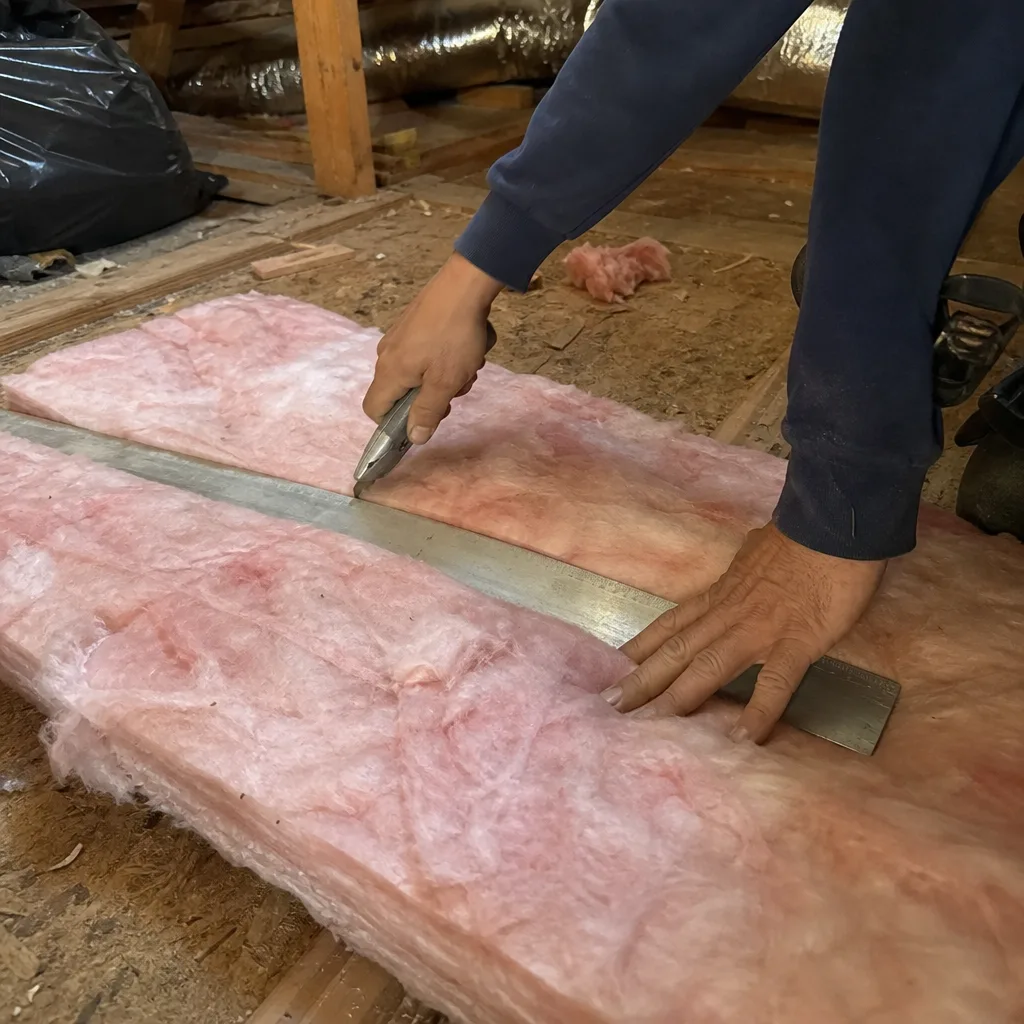
Led by Noel Carrasco, our team operates with a simple rule: the right material for your home, not the easiest one for us to install. That means sometimes the answer is a radiant barrier instead of more fiberglass. Sometimes it’s GreenFiber cellulose blown to code depth after we air-seal the ceiling plane. Sometimes it’s open-cell Icynene spray foam for an attic that needs both insulation and air-sealing in one pass. We carry eight major manufacturer brands, so the recommendation comes from your roof type, your budget, and your cooling bills, not from whatever single product we happen to stock.
Response time to Huntington Park is quick. We schedule free estimates within a few days, and our crews move fast once the job is approved. You won’t wait weeks for a callback. If you’ve been chasing a hot upstairs bedroom for years, this is the season to fix it. Call (877) 680-3557.
Radiant Barrier in Huntington Park
Radiant barrier is the single most underrated retrofit for Huntington Park’s flat and low-pitch roof homes, because radiant heat is the enemy here, not conductive heat. Your 1948 stucco bungalow absorbs Los Angeles basin sun all day, the attic turns into a convection oven, and that heat radiates straight down through the ceiling into your living space. Adding R-value alone doesn’t stop radiant heat. A radiant barrier does. We install Owens Corning radiant barrier as a retrofit staple for Huntington Park attics, typically alongside air-sealing and insulation top-up, and a standard installation runs $1,200 to $2,800 depending on attic size and access.
Low-Slope and Flat Roof Applications
Flat and low-pitch roofs are the default on Huntington Park’s older bungalows and apartment buildings, and they trap heat harder than pitched roofs with ridge vents. In these attics, a radiant barrier stapled to the underside of the rafters or laid over existing insulation reflects a meaningful share of that heat back through the roof deck. It’s the first move we recommend for cooling-driven homes along Salt Lake Avenue and the streets branching off the Alameda corridor.
When to Combine with Air-Sealing
A radiant barrier works best when it’s paired with proper air-sealing. In Huntington Park’s knob-and-tube-era homes, the ceiling plane is full of unsealed penetrations: wiring chases, plumbing stacks, old canister light cutouts. Those gaps let hot attic air bleed into the rooms below, and a radiant barrier can’t stop that by itself. We seal first, then install the barrier, so the thermal and airflow problems get solved together.
Attic Cleaning Services in Huntington Park
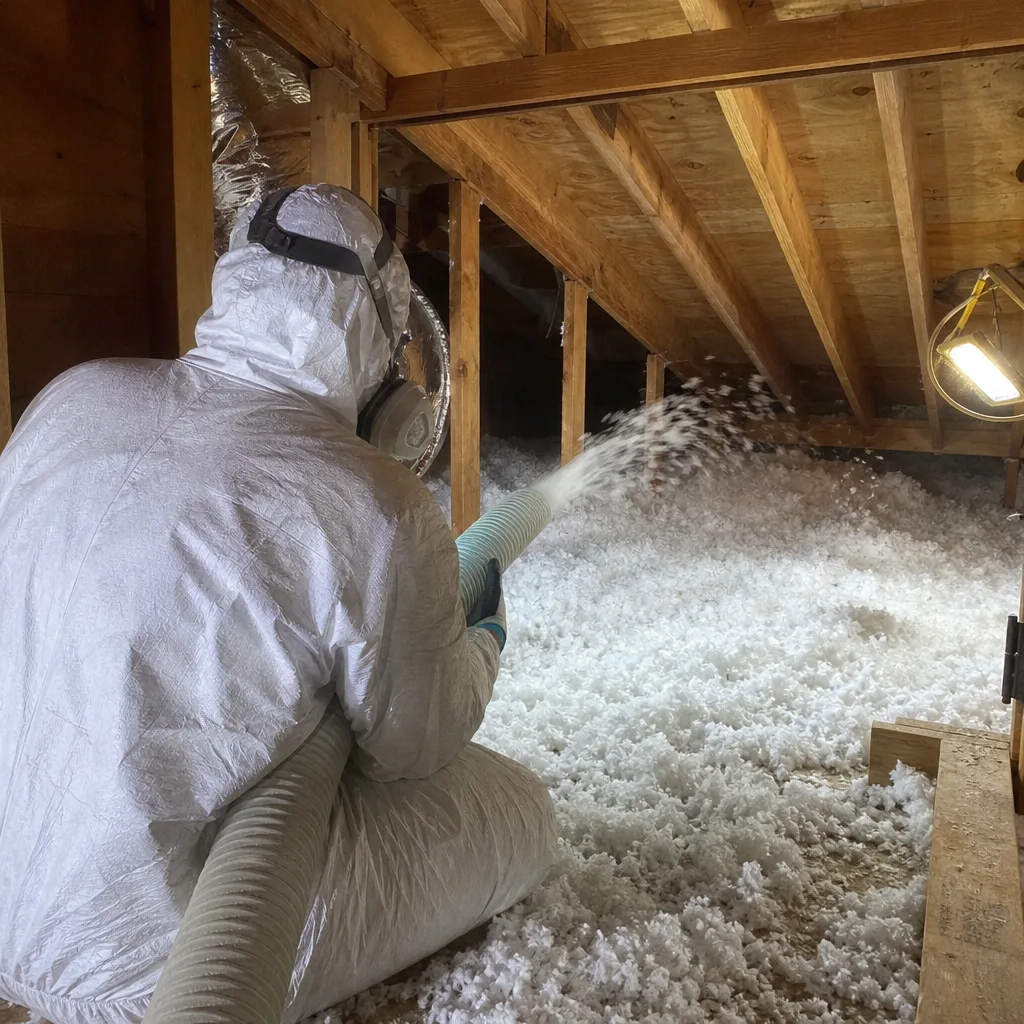
Attic cleaning services are a regular first step for Huntington Park retrofits, because decades of dust, rodent droppings, and deteriorated old blow-in create a mess that no new insulation should be installed over. We see it all the time in the 90255: a homeowner wants to finally insulate, but the existing attic has three inches of compacted 1970s fiberglass, raccoon or rat activity, and enough dust to choke a vacuum. You don’t install new material on top of that. You clean it out first. A typical attic cleaning in Huntington Park runs $800 to $1,800, depending on square footage, access difficulty, and how much contaminated material has to be bagged and removed.
Prep for Retrofit Insulation
Before we blow in new insulation or install batts, the attic has to be clean enough that the new material actually performs. That means vacuuming old debris, removing settled blow-in, sanitizing where needed, and clearing the eaves so baffles can go in properly. For homes off Gage Avenue and Pacific Boulevard where the attic hasn’t been opened in 50 years, cleaning is part of the retrofit, not an optional add-on.
What You Should Expect
The cleaning crew sets up containment, removes the old material by hand or with a commercial vacuum, and bags everything for disposal. Depending on the size of the attic and what we find, the job takes half a day to a full day. Afterward, we’ll tell you honestly whether the rafters and decking are in good enough shape for new insulation, or whether we need to address ventilation problems before moving forward.
What happens when you call
- 1
A real person answersNo phone trees — you reach a local pro.
- 2
You get an upfront price rangeHonest numbers before anyone is dispatched.
- 3
A background-checked tech heads outLicensed & insured, dispatched right away.
- 4
You approve before work beginsNothing starts until you say go.
Trusted Brands We Service in Huntington Park
We install and service products from eight major manufacturers, which matters in Huntington Park because the right brand for a 1940s low-slope roof bungalow is not always the right brand for a 1960s apartment building. For attic retrofits here, we commonly specify CertainTeed fiberglass batts, Icynene open-cell spray foam, and GreenFiber cellulose, plus Owens Corning radiant barrier for the flat-roof heat problem. Because we carry multiple product lines, we’re never forcing one solution into a home it doesn’t fit. Local parts and materials are stocked for fast Huntington Park turnaround, so the time between approved estimate and completed retrofit stays short.
Common Attic Insulation Problems We See in Huntington Park Homes
- Settled legacy blow-in that’s lost its R-value. Many Huntington Park homes have a few inches of cellulose or fiberglass from a decades-old partial retrofit. In low-slope attics with no ventilation, that material settles and compacts, leaving the top plates and kneewalls bare. It has to be removed and replaced, not topped up.
- Unsealed knob-and-tube-era penetrations. The wiring chases, plumbing stacks, and old light cutouts in a 1930s or 1940s bungalow create open channels between the attic and the living space. Hot attic air pours through them. Adding insulation without sealing these gaps first is a waste of money.
- Flat or low-pitch roofs with minimal venting. Most Huntington Park bungalows were built without ridge or soffit vents, and the flat roof design makes installing new vents expensive. The trapped radiant heat spikes attic temperatures and degrades any batt or loose-fill installed without a radiant barrier.
- Debris and contamination from decades of neglect. Rodent droppings, dust, and old pest nests are common in attics that haven’t been accessed since the Johnson administration. New insulation can’t perform in a contaminated space, so cleaning becomes a mandatory first step.
Pricing for Attic Insulation in Huntington Park, CA
Attic insulation work in Huntington Park typically runs $1.50 to $4.50 per square foot depending on the material and scope. A basic blown-in insulation top-up for an 800-square-foot attic starts around $1,200. Full air-sealing plus new cellulose runs $2,500 to $4,500. Radiant barrier installation adds $1,200 to $2,800. Attic cleaning before insulation adds $800 to $1,800. Open-cell spray foam is the most expensive at $3.00 to $5.00 per square foot but solves insulation and air-sealing in one application. Factors that shift the price: attic access difficulty, how much old material has to be removed, whether baffles and venting need to be added, and the height of the rafter cavities. Call (877) 680-3557 for a free estimate, and we’ll give you exact numbers for your home before you commit to anything.
We Also Serve Cities Near Huntington Park
Our attic insulation crews work up and down the 710 and 105 corridors. If you’re in Huntington Park proper or the surrounding communities, we cover Attic Insulation in Huntington Park plus Walnut Park, Bell, Cudahy, and Maywood. Call (877) 680-3557 to confirm your address and schedule a free estimate.
Serving Huntington Park, CA — Our Local Coverage Area
We’re based in the Huntington Park area and know this community well. Use the map below to see our service coverage — if you’re nearby, we can almost certainly help.
FAQs About Attic Insulation in Huntington Park
Because the heat isn’t coming through the insulation, it’s radiating off the flat or low-pitch roof deck directly into the attic air, and your attic has almost no ventilation to release it. Pre-1960 Huntington Park bungalows were built without ridge or soffit vents, so the attic becomes a superheated box every afternoon. The fix is a radiant barrier plus air-sealing, not more R-value alone. Call (877) 680-3557 for an attic assessment and an exact quote.
Yes, and we do it regularly in Huntington Park. Many of the homes we retrofit near the Alameda corridor are multi-generational households where decisions are made collectively and projects are phased over months. We provide estimates and material choices in Spanish, and we’ll structure the work so the most impactful step (usually air-sealing and radiant barrier) happens first, with insulation top-up following when the budget allows. Call (877) 680-3557 and ask for Noel.
Expect a crew in protective gear to remove old blown-in material, vacuum debris, bag contamination, and sanitize the attic floor before any new insulation is installed. In Huntington Park’s older homes, this step takes half a day to a full day and costs $800 to $1,800. You’ll see the attic before and after, and we won’t install over a mess. Call (877) 680-3557 to schedule a cleaning assessment.
Yes, and in most cases it’s the most cost-effective single retrofit available. Flat roofs absorb full sun all day, and without ventilation the attic heat loads are extreme. A radiant barrier reflects a significant portion of that heat before it enters the attic air, which directly reduces your cooling load. In Huntington Park’s climate, radiant barrier outperforms additional R-value for flat-roof bungalows. Typical cost: $1,200 to $2,800. Call (877) 680-3557 for a quote specific to your roof.
We specify CertainTeed fiberglass batts, GreenFiber cellulose, Icynene open-cell spray foam, and Owens Corning radiant barrier most often for Huntington Park homes, chosen based on roof type, venting, and budget. We carry eight manufacturer brands total, so we’re not locked into one product line. Our recommendation is based on what will actually solve your cooling problem. Call (877) 680-3557 and we’ll walk you through the options.
Written by Noel Carrasco, Owner at Orange County Insulation, serving Huntington Park and the surrounding Alameda corridor communities.