
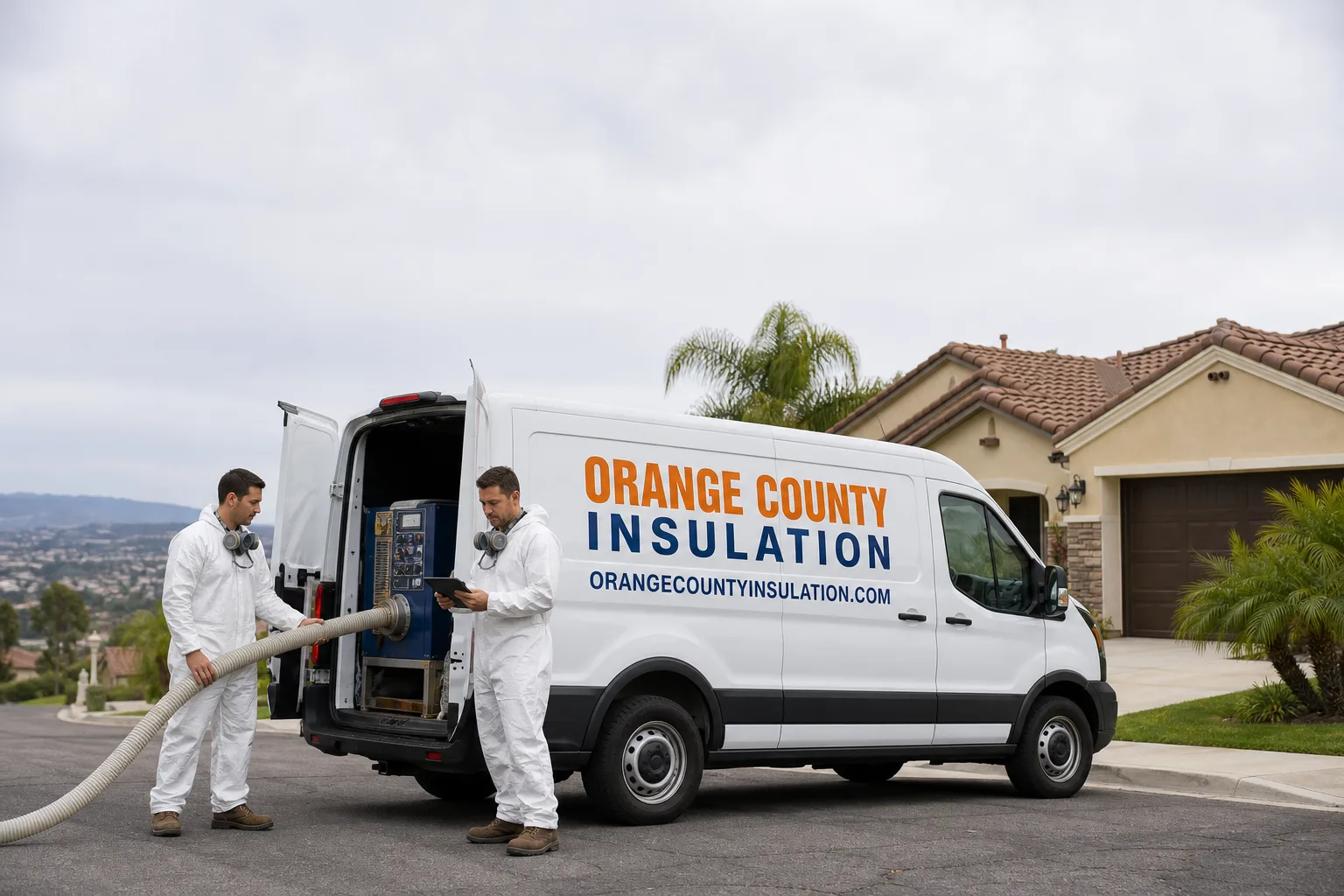
Fast, Reliable Attic Insulation Across Corona
Attic insulation in Corona isn’t a one-size job. The Santa Ana winds that funnel through the gap between the Santa Ana Mountains and Chino Hills displace loose-fill and batt insulation in ways you won’t see in Anaheim or Riverside. We install and repair insulation specifically for Corona’s wind load, heat cycling, and foothill microclimates. If your energy bills spike every summer or certain rooms feel 10 degrees hotter than others, call (877) 680-3557. We’ll diagnose the attic first, not just quote a number.
We know the difference between a 92882 tract home near downtown and a 92881 foothill house with vaulted ceilings. That matters when you’re choosing between blown-in cellulose, batts, or spray foam. One product doesn’t fit every Corona attic, and we’ll tell you exactly why before we recommend anything.
Why Orange County Insulation Is Corona’s Preferred Attic Insulation Company
We only do insulation. No roofing side jobs, no HVAC add-ons, no general contracting. Every estimate we run, every crew we send into a Corona attic, every warranty conversation we have is about thermal performance and air sealing. That single-trade focus means we can talk specifics that general contractors can’t: R-value per inch by material, open-cell versus closed-cell tradeoffs, wind-resistant baffle installation, and how radiant barrier actually performs in a 100-degree inland attic.
Corona homeowners call us because the attic is usually the problem, and we treat it as the whole job, not a line item. We carry eight major manufacturer brands: Owens Corning, Johns Manville, Knauf, Rockwool, CertainTeed, Icynene, Demilec, and GreenFiber. That breadth means we can match a material to your house, your budget, and your specific heat profile instead of pushing whatever’s on the truck.
Our crews know Corona’s housing stock. The mid-century tract homes near the 92879/92882 circle have shallow attics with old fiberglass that’s often compressed to half its original R-value. The two-story 92880 subdivisions out toward Eastvale have big attics that bake all afternoon. The 92881/92883 foothill homes deal with wind-driven insulation displacement. We’ve worked all three patterns, and we bring that experience to every estimate.
Led by Noel Carrasco, our team treats every Corona attic like a forensic case: find the thermal failure, fix it with the right material, and document what we did. No vague “we added some insulation” invoices. You get specifics.
Radiant Barrier in Corona
Radiant barrier work in Corona addresses what inland Riverside County heat does to an attic: a standard vented attic can hit 130°F to 150°F on a July afternoon, and that heat radiates straight down into your living space. A properly installed radiant barrier reflects a significant portion of that radiant heat before it ever reaches your insulation or ceiling. In Corona, where summer highs routinely clear 100°F and attics stay hot well into the evening, radiant barrier is one of the highest-impact upgrades you can make.
Doesn’t replace insulation. It works with it. Radiant barrier reduces heat gain from above, while insulation resists heat transfer through conduction. Together they keep your attic cooler and your HVAC from running nonstop from June through September.
Attic-Side Radiant Barrier Installation
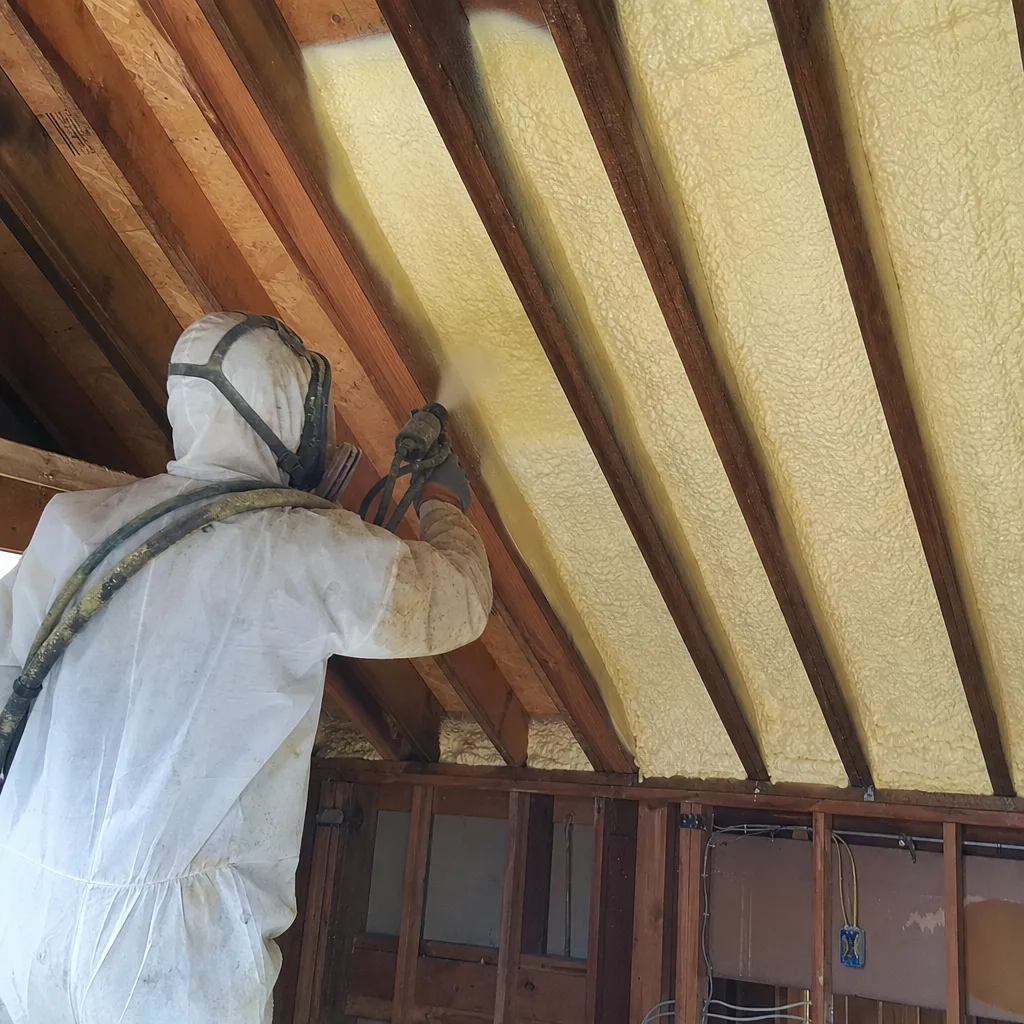
We staple a reinforced foil barrier to the underside of your rafters. This keeps the foil’s reflective surface facing the roof deck, where it blocks radiant heat before it enters the attic air space. Proper ventilation and an air gap are critical: foil pressed flat against sheathing loses most of its reflectivity. We install it with the gap it needs to actually work.
Radiant Barrier with Blown-In Insulation
For Corona attics getting a full insulation upgrade, we often pair radiant barrier on the rafters with fresh blown-in insulation on the floor. The barrier handles the radiant load from the roof, the insulation handles the conducted heat from the attic air. Together they take a measurable load off your AC. In foothill homes with big south-facing roof planes, this combination makes a noticeable difference by the first heat wave.
Radiant barrier in Corona typically runs $1.50 to $3.00 per square foot installed, depending on attic accessibility, rafter spacing, and whether we’re also doing insulation work at the same time. Call (877) 680-3557 for a specific quote on your attic.
Attic Cleaning Services in Corona
Attic cleaning services in Corona often come before insulation work, and for good reason. Decades of Santa Ana wind events blow dust, grit, and debris into attics through vents and soffit gaps. Rodents and birds find their way in through the same openings. Old insulation gets contaminated, compressed, and sometimes hazardous. You can’t put new insulation over a dirty, rodent-damaged attic and expect it to perform.
We remove the old insulation, vacuum or hand-clean the attic floor, sanitize the space, air-seal penetrations, and prepare the attic for fresh material. This is especially common in Corona’s older 92879/92882 homes, where insulation has been sitting since the 1970s or 1980s and has degraded well below its labeled R-value.
Full Removal and Sanitization
Full attic cleaning means removing all existing insulation with a commercial vacuum system, cleaning the deck, and applying an antimicrobial treatment to address any rodent or pest contamination. We also inspect for the entry points that let pests in. Cleaning without sealing those points just invites the problem back.
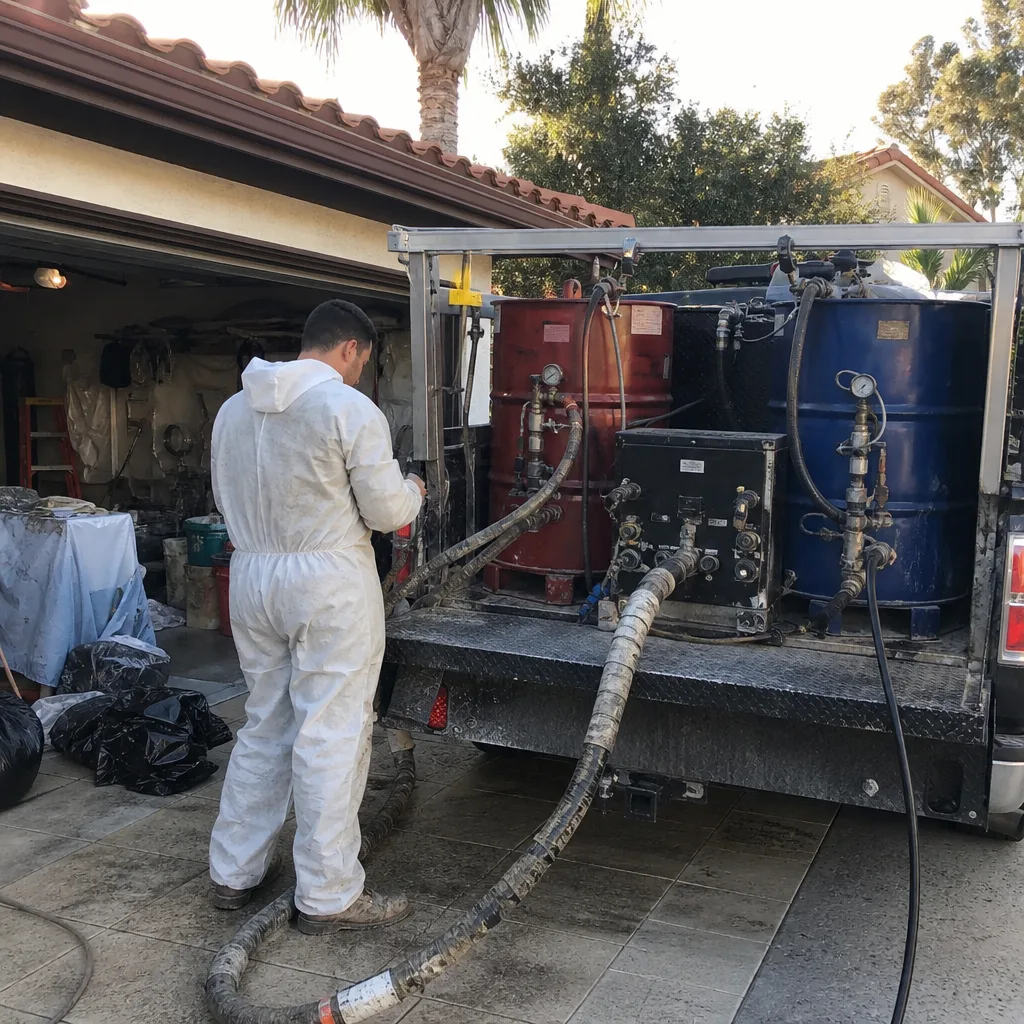
Blown-In Insulation Prep
If you’re planning blown-in insulation, we prep the attic first: clean the deck, verify baffles, seal bypasses around ceiling penetrations, and confirm the attic is ready for uniform coverage. Doing this right prevents the uneven R-value problems Corona’s wind already causes from getting worse.
Attic cleaning in Corona typically runs $1,800 to $4,500 depending on attic size, depth of existing insulation, and contamination level. Add the cost of new insulation on top, and most homeowners in Corona spend $4,000 to $9,000 total for a full clean-and-reinsulate job. Free estimates: call (877) 680-3557.
What happens when you call
- 1
A real person answersNo phone trees — you reach a local pro.
- 2
You get an upfront price rangeHonest numbers before anyone is dispatched.
- 3
A background-checked tech heads outLicensed & insured, dispatched right away.
- 4
You approve before work beginsNothing starts until you say go.
Trusted Brands We Service in Corona
We stock and install from eight major manufacturers, which means Corona homeowners don’t get steered toward whatever single product our supplier happens to carry that month. Need fire-resistant mineral wool? We’ll recommend Rockwool. Want recycled-content blown-in? GreenFiber. Open-cell spray foam for air sealing? Icynene. Closed-cell for a vaulted ceiling or a tight budget-to-performance target? Demilec. Need conventional fiberglass batts? Owens Corning or Johns Manville. The right material gets chosen because it fits your attic and your goals. We keep common products and components available for fast turnaround on Corona jobs, which matters when a wind event has just scoured half your attic and you need a repair done before the next heat cycle.
Common Attic Insulation Problems We See in Corona Homes
- Santa Ana wind displacement. Strong east-to-west winds funnel through the Norceo corridor and move loose-fill and batts around inside the attic. We regularly find insulation piled against one gable end with bare decking exposed on the other side, leaving half the house under-insulated.
- Heat-cycled degradation in 92880 and 92881. West- and south-facing attic sections in the newer subdivisions bake under relentless afternoon sun. Insulation there loses loft and R-value faster than shaded north-facing sections, creating uneven thermal performance you feel in specific rooms.
- Compression from storage and HVAC equipment. Corona homeowners use attics for storage. Heavy boxes, plywood platforms, and HVAC equipment crush fiberglass batts and loose-fill, cutting their effective R-value in half or worse in those areas.
- Vaulted ceiling weak spots. Foothill homes in 92881 and 92883 often have vaulted ceilings with thin insulation cavities. These homes lose heat through the roofline in winter and gain it in summer, and generic insulation fixes don’t address the geometry of the vault.
Pricing for Attic Insulation in Corona, CA
Here’s what Corona homeowners can expect to pay. Blown-in attic insulation to bring an average 1,500-square-foot attic up to R-38 typically runs $2,800 to $4,900. Attic batt insulation with new fiberglass or mineral wool batts lands in a similar range, $3,200 to $5,600, depending on the existing material and how much removal is needed. Attic insulation top-up jobs, where we add a few inches over existing material, run $1,400 to $2,800. Full attic insulation replacement with removal and cleaning runs $4,500 to $9,000. Spray foam, for homes opting for open-cell Icynene or closed-cell Demilec, typically starts around $6,500 for open-cell on a standard attic and climbs from there based on square footage and depth. Attic baffle and ventilation prep work adds $600 to $1,800 depending on how many rafter bays need baffles. The biggest cost drivers are attic size, existing insulation condition, access difficulty, and whether wind damage or pest contamination requires cleaning first. Estimates are free. Call (877) 680-3557 and we’ll give you real numbers after a real attic inspection.
We Also Serve Cities Near Corona
Our Attic Insulation team works throughout western Riverside County and the surrounding communities. If you’re in Home Gardens, El Cerrito Corona, Eastvale, or Norco, you’re within our regular service area. We know the wind pattern through the Norceo corridor affects these areas too. See our Attic Insulation in Corona page for details on serving this area, or call (877) 680-3557 to schedule an estimate wherever you are nearby.
Serving Corona, CA — Our Local Coverage Area
We’re based in the Corona area and know this community well. Use the map below to see our service coverage — if you’re nearby, we can almost certainly help.
FAQs About Attic Insulation in Corona
Santa Ana winds displace loose-fill and batt insulation by forcing air through soffit vents, gable vents, and any gaps in the attic envelope, pushing material across the deck and piling it against downwind gable ends. The result is uneven R-value: some parts of your attic end up at R-8, others at R-38. In the 92881 foothills, we recently re-secured a vaulted-ceiling attic where a Santa Ana wind event had blown loose-fill insulation into a pile against the east gable, leaving half the attic at R-8. After inspecting for displaced Owens Corning batts and finding several gaps, we reinstalled with wind-resistant baffles and fasteners, then topped up to R-38 with Johns Manville loose-fill. The homeowner immediately noticed fewer hot spots in the afternoon. If you suspect wind displacement, call (877) 680-3557 for an attic inspection.
The west- and south-facing attic sections in the 92880 and 92881 subdivisions degrade fastest, because they absorb the full afternoon sun load with no shade relief. Attics in these areas run hotter, longer, and that thermal cycling breaks down fiberglass binders and compresses loose-fill faster than shaded north-facing sections. Homes in the 92879/92882 circle also see accelerated degradation because the insulation is simply older: 40 to 60 years of heat cycling have left much of it well below its original R-value. Call (877) 680-3557 and we’ll tell you what we find in your specific attic.
Most wind-displaced insulation can be re-secured and supplemented rather than fully replaced. If the existing material is clean, dry, and not compressed beyond usefulness, we redistribute it, add wind-resistant baffles and fasteners, and top it up to the recommended R-value. If the insulation has been contaminated by rodents, water, or decades of dust infiltration, full removal and replacement makes more sense. We’ll show you the condition of your existing material and give you both options with real numbers before we do any work.
For attics in Corona, we recommend R-38 to R-49 for most homes. The Department of Energy’s climate zone map places Corona in a mixed-hot-dry zone where R-38 is the baseline, but given the extreme summer heat and Santa Ana wind pressure, many foothill and west-facing homes benefit from R-49. The right number depends on your attic’s geometry, your existing insulation, and whether you’re adding radiant barrier. We’ll calculate it from your actual attic during the estimate, not from a chart on the phone.
Radiant barrier reflects radiant heat from your roof deck before it enters the attic air space, which in Corona can mean a 15 to 25 degree reduction in peak attic temperature. A cooler attic means less heat radiating down into your living space, less strain on your HVAC, and lower cooling bills from June through September. It’s most effective when paired with proper insulation on the attic floor. In Corona’s inland heat, radiant barrier is not a gimmick; it’s physics working in your favor. Call (877) 680-3557 to see if your attic is a good candidate.
Written by Noel Carrasco, Owner at Orange County Insulation, serving Corona and the surrounding communities.