Fast, Reliable Attic Insulation Across Lakewood
Attic insulation in Lakewood typically runs $1,400 to $3,800 for a full retrofit, with blow-in fiberglass for a standard 1,200-square-foot attic landing between $1,400 and $2,200 and spray foam running higher. Most Lakewood jobs take one day, and we’re in your neighborhood regularly given how many 1950s tract homes line these streets. Call (877) 680-3557 for a free estimate and we’ll tell you exactly what your attic needs and why.
Lakewood’s original subdivisions repeat the same handful of floor plans block after block. That means we know these attics before we even open the scuttle hatch. We’ve mapped the bypasses, the missing wall cavities, and the settled rock wool in dozens of homes across Lakewood Park, Lakewood Village, and Mayfair. When you call us, you’re not getting a contractor learning your house for the first time. You’re getting a crew that already knows where the builder took shortcuts.
Attic Mold Removal in Lakewood
Attic Mold Removal in Lakewood usually runs $800 to $2,500 depending on how far it’s spread and whether the sheathing needs treatment or replacement. Lakewood’s marine layer rolls in most summer nights, and when a 1950s attic lacks proper soffit venting, that moisture sits against the roof deck and feeds mold. You’ll notice black spotting on rafters, a musty smell when the attic access is open, or dark stains bleeding through ceilings in the hall bath.
We don’t just kill the surface mold and call it done. The job involves finding the moisture source first because mold returns fast if the venting problem stays. Often in Lakewood, the original soffit vents are blocked by settled insulation or painted over during a past re-roof. We clear the airway, treat the affected wood, and only then bring insulation levels back to code. The order matters. Mold first, insulation second.
When Attic Mold Becomes a Health Problem
Attic mold doesn’t always stay in the attic. In Lakewood homes with older HVAC ducting running through attic space, tiny mold spores get pulled into the return air and circulated through every room. Household members with allergies or asthma usually feel it first. If bedroom windows fog up overnight or the home feels stuffy even with the AC running, it’s worth having the attic checked before the problem migrates further.
Ventilation Repair Before Insulation
You can’t solve a moisture problem by adding insulation. In fact, more insulation can make it worse by trapping humid air against the roof sheathing. On Lakewood’s low-pitch roofs, we often find the original vents were undersized from the start. We address airflow first, then insulate. It’s the only sequence that keeps mold from returning a year later.
Attic Insulation Removal in Lakewood
Attic Insulation Removal in Lakewood costs $1 to $2 per square foot of attic floor for full extraction and disposal, so a typical 1,200-square-foot attic runs $1,200 to $2,400 before new insulation goes in. Most Lakewood homes from the original 1950s tracts still have the builder-installed rock wool or kraft-faced batts. That material has settled, compressed, and lost most of its R-value. You can’t just blow new insulation over it and expect good performance.
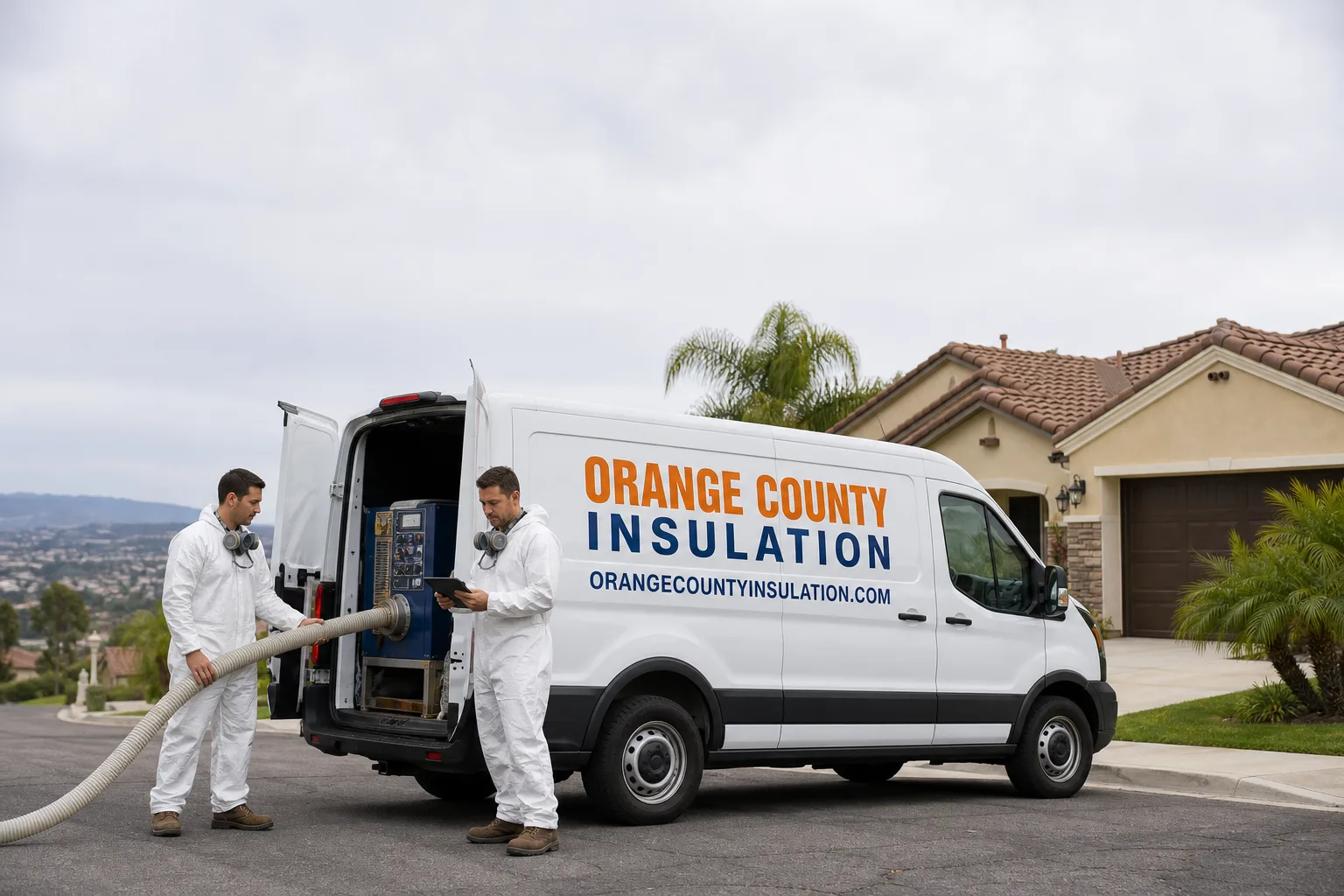
We remove old insulation for three main reasons in Lakewood: rodent or pest contamination, water damage from a past roof leak, or simply material that’s deteriorated past usefulness. The removal is dusty work, so we use full vacuum extraction with HEPA filtration and seal off the attic access from the living space. The whole removal usually takes three to five hours, then we’re ready to air-seal and insulate the same day.
Rodent Damage and Contamination
Rats and mice love Lakewood attics, especially in older tract homes with open eaves and gaps around plumbing vents. Their droppings and urine soak into existing insulation, and no amount of new insulation fixes the smell or the health risk. Full removal is the only right answer. After extraction, we sanitize the attic floor and seal the entry points before installing clean material.
Water-Damaged Insulation Replacement
Lakewood’s stucco exteriors hide roof leaks surprisingly well. By the time a ceiling stain appears, water has often been dripping into the insulation for weeks. Wet insulation loses R-value immediately and stays damp for months in our marine-layer climate. If you’ve had Reflectix repair in Lakewood or any other roof work in the past year, it’s worth checking whether the insulation below it is still dry. We’ll tell you honestly whether removal is needed or whether spot replacement will do.
Why Orange County Insulation Is Lakewood’s Preferred Attic Insulation Company
We only do insulation. Not roofing, not HVAC, not remodeling that happens to include insulation as an afterthought. That single-trade focus means every crew member at Attic Insulation thinks about thermal boundaries, air sealing, and venting all day, every day. We’re not learning your house type for the first time because we’ve already worked in dozens of identical Lakewood models.
Homeowners across Lakewood call us because we explain exactly which material fits their situation and why. We carry eight manufacturer brands: Owens Corning, Johns Manville, Knauf, Rockwool, CertainTeed, Icynene, Demilec, and GreenFiber. That means the right product gets chosen for your attic, not whatever one supplier happens to stock that week. It’s a different conversation than you’ll get from a general contractor.
Noel Carrasco leads our team, and he’s built the company around one idea: if you only do one thing, you get genuinely good at it. That’s why we can predict what’s in your Lakewood attic before we open it, why we carry specialized tools for removing settled rock wool, and why our estimates include specifics, not vague promises.
Common Attic Insulation Problems We See in Lakewood Homes
- Compressed original kraft-faced batts. The 1950s builders installed thin batts that have flattened to roughly R-8 or less, leaving large sections of ceiling under-insulated. West-facing bedrooms in Lakewood feel the heat first because the afternoon sun beats on the low-pitch roof and the attic heat radiates straight down.
- Settled rock wool blocking soffit vents. Low-pitch roofs in Lakewood are already tight on airflow, and the original rock wool has slumped over the eaves. That traps heat in summer and moisture during marine-layer nights, which is a recipe for mold on the roof sheathing.
- Missing wall cavity insulation in 2×4 walls. Many original Lakewood tract homes have zero insulation in the wall cavities, especially on front-facing elevations. Hot attic air finds its way into the wall stud bays and makes rooms feel like they can’t hold temperature no matter how high the AC runs.
- Bypasses around chimneys and plumbing chases. The original construction left open gaps where the flue and vent pipes pass through the attic floor. These bypasses move hot attic air directly into living spaces and pull conditioned air out, which is why some Lakewood homes feel drafty in rooms far from any window.
Pricing for Attic Insulation in Lakewood, CA
Here’s what Lakewood homeowners can expect to pay for common attic insulation work:
| Service | Typical Lakewood Price Range |
|---|---|
| Blown-In Fiberglass Attic Insulation (1,200 sq ft attic) | $1,400 – $2,200 |
| Blown-In Cellulose (GreenFiber) | $1,600 – $2,600 |
| Attic Insulation Top-Up (existing insulation kept) | $700 – $1,400 |
| Full Attic Insulation Removal & Replacement | $2,400 – $4,000 |
| Attic Mold Removal | $800 – $2,500 |
| Open-Cell Spray Foam (Icynene) | $3,000 – $5,500 |
| Closed-Cell Spray Foam (Demilec) | $4,500 – $7,500 |
What moves the price? Attic size, how much old insulation has to come out first, access (a low-pitch Lakewood roof can make hoses awkward), and the R-value you’re targeting. Air sealing always adds a little, but it’s the highest-value dollar you’ll spend in a 1950s house. Call (877) 680-3557 for a free estimate with a written quote. We inspect the attic, show you what’s there, and explain your options without pressure.
Trusted Brands We Service in Lakewood
Lakewood homeowners get access to eight major insulation manufacturers through us, not just one or two. We install fiberglass systems from Owens Corning, Johns Manville, Knauf, and CertainTeed; mineral wool from Rockwool; cellulose from GreenFiber; and spray foam from both Icynene and Demilec. Because we carry dual spray foam capability, we can offer open-cell for your attic’s sloping roofline and closed-cell for areas needing a moisture barrier. We keep local stock for Lakewood jobs, so once we inspect your attic and choose a material, we’re not waiting on a supplier order from out of state.
The Lakewood Advantage: Identical Floor Plans Mean Predictable Retrofits
Lakewood is one of America’s first planned postwar suburbs, and the original Lakewood Park tract repeats the same handful of 1950s floor plans block after block. Here’s what that means for attic insulation: once our crew maps the attic bypasses and missing wall cavities in one model, we can predict the exact same gaps in dozens of neighboring homes. The builder skipped wall cavity insulation in that corner? He skipped it in every house on the block. The top plates left unsealed in one ceiling? Same gap two doors down. No other city in the Long Beach area gives us that kind of repeatable intel.
We were called to a home in Lakewood Park a couple of summers ago, one of the original tract models near the elementary school. We removed the settled rock wool from the 1950s attic and found the builder had skipped wall cavity insulation entirely in the front-facing walls. The homeowners had been running the AC hard for years and still couldn’t keep the living room comfortable. After air-sealing the top plates and blowing in fiberglass to R-38, the homeowner reported the upstairs bedrooms finally stayed cool during a July heat wave. That’s not a one-off. That’s the same condition waiting in the attic of a dozen houses on the same block.
Lakewood’s inland coastal location means hot, dry summers with the marine layer rolling in most nights. Insulation strategy here focuses on stopping radiant heat gain in attics rather than freeze protection. And because the marine layer traps moisture, proper ventilation and vapor management are essential. Retrofit a wall cavity wrong and you’ll get condensation inside the stud bay, feeding mold behind the stucco where you can’t see it until it’s bad.
We Also Serve Cities Near Lakewood
Our crews work throughout Los Angeles County, including Attic Insulation in Lakewood and neighboring Signal Hill, Bellflower, Long Beach, and Paramount. If you’re in any of those areas, the same eight-brand lineup and the same insulation-only expertise apply. Call and we’ll schedule a free attic inspection on our next pass through your neighborhood.
Serving Lakewood, CA — Our Local Coverage Area
We’re based in the Lakewood area and know this community well. Use the map below to see our service coverage — if you’re nearby, we can almost certainly help.
FAQs About Attic Insulation in Lakewood
In a 1953 Lakewood Park home, you’ll almost certainly find original kraft-faced fiberglass batts that have compressed to under R-8, often mixed with settled rock wool that was blown over them decades ago. The rock wool has typically slumped into the eaves, blocking the soffit vents. Expect minimal coverage, no air sealing, and open bypasses around vent pipes and the chimney. Most of these attics need full removal before new insulation goes in rather than a simple top-up.
Yes, Lakewood’s low-pitch roofs limit working space near the eaves and make it harder to reach the soffit vent area where insulation tends to block airflow. With blow-in insulation, our installers use extension baffles and rakes to keep the eaves clear. With batts, we pre-cut materials and stage them from the access point. It takes longer than a steep-roof house, but it’s routine for our crew. Call (877) 680-3557 and ask what your specific attic layout allows.
The marine layer raises attic humidity at night, especially from May through September. In a poorly vented Lakewood attic, humid air condenses on the underside of roof sheathing, which feeds mold and can rot the decking over time. The insulation itself should stay dry if venting is adequate. We always correct soffit and ridge ventilation as part of the job because insulation alone can worsen the condensation problem by trapping the moist air in the attic.
Yes, and we do it regularly. Lakewood’s original tract builders used the same handful of floor plans for hundreds of homes, so the missing wall insulation, unsealed top plates, and bypass locations repeat from house to house. We keep records of what we find and fix in each model. If your neighbor had us insulate their identical home last month, we know exactly what your attic needs before we climb up there. That predictability saves time and gets the insulation installed in one visit.
We install products from Owens Corning, Johns Manville, Knauf, Rockwool, CertainTeed, Icynene, Demilec, and GreenFiber. For most Lakewood attic retrofits, blown-in fiberglass from Owens Corning or Johns Manville is the workhorse because it fills irregular cavities and covers settled areas evenly. If you want recycled content, we use GreenFiber cellulose. If you need an air and moisture barrier in one, spray foam from Icynene or Demilec fits the bill. We choose the material based on your attic’s ventilation, your budget, and your comfort goals, not based on what’s easiest for us to carry up a ladder.
Call Orange County Insulation for a Free Lakewood Attic Inspection
If your Lakewood home has hot rooms, high energy bills, or an attic you haven’t looked in for years, call (877) 680-3557 today. We’ll inspect the attic, show you exactly what’s there, and give you a written quote for free. No generalist sales pitch, no pressure. Just a specialist who knows Lakewood’s 1950s tract homes better than most people know their own attic.
Written by Noel Carrasco, Owner at Orange County Insulation, serving Lakewood and Los Angeles County with insulation-only expertise backed by eight major manufacturer brands.