
Emergency Attic Insulation Near Me: What Rancho Santa Margarita Homeowners Should Do First
If you’re searching “emergency attic insulation near me Rancho Santa Margarita” because you just found raccoon damage, moisture staining after a storm, or a smoldering smell from your roof line, the worst thing you can do right now is call an insulation company first. The correct first call is to a remediation professional who can certify the underlying problem is resolved. Only after that certification should insulation removal and replacement begin. If you’d rather not DIY the sequencing, call Orange County Insulation at (877) 680-3557 and we’ll walk you through it.
We’ve pulled insulation out of a Melinda Heights attic at 7 p.m. on a Tuesday. That’s not a brag. It’s just the reality of what happens when a raccoon decides your fiberglass batts are a nursery. But here’s the thing most homeowners don’t realize: we were the third call that homeowner made, not the first. And that order is exactly what protected her from spending $8,000 twice.
What Actually Counts as an Attic Insulation Emergency in Rancho Santa Margarita
Let’s be clear about something up front: true attic insulation emergencies are rare. Missing R-value? That’s a project, not an emergency. High energy bills? Worth addressing, but not a middle-of-the-night problem. In 15 years of doing insulation work across Orange County, we’ve seen exactly three situations that justify emergency response. Here they are:
- Rodent or wildlife contamination – raccoons, rats, or squirrels nesting in insulation and leaving droppings, urine, and damaged material throughout the attic. This is a health hazard, not just a nuisance. Hantavirus, leptospirosis, and salmonella are all transmitted through rodent waste. In Rancho Santa Margarita’s canyon-adjacent neighborhoods like Trabuco Canyon, Dove Canyon, and Robinson Ranch, rodent pressure is constant, and contaminated insulation needs professional removal with containment protocols.
- Post-fire smoke and ember infiltration – if embers from a nearby hillside fire got into your attic through vents, or smoke saturated your insulation, that material is compromised. Smoke particulates embed in fiberglass and cellulose permanently. The Saddleback Mountain corridor makes certain RSM neighborhoods more exposed to this than people realize.
- Acute roof leak saturation – not a small drip, but a full saturation event: a tree limb through the deck, a failed flashing that dumped water into the attic during January’s atmospheric rivers, or a long-running leak that finally soaked through. Wet insulation loses R-value almost immediately, but the bigger issue is that it never dries out properly in an enclosed attic, and that moisture migrates to framing and drywall.
What’s not an emergency? Aging insulation that’s settled from R-30 to R-22. Gaps around recessed lights. Mild rodent activity you suspect but haven’t confirmed. Those need attention, yes, but they don’t require same-week action, and treating them like emergencies often means you overpay for speed you don’t need.
The Right Sequence: Who to Call Before You Call an Insulation Company
This is the section most “emergency insulation” content glosses over, and it’s the one that saves Rancho Santa Margarita homeowners the most money. Insulation is almost never the first problem. It’s the material that gets damaged by the first problem. So the sequence matters.
For rodent contamination: Call a licensed wildlife exclusion or pest remediation company first. They need to identify entry points, trap and remove any remaining animals, and seal the access routes. In RSM specifically, that means checking gable vents, eaves, soffit gaps, and roof transitions where canyon winds have worked trim loose. The critter removal has to be confirmed complete before insulation comes out. Otherwise you’ll replace the insulation and the next raccoon family moves in within a month. We’ve seen it happen in Rancho Santa Margarita more times than we can count.
For post-fire smoke or ember infiltration: Start with a fire damage restoration company or, if your homeowner’s insurance is involved, your claims adjuster. If the smoke damage is extensive enough that you’re replacing insulation, you may have a covered claim. In California, a public adjuster can be worth the fee when the claim is $15,000 or more. Get the damage documented and the claim opened before you pull anything out. Your insurance adjuster needs to see the evidence in place.
For acute water saturation: Call a roofing contractor first, or a water damage mitigation company if there’s active standing water. The source of the water has to be permanently fixed before new insulation goes in. Period. And if the water event was significant, your policy may cover the insulation replacement. Document everything with photos before removal begins.
Only after the underlying problem is certified resolved – pest company sign-off, roof repair complete, fire remediation done – should you call an insulation contractor. That’s where Orange County Insulation home comes in.
What Contaminated Insulation Actually Looks Like (And What’s Just Old)
Before you climb into your attic with a flashlight and a panic, here’s what actually indicates a problem versus what’s normal aging. We walk Rancho Santa Margarita homeowners through this distinction weekly.
Signs of genuine contamination:
- Scattered droppings – small dark pellets about the size of a grain of rice (mice) or larger capsules with tapered ends (rats). Raccoon droppings are the size of a small dog’s, and they’re often concentrated in a latrine area.
- Greasy rub marks along joists and baffles where animals squeeze through repeatedly. This is body oil, and it’s a strong indicator of an active or recent entry path.
- Tunnels or burrows pressed through batts – animals create paths, not just occasional scurrying.
- Urine odor that gets stronger in humidity. That smell means the material needs to come out, not be covered over.
- Mold growth – usually black, green, or white fuzzy patches on the paper backing of batts or on the upper layer of blown-in cellulose. In Rancho Santa Margarita’s marine-influenced climate, condensation at the attic deck is common, but visible mold on insulation is a removal situation.
What’s just normal aging:
- Settled blown-in insulation that’s lost height. This happens over 10-20 years. The fix is topping it off, not removal.
- Dust and dirt on the top layer. Normal air movement carries particulates in.
- Insulation that’s flattened slightly under a storage deck. Compression reduces R-value but isn’t contamination.
- Discoloration that’s uniform – aged fiberglass yellows slightly. That’s not active growth.
The health risk depends on what you’re dealing with. Rodent waste carries disease risk – don’t disturb it without proper PPE. Mold spores become airborne the moment you agitate the material. If you’re going to poke around up there, wear an N95 or better, gloves, and eye protection, or better yet, let a professional do the assessment.
Why RSM’s Canyon-Adjacent Homes Need a Different Approach
Rancho Santa Margarita’s geography creates specific conditions that homeowners in flatter parts of Orange County don’t face. The communities built into the foothills – Dove Canyon, Robinson Ranch, Trabuco Highlands, and the older sections near the lake – sit directly against wildland interface. That means:
- Rodent pressure is constant. When one colony is removed, another moves in from the canyon. If the exclusion work isn’t done correctly, you’re renting insulation, not owning it. We’ve seen attics in Dove Canyon re-infested within six weeks of insulation replacement because entry points weren’t fully sealed.
- Wind-driven ember exposure is real. During Santa Ana events, embers travel miles. Gable vents and ridge vents designed for passive ventilation become ember entry points. In fire-prone areas, you should consider ember-resistant vent covers as part of any attic insulation project.
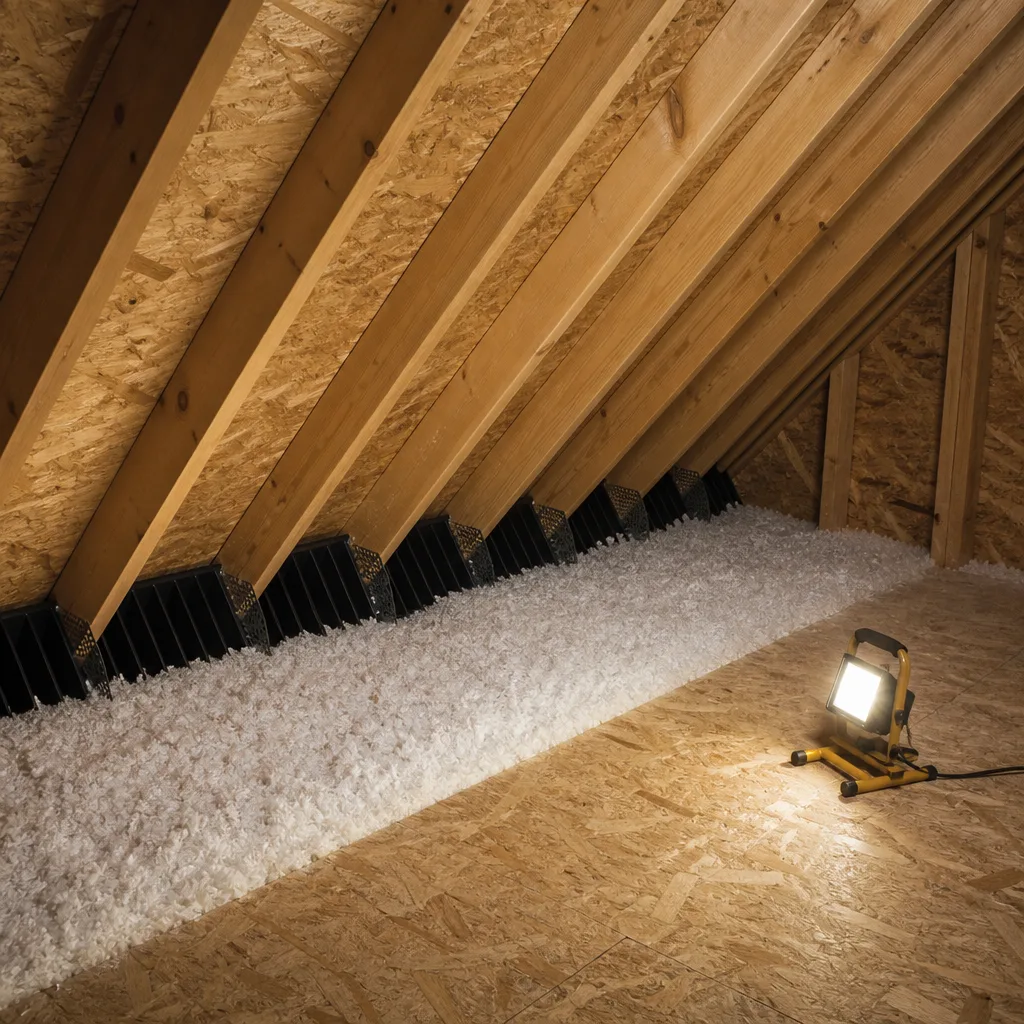
- Moisture behavior is different in canyon proximity. Homes tucked against slopes get less direct sun on the roof deck, which means slower drying after rain events. Insulation in these attics needs proper baffling at the eaves to maintain airflow, otherwise condensation becomes a chronic problem.
An insulation specialist looks at all of this differently than a pest control company does. The pest company removes the animal and seals the entry. The insulation specialist evaluates whether the existing material is worth saving, what type of replacement makes sense for the home’s specific microclimate, and whether the ventilation system needs to change to prevent the same problem from recurring. That’s the difference between a fix and a patch.
PPE, Negative Pressure, and Verifying Your Contractor Does It Right
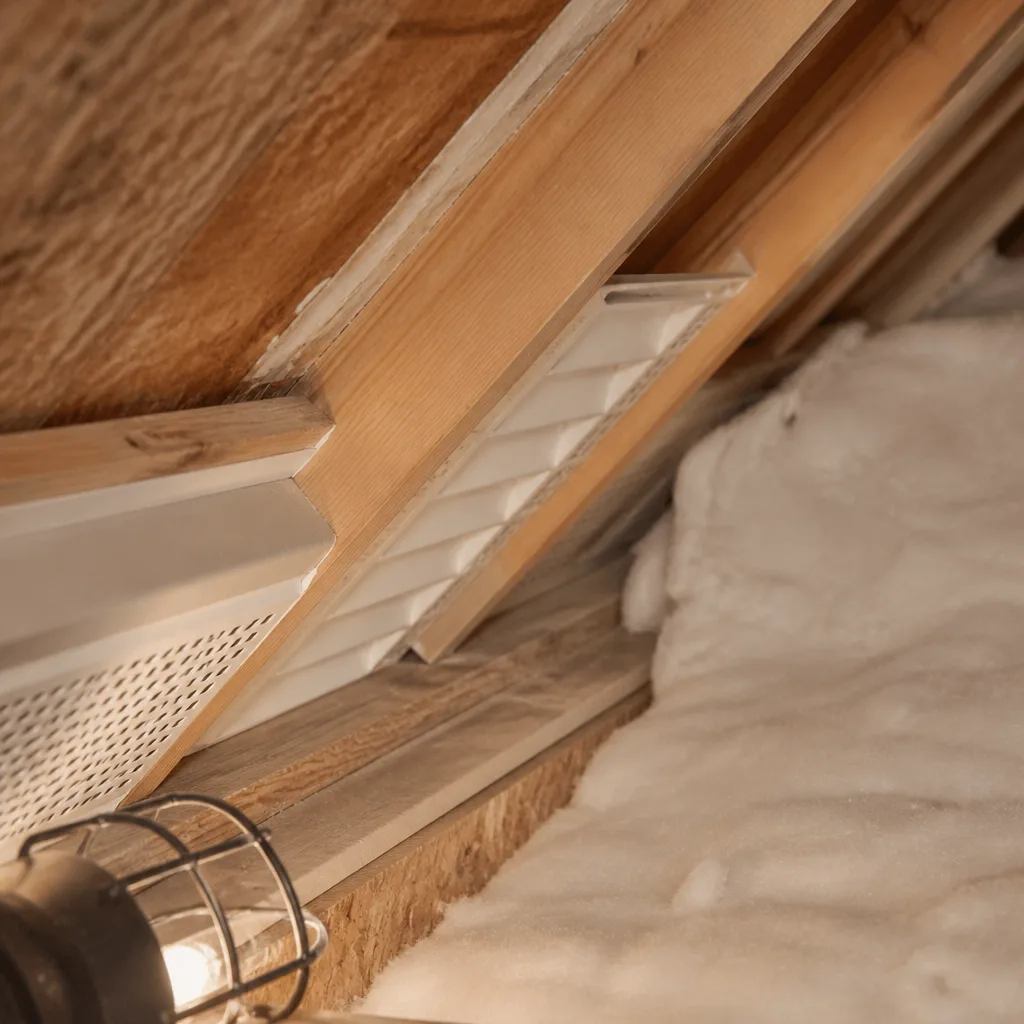
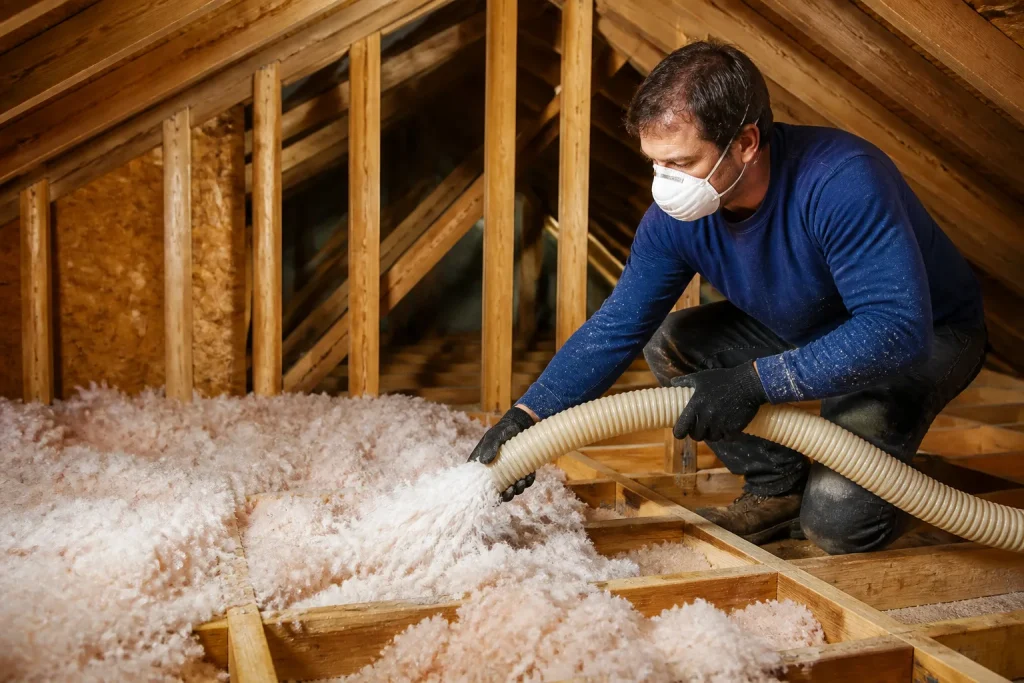
This is where we get technical, because removing contaminated insulation isn’t a “shop vac and a dumpster” job, despite what some contractors will quote you. When insulation is contaminated with rodent waste, mold, or smoke residue, the removal process requires specific protocols. Here’s what to look for:
- Negative-pressure containment. The attic access should be sealed with plastic sheeting and a HEPA air scrubber should be running during removal. This pulls air into the attic rather than letting contaminants spill into the living space. If the crew shows up with just a vacuum hose and a garbage bag, stop the job.
- Full-body PPE, not just gloves. For rodent-contaminated material, workers should be in Tyvek suits, respirators (P100, not just N95), and full eye protection. For mold, the same. If you see someone in jeans and a t-shirt loading batts into trash bags, that’s a red flag.
- Proper disposal. Contaminated insulation can’t go in the regular trash in most California jurisdictions. It needs to be bagged, sealed, and transported to a facility that accepts it. Ask how the contractor handles disposal before you sign anything.
- Sanitization after removal. Once the contaminated material is out, the attic decking and joists should be treated with an appropriate antimicrobial or enzyme cleaner before new insulation goes in. This is a step that gets skipped, and it’s the step that determines whether odors come back.
At Orange County Insulation, Attic Insulation in Rancho Santa Margarita includes this full protocol: containment, removal, sanitization, and then re-insulation with the right product for the home. The re-insulation product matters too, which is why we stock more than one option – including Rockwool for fire resistance and sound dampening in canyon-adjacent homes, and CertainTeed fiberglass for budget-conscious replacements.
What Goes Back In: Choosing the Right Replacement for a Wildland-Interface Home
Once the emergency is resolved and the contaminated material is out, you have a decision to make: what goes back in? This is where most Rancho Santa Margarita homeowners benefit from talking to a specialist rather than accepting whatever the remediation company’s preferred subcontractor stocks. The right answer depends on your home’s specific situation.
For homes in the foothills with ember exposure, Rockwool mineral wool has real advantages. It’s non-combustible, rated for fire resistance up to 2,000°F, and it won’t support flame spread the way some other materials can. It’s also denser, which means better sound dampening if you’re near Ortega Highway or a canyon road. We install a lot of Rockwool in Dove Canyon and Robinson Ranch for exactly these reasons.
For homes where the priority is air sealing and moisture resistance, closed-cell spray foam from Demilec creates a moisture barrier that fiberglass batts simply can’t match. In Rancho Santa Margarita attics with chronic condensation issues, closed-cell foam at the roofline transforms the space. It’s more expensive upfront, but it’s a 30-year material.
For homeowners on a tighter budget after paying for pest remediation, CertainTeed fiberglass batts or blown-in fiberglass offer a solid, code-compliant replacement at lower cost. The key is that the choice should be driven by your home’s specific conditions – sun exposure, slope proximity, ventilation design, moisture history – not by whatever material the installer happens to have in the warehouse.
That’s the whole reason we carry eight manufacturer brands and three installation methods. Spray Foam Insulation in Rancho Santa Margarita has different use cases than Blown In Insulation in Rancho Santa Margarita, and the wrong choice in a canyon home costs you comfort and money for decades.
When to Call a Pro (And When You Can Wait)
If you’ve got active water dripping through your ceiling, visible smoke damage, or confirmed rodent activity in the attic – call a pro. That’s not a DIY situation, and the containment protocols we described above aren’t something you can safely replicate with items from the hardware store. A pro also knows what insurance documentation looks like, which saves you money even after you factor in the service cost.
If you’ve got a small access hatch you can peek through and want to assess whether something might be wrong, that’s reasonable. Wear a respirator. Use a bright flashlight. Take photos. Don’t disturb anything. Then call for a professional assessment.
If you’re in Rancho Santa Margarita and need related services, we cover the whole attic insulation spectrum: Attic Insulation in Rancho Santa Margarita for removal and replacement, Spray Foam Insulation in Rancho Santa Margarita for air sealing in fire-prone zones, and Blown In Insulation in Rancho Santa Margarita for top-offs and whole-attic retrofits.
The Bottom Line
If you’re facing an attic insulation emergency in Rancho Santa Margarita, sequence matters more than speed. Confirm the underlying problem is resolved – critters out, leak fixed, fire damage mitigated – before you replace insulation. Document everything for insurance. Verify any contractor you hire uses containment and proper PPE for contaminated material removal. And when it’s time for replacement, match the material to your home’s specific canyon-adjacent conditions rather than accepting a generic quote.
If you’re in Rancho Santa Margarita and need help with insulation removal, replacement, or just an honest assessment of what you’re dealing with, Orange County Insulation offers free estimates. We only do insulation – which means we do it better. Call (877) 680-3557.
Frequently Asked Questions
Emergency insulation removal and replacement in Rancho Santa Margarita typically runs $3,500 to $9,000 depending on attic size, contamination type, and replacement material. Rodent-contaminated removal with containment protocols runs higher than simple water-damaged removal. Depending on your homeowner’s policy, part of this may be covered – call (877) 680-3557 for an honest assessment.
For rodent-contaminated or moldy material, no. The health risks of airborne contamination during removal are serious, and proper disposal in California requires specific handling. Leave it to a crew with negative-pressure containment and proper PPE. If it’s just settled, old insulation, removal may not even be necessary – topping it off often solves the problem at a fraction of the cost.
Typical removal and replacement takes one to two days for most attics under 2,000 square feet. Larger attics or those requiring extensive sanitization may take three days. The remediation or pest exclusion work before insulation comes first, which adds its own timeline – usually one to three weeks for wildlife removal with exclusion work.
No, and more importantly, it’s unsafe. Covering rodent-contaminated or saturated insulation with a new layer seals the problem in place – odors continue, mold spreads, and the structural damage accelerates. The contaminated material has to come out first. Then the right replacement can go in. Call (877) 680-3557 and we’ll tell you honestly whether removal is required or whether a top-off is all you need.
Written by the team at Orange County Insulation, serving Rancho Santa Margarita.
Need Insulation Help?
Call Orange County Insulation - licensed & insured, here with fast help in Rancho Santa Margarita.
(877) 680-3557